Shorelines Reimagined

Hurricane Sandy revealed New York City’s profound vulnerability to coastal storms and flooding, prompting a decade-long mobilization of expansive resiliency programs. These initiatives have completely reimagined the city’s shores, combining sturdy engineered flood barriers with vibrant green public spaces that both protect neighborhoods and offer valuable recreational areas. The massive infrastructure projects have created thousands of jobs, drawing on materials supplied by states such as Pennsylvania, Ohio, Michigan, and Texas, whose manufacturing and transportation sectors have played key roles in producing steel, concrete, and specialized floodgates used in the construction. Locally, many New Yorkers have been employed throughout the building process, supporting the regional economy. Importantly, the integration of greenspaces into these protective designs provides critical relief during increasingly hot and humid summers, offering shade and cooling benefits that are especially vital for the health and comfort of children and the elderly, thereby enhancing the resilience and livability of New York City’s coastal communities for generations to come.
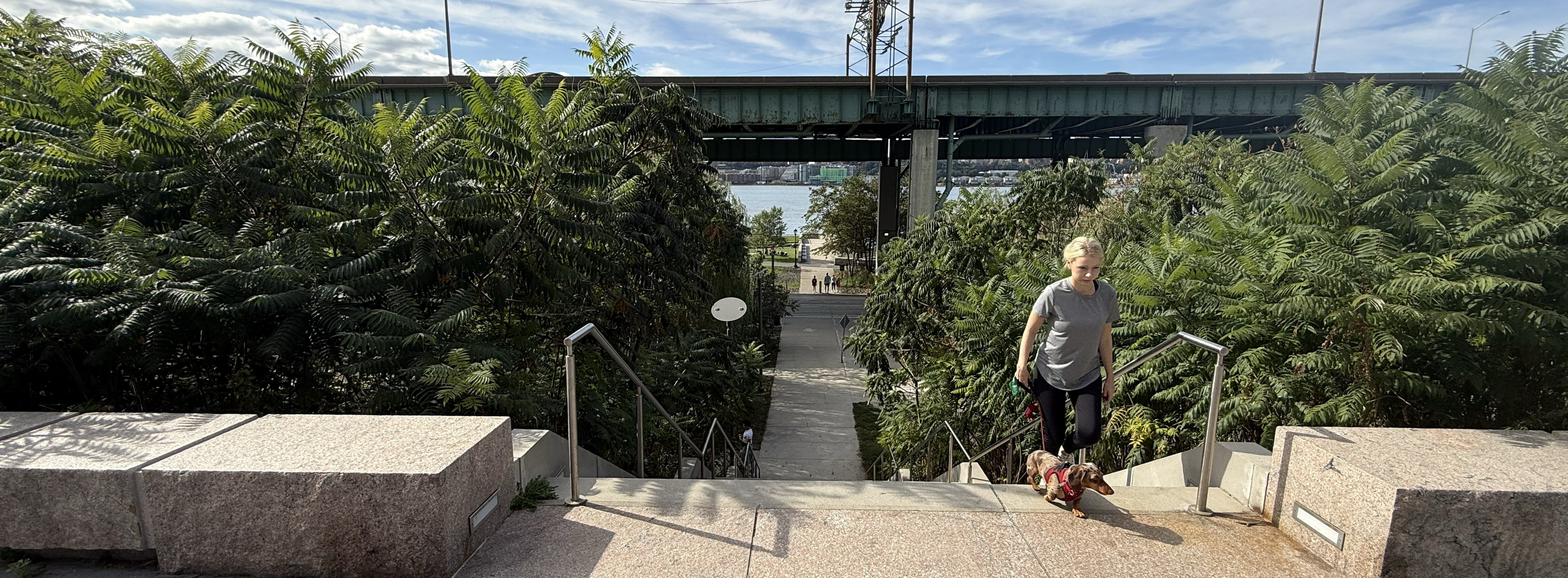
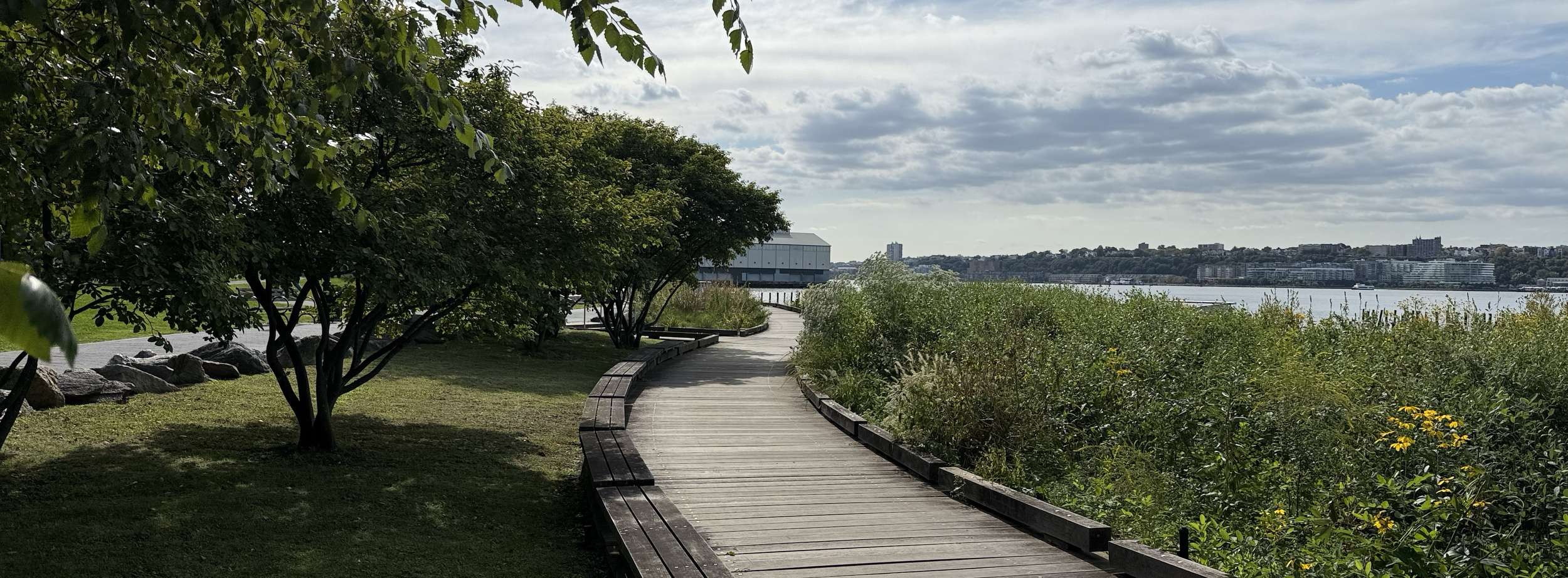
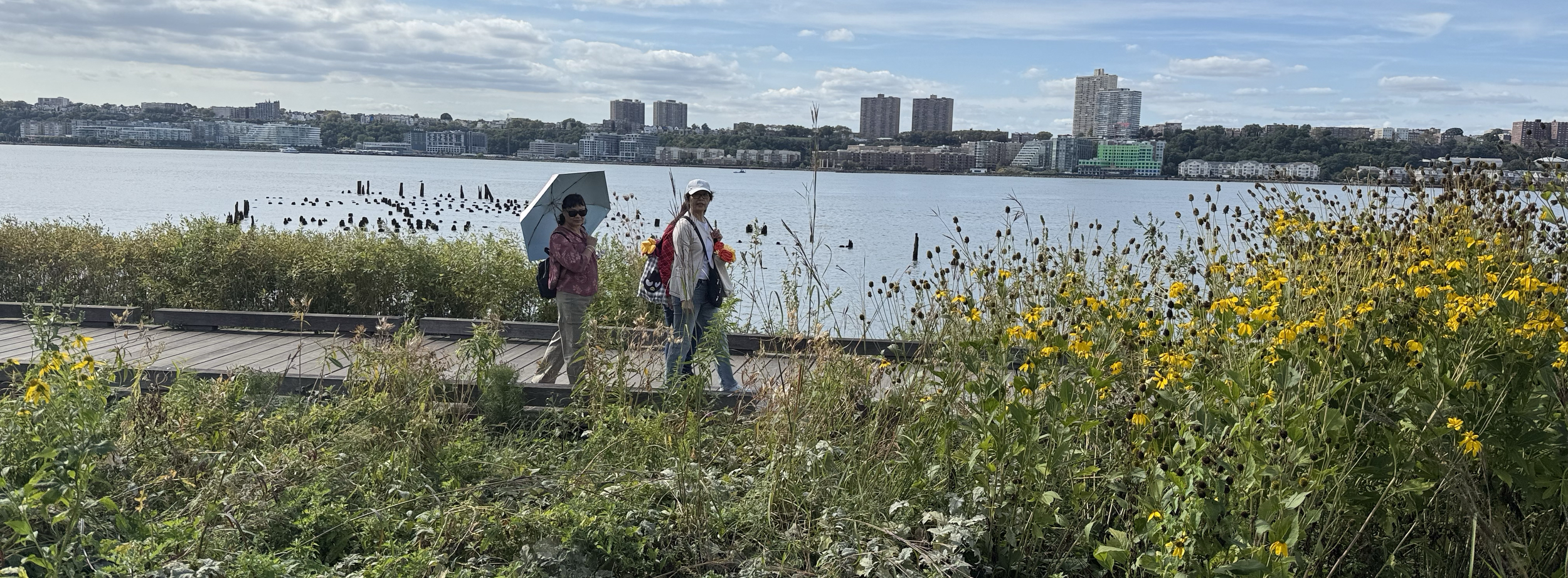
With old infrastructure of the West Side Highway looming over it, the Westside park has been raised approximately 30 feet above the Hudson River and features three lines of defense: the Westside Greenway closest to the water, separated by a recreational space, and finally protective berms that shield the structures behind them.
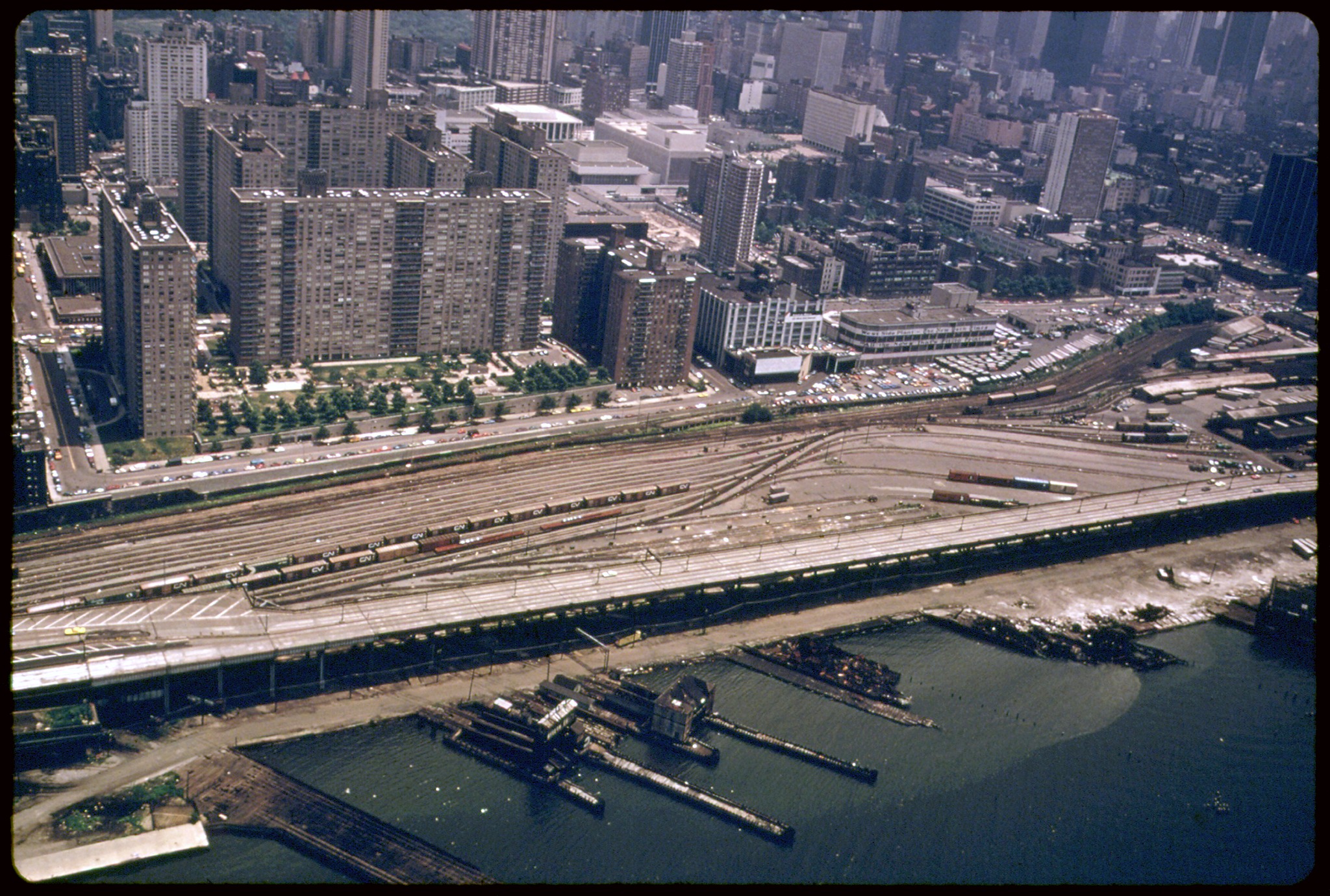
The 60th Street Rail Yard on Manhattan’s west side once served as a major freight hub, linking rail cars ferried across the Hudson from New Jersey to local tracks. Located between West 59th and 72nd streets, it featured six warehouse piers, labeled B through I, and three float bridges that enabled direct transfer of rail cars from barges to the yard.
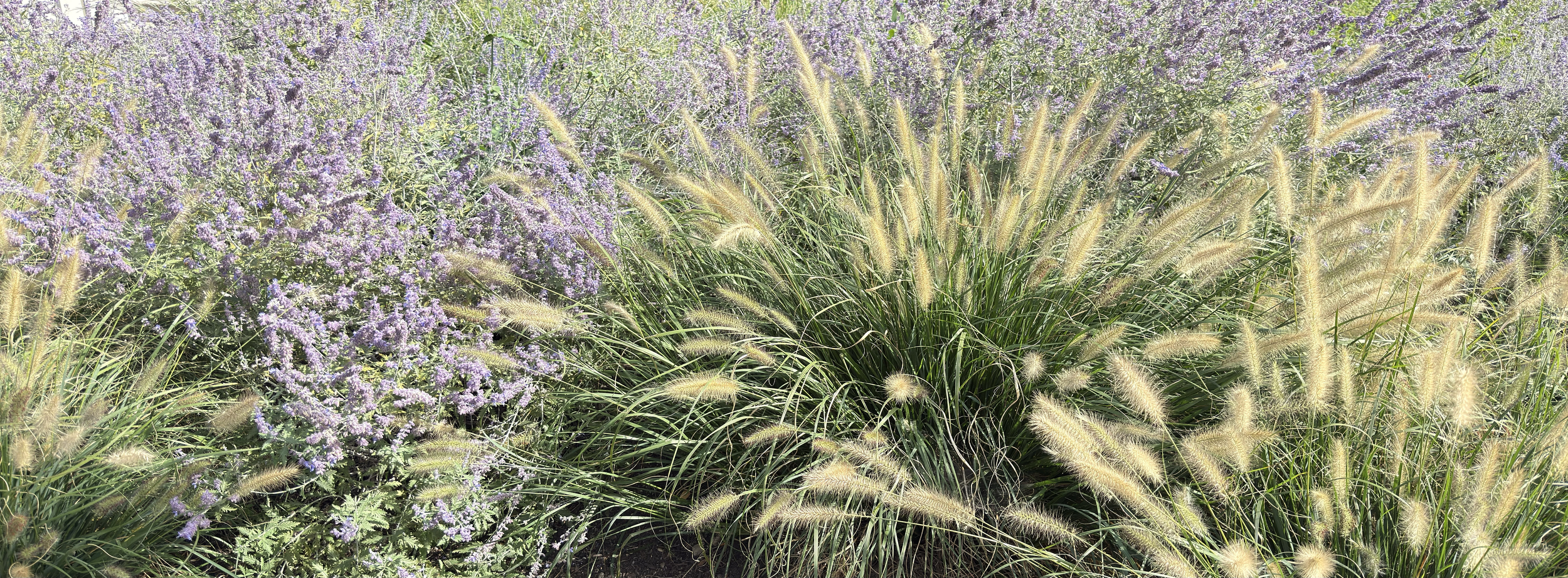
native plants support local biodiversity by providing habitat for wildlife, increase the resilience of shorelines against climate change impacts, enhance water quality, and improve urban aesthetics and community engagement with natural green spaces.
Using native species is beneficial because they are adapted to local environments, require less maintenance, and contribute to long-term ecological and infrastructural stability alongside engineered flood protection measures.
Native flora such as weeping willows and native plants are being planted along New York City’s waterfronts as part of shore protection efforts, where they play a critical role by stabilizing soil with their extensive root systems to reduce erosion, managing stormwater through improved infiltration and filtration, and demonstrating salt and flood tolerance suited to coastal conditions.
Native flora planted at 69th Street on the West Side helps protect the land behind the shore by stabilizing the soil with deep root systems that reduce erosion, absorbing and filtering stormwater to prevent flooding, and tolerating salt and periodic flooding, which strengthens the resilience of the shoreline against storms and sea level rise
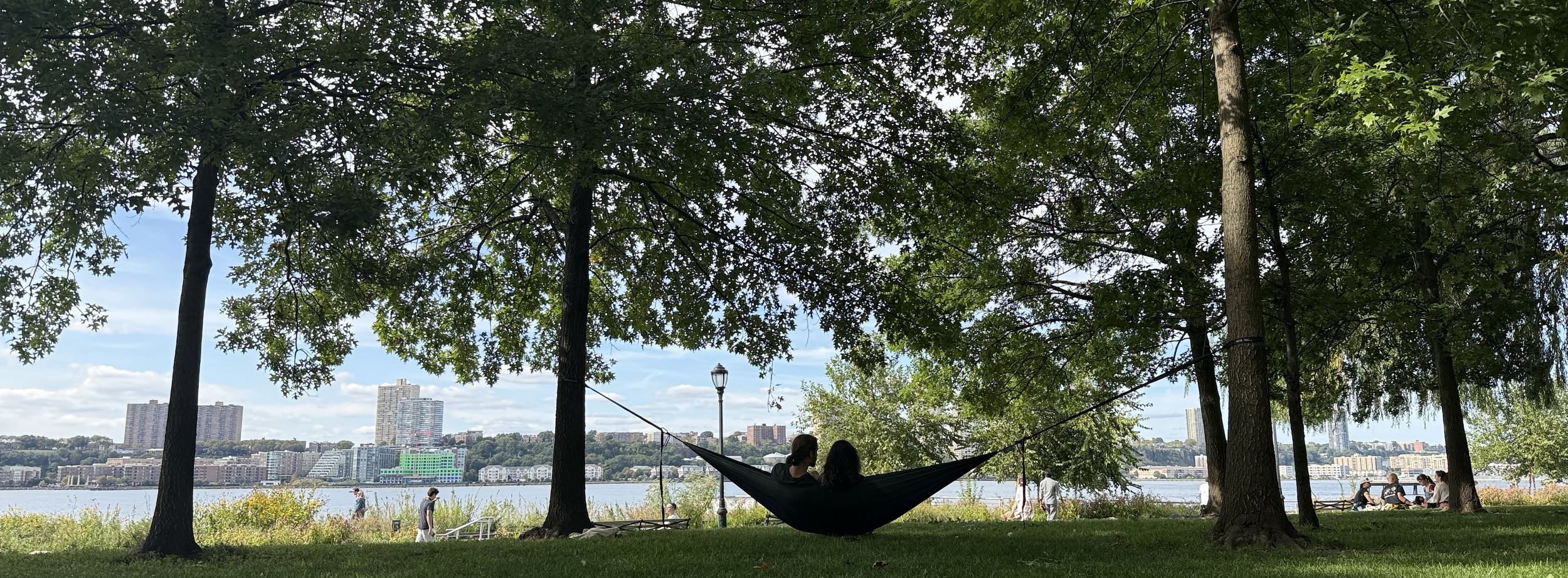
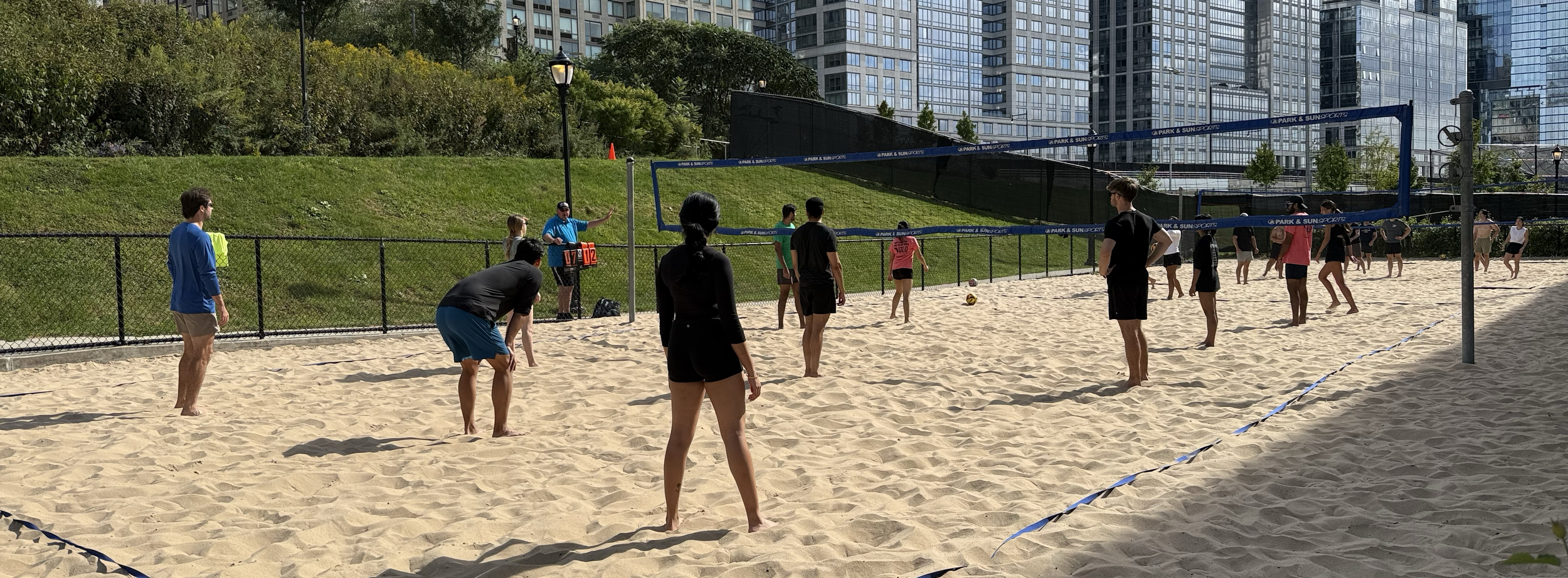
Behind the first lines of defence along the shore are recreatinoal areas. The recreation areas are both for enjoyment and they are also functional: in their width and with their soil, sand and grass they serve as a second line of defence.
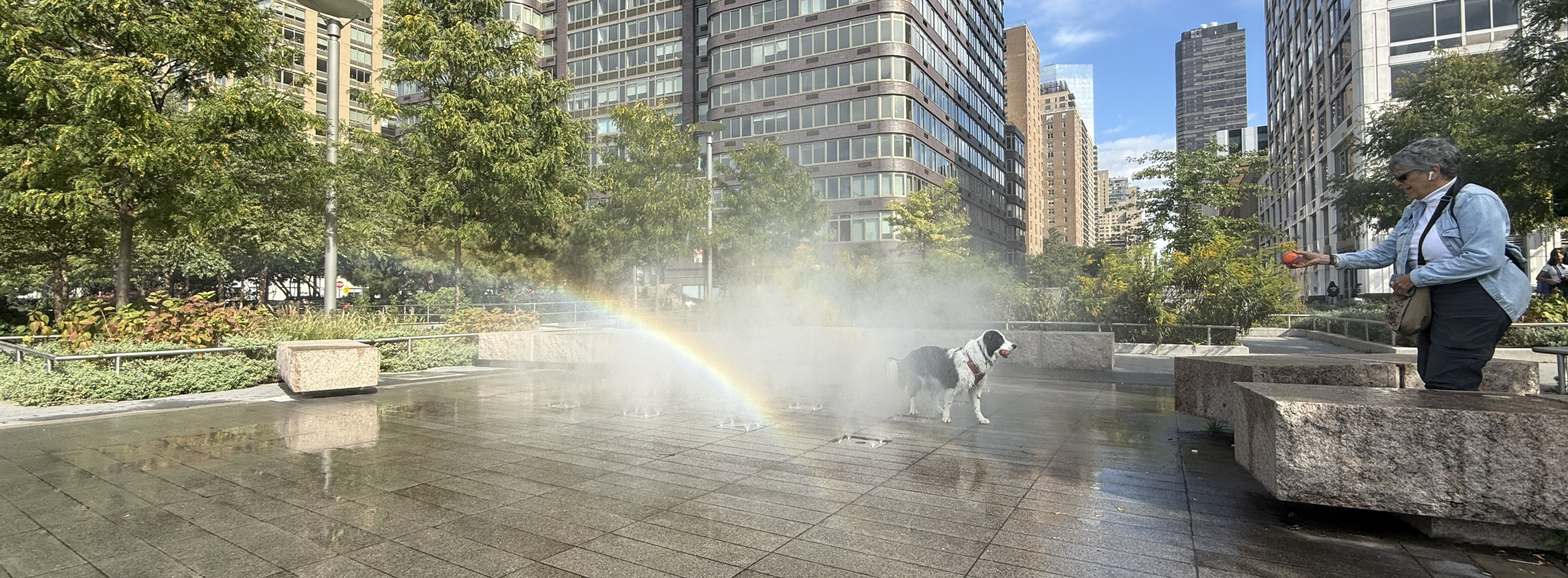
The third line of defence is above a TK foot berm. It hosts sprinklers for cooling down and also breakwaters for further protection.
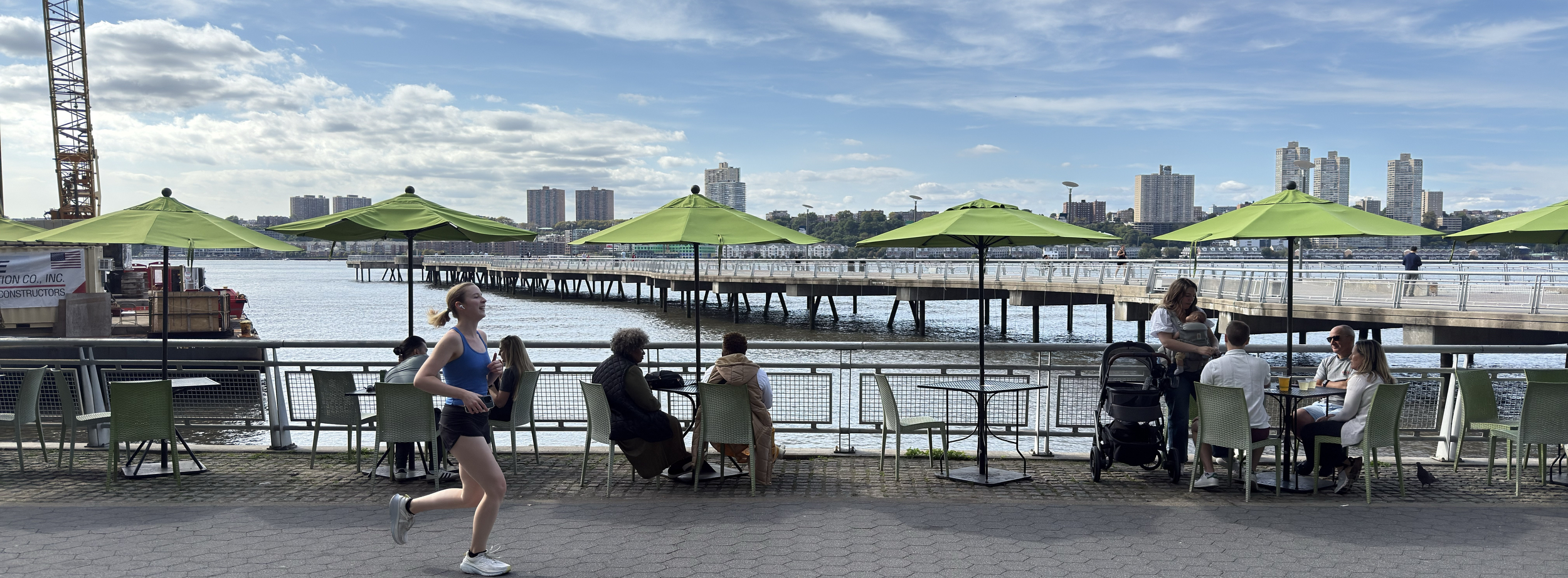
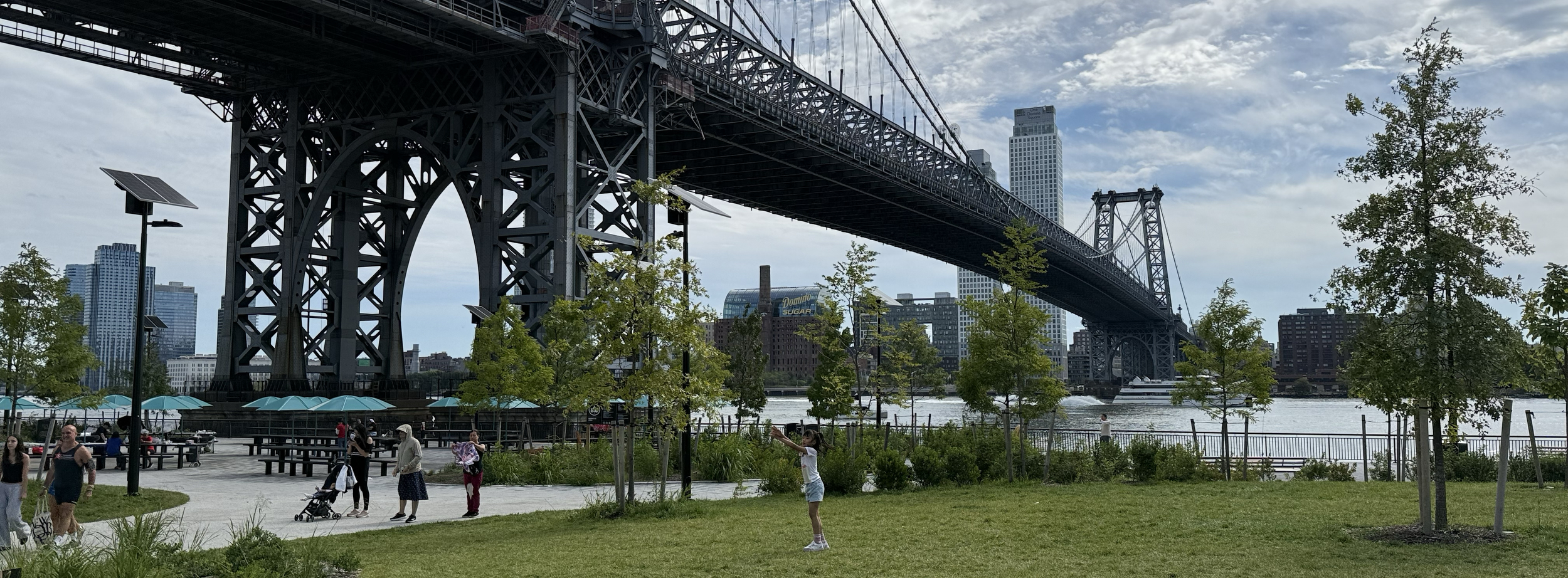
Resiliency projects that include restaurants and bars have generated substantial economic income by attracting visitors and boosting local commerce, integrating vibrant social spaces that support hospitality jobs and increase neighborhood property values while enhancing waterfront livability.
The benefits from resiliency projects are not limited to New York; states such as Pennsylvania, Ohio, and Michigan have supplied steel and concrete materials, Texas-based company FloodBreak has provided custom flood gates critical to coastal defense, while companies like Skanska USA and IPC Resiliency Partners, based in New York, have been key contractors providing heavy civil construction, reinforced concrete, and steel infrastructure essential for Manhattan’s waterfront resiliency projects.
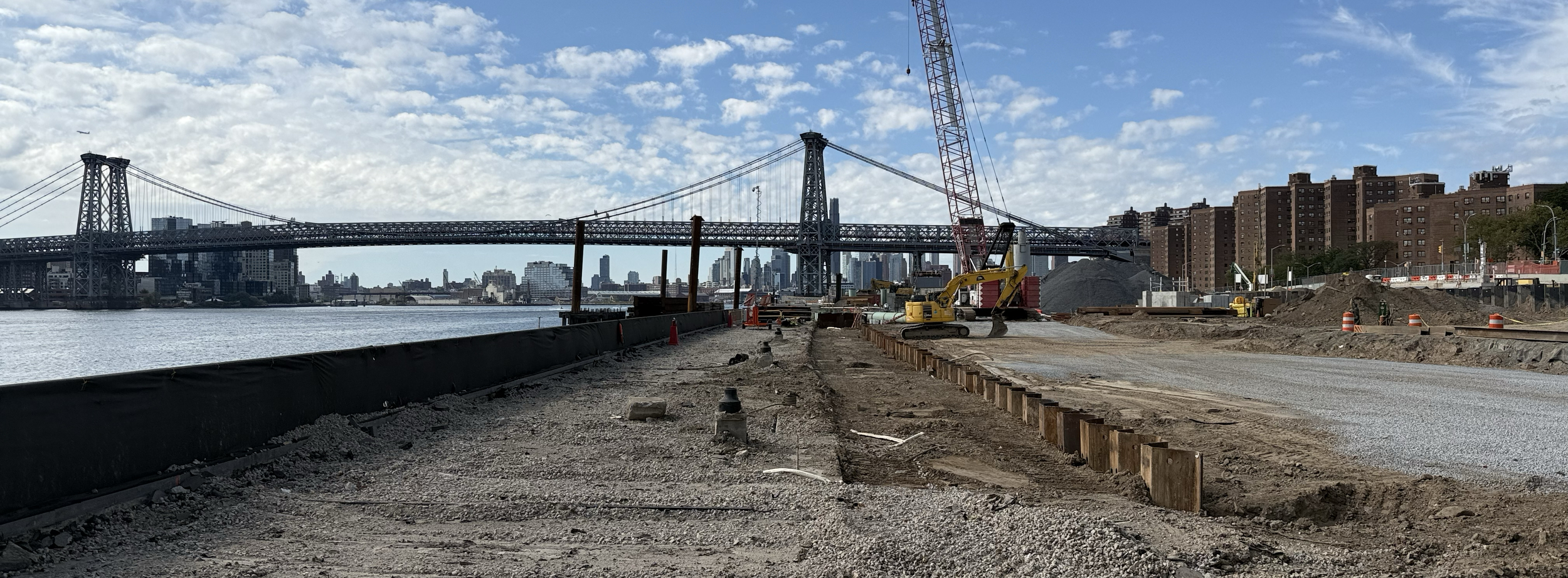
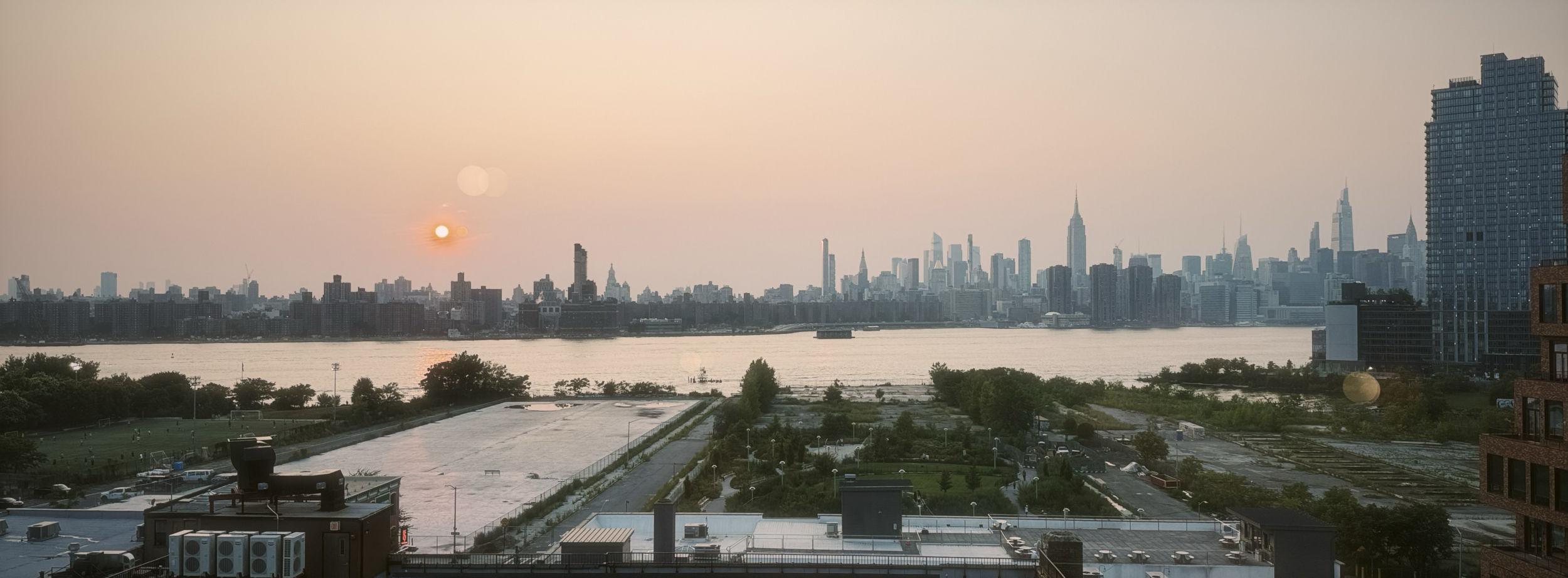
Old infrastructure still lines much of the East River in Brooklyn, underscoring the urgent need for green infrastructure as smoke-filled skies from wildfires in the West darken the skyline on hot, humid days with sunsets over the river. With temperatures projected to continue rising in the coming decade, the implementation of green spaces alongside updated flood defenses is critical—not only to reduce urban heat and improve air quality, but also to protect vulnerable populations, especially the elderly, who suffer thousands of heat-related deaths annually nationwide as heatwaves become more frequent and intense.


All content © Jake Price 2025