Author: admin
-
LA Migration
Louisiana Shrimpers
Fight to Save Their Industry
Cheap imported shrimp, environmental degradation, and rising fuel costs are
collapsing the seafood economy in the Mississippi Delta.Locals say government intervention and consumer support could change that.
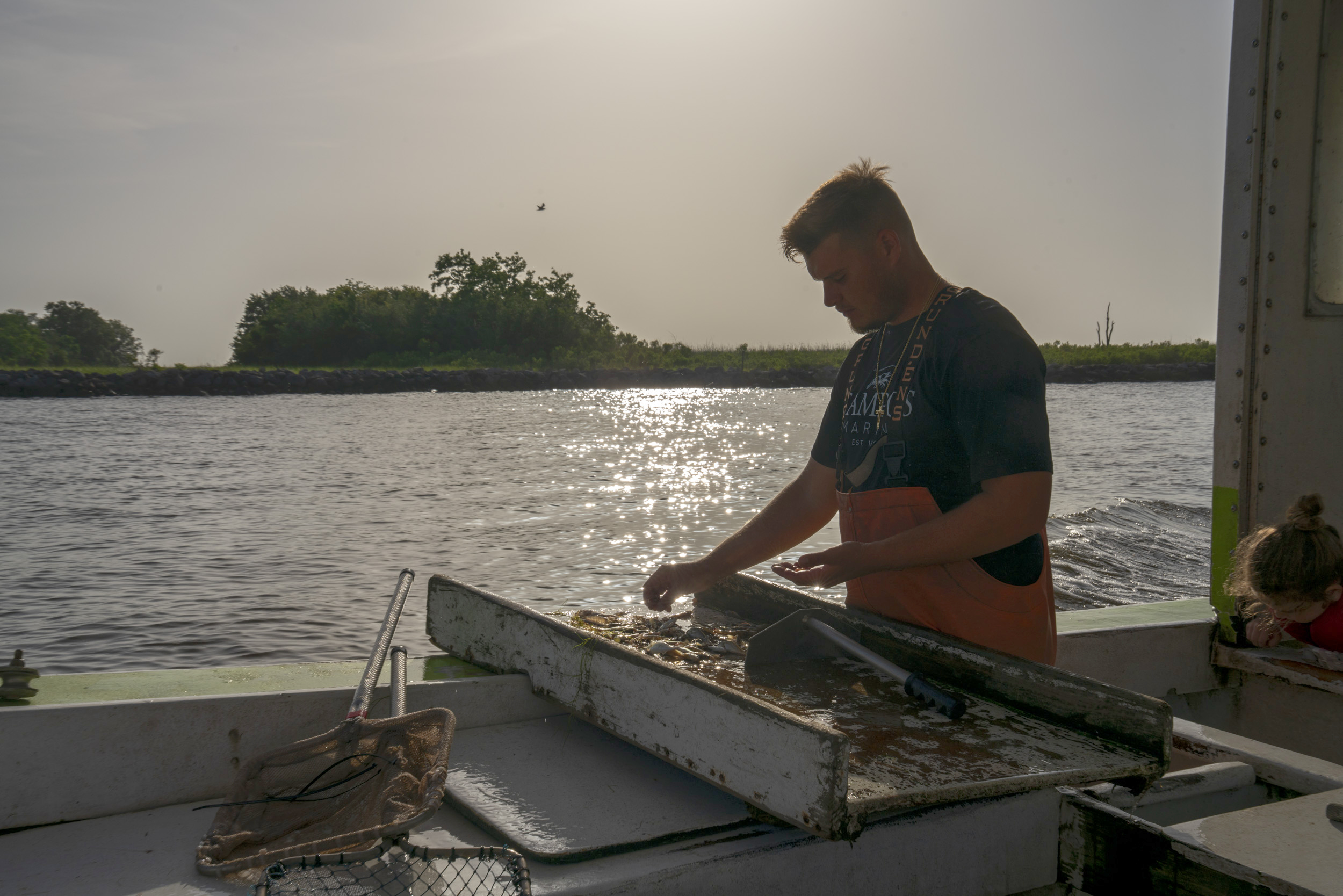
By Jake Price and Olivia ShaffettAlong the Gulf Coast of Louisiana, where the mighty Mississippi flows into the ocean and seeps into mile after mile of marshy delta, the waterways teem with shrimp, crabs, oysters and finfish. This area, wryly dubbed “the end of the world” by locals, has depended on the seafood industry, both culturally and economically, since the late 1800s. Shrimping is particularly important; 25 percent of all shrimp consumed in the U.S. comes from Louisiana.
But for 20 years, that industry has been in decline. Shrimpers along the Gulf Coast have struggled to compete with cheaper imported shrimp, endured environmental devastation—particularly the aftermath of the 2010 BP Deepwater Horizon oil spill, which flooded the Gulf with toxins and decimated marine life populations—and dealt with rising fuel costs, among other challenges.
In the 1980s, shrimpers could sell a pound of shrimp for about $4.50 (adjusted for inflation). In recent years, they have been lucky to get $1.50.
Rocky Ditcharo, a seafood wholesaler and the owner of Ditcharo D Jr. Seafoods in Buras, Louisiana, worries for the industry’s future if domestic shrimp prices continue to decline. “If we can’t cap imports, if there is no solution,” he says, “then this industry dies in 20 years.”
Along the Gulf Coast of Louisiana, where the mighty Mississippi flows into the ocean and seeps into mile after mile of marshy delta, the waterways teem with shrimp, crabs, oysters and finfish. This area, wryly dubbed “the end of the world” by locals, has depended on the seafood industry, both culturally and economically, since the late 1800s. Shrimping is particularly important; 25 percent of all shrimp consumed in the U.S. comes from Louisiana.
But for 20 years, that industry has been in decline. Shrimpers along the Gulf Coast have struggled to compete with cheaper imported shrimp, endured environmental devastation—particularly the aftermath of the 2010 BP Deepwater Horizon oil spill, which flooded the Gulf with toxins and decimated marine life populations—and dealt with rising fuel costs, among other challenges.
In the 1980s, shrimpers could sell a pound of shrimp for about $4.50 (adjusted for inflation). In recent years, they have been lucky to get $1.50.
Rocky Ditcharo, a seafood wholesaler and the owner of Ditcharo D Jr. Seafoods in Buras, Louisiana, worries for the industry’s future if domestic shrimp prices continue to decline. “If we can’t cap imports, if there is no solution,” he says, “then this industry dies in 20 years.”On a sweltering summer day, while shrimp boats idle in his docks, Ditcharo stands inside one of his freezer rooms, where a massive machine spits out ice chips for packing shrimp. As demand for domestic shrimp has fallen, his second freezer room has gone unused. Over the past two years, Ditcharo has spent $170,000 to upgrade and maintain these rooms, putting even more strain on his already stressed finances.
Ditcharo, along with the Louisiana Shrimping Association, believes some form of governmental intervention—whether quotas, import caps, or higher tariffs—is needed to curtail the high volume of imported shrimp.
Through the farm bill, farmers and ranchers receive financial assistance in the form of crop insurance, subsidy payments, and conservation programs. But shrimpers and other seafood producers do not receive similar relief. “If [the government] subsidizes [shrimping] . . . It might bring in younger people,” Ditcharo says. “It’s a lot of money to go out and buy a boat and all the equipment on your own.”
Without help, Ditcharo fears the industry will collapse. “The small boats will go first, then the larger vessels. Then, a few smaller wholesalers and retailers. I’ll hold off as long as I can. But eventually, I’ll have to shut down, too.”George Barisich is the kind of person you hear before you see. He can tell stories for hours, regaling you with tales of growing up catching oysters like his Croatian ancestors did, and of facing one catastrophe after the next, like the fire that took the Peruga, his beloved shrimp boat, in 2020.
A fourth-generation fisherman and the president of the United Commercial Fishermen’s Association, Barisich started working the waters with his father when he was just 10 years old. Life was hard, but it had its freedoms. When the fishing was good, the school year ended early, and Barisich would eagerly join his father aboard the FJG, named for Barisich and his siblings (Frances, Joseph, and George). “The boat is the same age as me. My dad bought it for shrimping the same year I was born.” Out on the water, he accumulated a lifetime of knowledge that was hard-earned, deeply rooted, and irreplaceable.
That knowledge has allowed Barisich to be both a guardian and a leader in his community, a source of wisdom for fellow shrimpers and fishers in times of crisis. Whether it was fighting BP for reparations after the 2010 oil spill or testifying for capped imports before Congress, Barisich has championed the interests of Louisiana’s seafood industry for more than three decades. “We need more gladiators out there,” Barisich says. “We need more people in the industry speaking out for us.”Barisich and his fellow seafood producers fought the state of Louisiana on a controversial, long-held plan to build a new freshwater diversion in Barataria Basin called the Mid-Barataria Sediment Diversion (MBSD). The state intended for the MBSD to rebuild rapidly disappearing land over the course of 50 years by flooding the basin with fresh water and sediment from the Mississippi River. Ecologists supported this plan as a way to restore wetlands vital to migrating birds and many other species, and to mitigating the impact of storms.
Opponents to the MBSD argued the diversion would force seafood producers out of their livelihoods, pointing to an environmental impact report from the U.S. Army Corps of Engineers that projected “major, adverse impacts” on oyster and brown shrimp populations. In July, the state terminated the diversion, with plans to explore reinstating another, smaller diversion project in Myrtle Grove.
Even though the Barataria diversion has been canceled, Barisich shares Ditcharo’s fear of a dying industry if the price of domestic shrimp does not provide a living wage. “I’m the last Barisich who will shrimp in these waters,” he says. “Our universe is so small now, it scares me. The average captain’s age is 54. That’s not good.”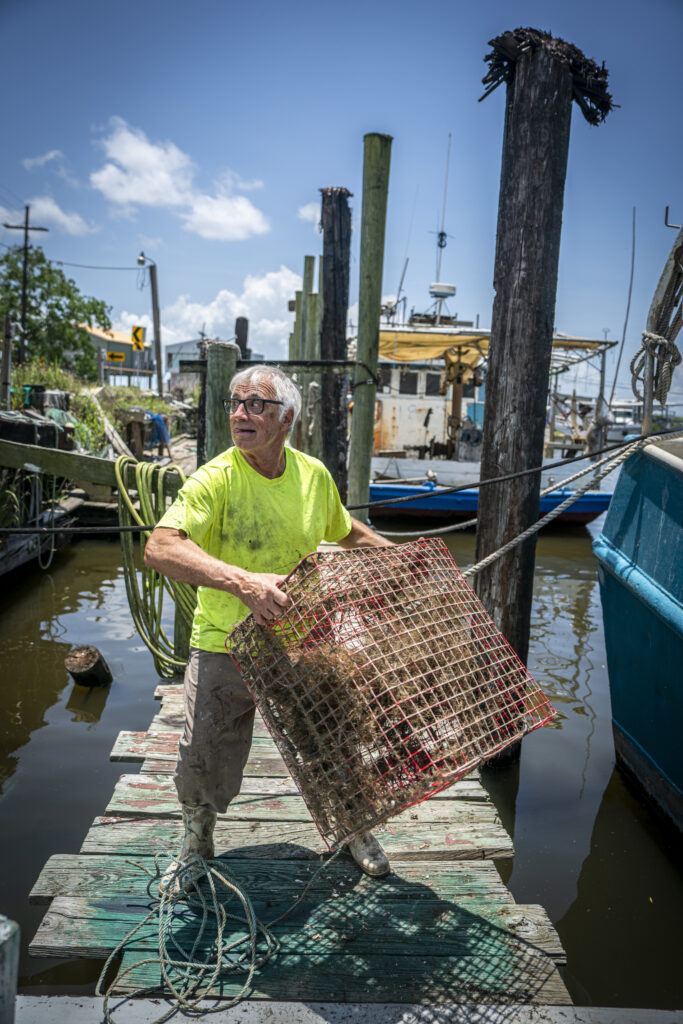
From Boat to Table
For commercial shrimping on the Gulf Coast to continue, the burden cannot fall solely on those on the water. Community leaders, government officials, and local consumers all have a part to play in keeping the industry alive. Few people seem to understand the responsibility of supporting Louisiana’s seafood producers more than chef Dana Honn.
“A lot of the problems that we’re seeing with our coastal communities right now stem from relationships that have been severed between the public and coastal communities over a period of 100 years,” Honn says. “Part of [our work] is making sure that there’s a connection between the chef and the producer and the consumer—that whole chain.”
Honn has worked to establish those connections by volunteering for Chefs on Boats, an immersive educational program that takes chefs and foodservice workers out on the Gulf to catch oysters, shrimp, and fish with local fishermen. “I’ve been lucky enough to see oyster shuckers out there seeing the process of catching the oysters for the first time,” says Honn. “It can be life-changing, because it infuses what they do with purpose and history.”
Honn argues that awareness of sourcing and consuming seafood from the Gulf needs to move beyond regional boundaries. “We know a 5 percent change in market share from farmed to domestic would have a massive effect throughout the Gulf South. That may not sound like a whole lot, but it would be a huge shift for the industry.”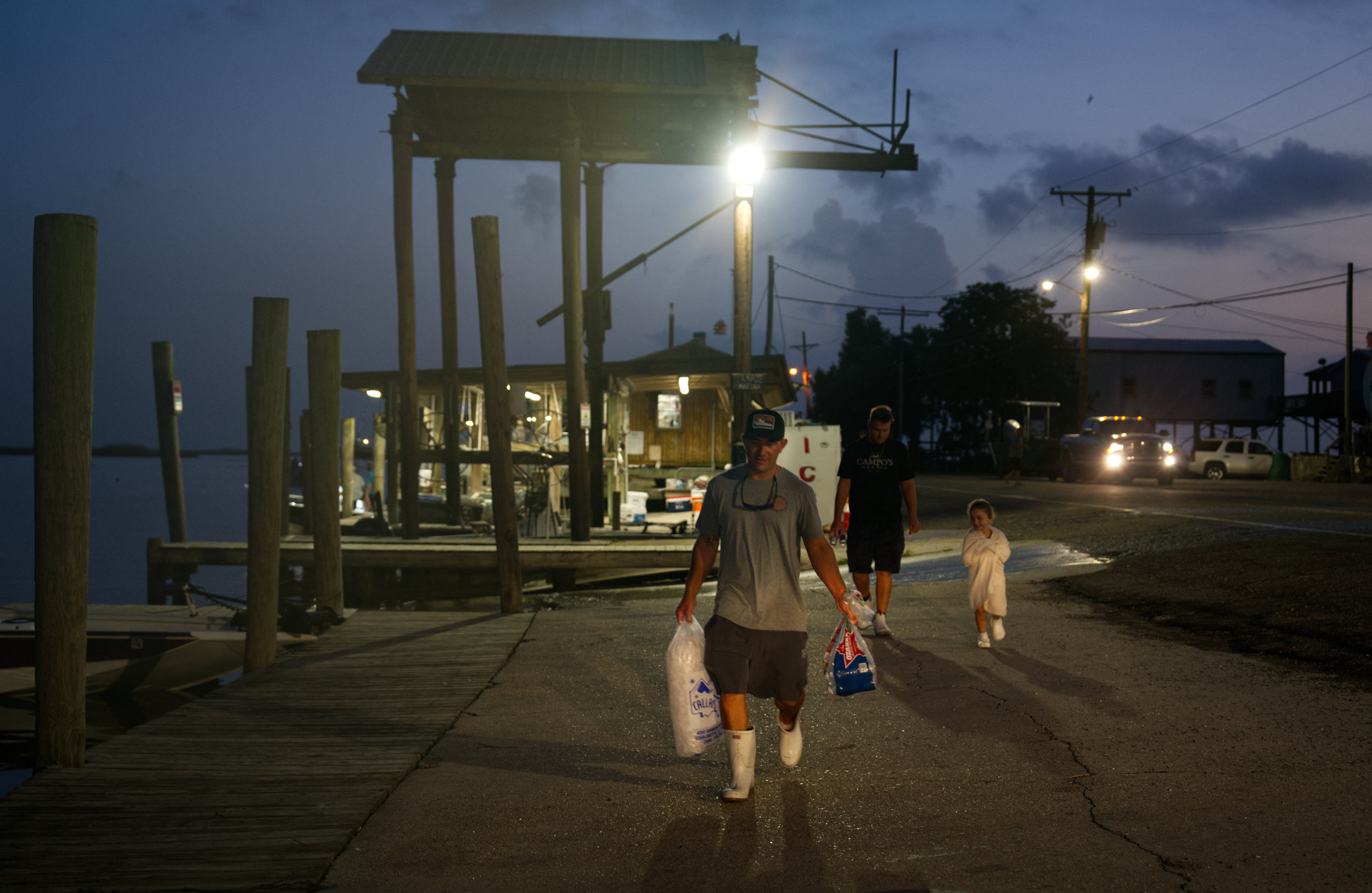
Zack Campo:
The Next GenerationShrimping on the Gulf Coast is a multi-generational industry. Now it’s experiencing a longevity crisis as older shrimpers, wearying of the many challenges they face, dissuade their children from joining the family business on the water.
Still, a few tenacious shrimpers are passing the nets on to the next generation.
Zack Campo is one of the youngest shrimpers operating in the area. A fifth-generation shrimper, Campo primarily catches bait shrimp for his family’s esteemed 122-year-old marina in Shell Beach, Campo’s Marina.And for shrimpers, the price of shrimp will help determine the industry’s future. Louisiana has just opened its in-shore white shrimp season as tariffs begin to take hold.
Right now, all eyes are on prices at the docks.***
Editor’s note: This article was updated on August 28, 2025, to include new information regarding radiation-tainted foreign shrimp. -
Shorelines Reimagined
Shorelines Reimagined
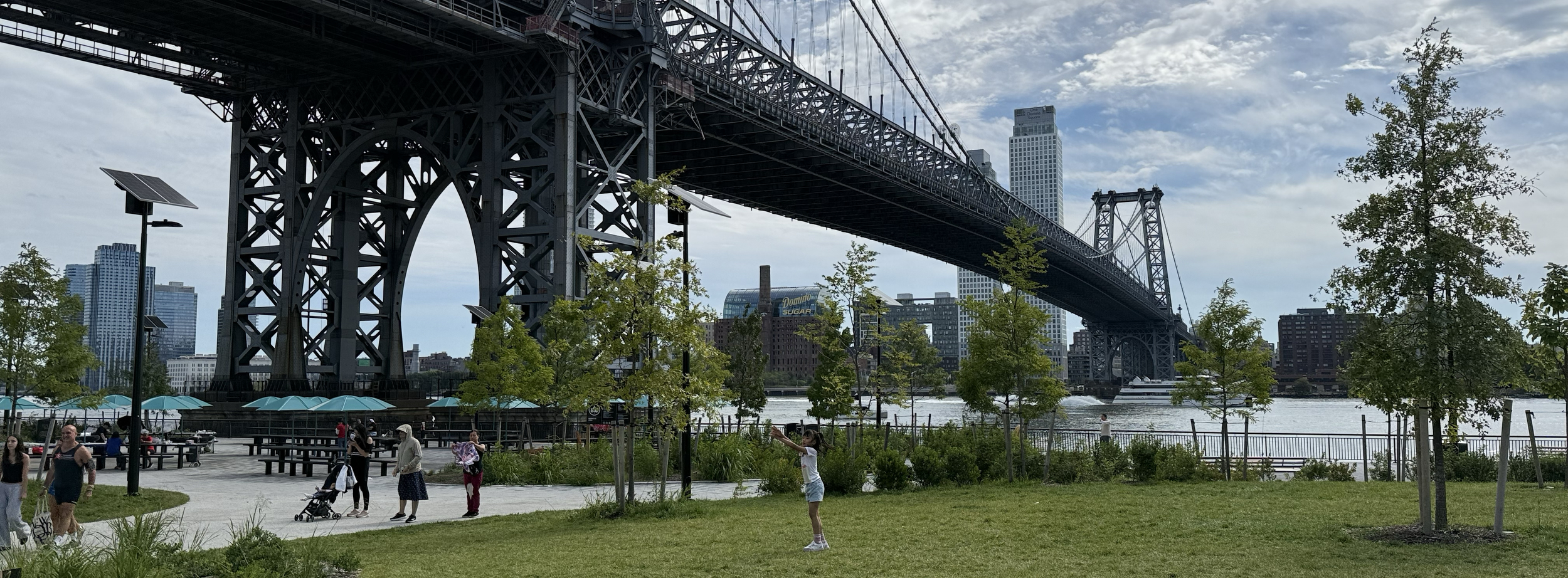
Hurricane Sandy revealed New York City’s profound vulnerability to coastal storms and flooding, prompting a decade-long mobilization of expansive resiliency programs. These initiatives have completely reimagined the city’s shores, combining sturdy engineered flood barriers with vibrant green public spaces that both protect neighborhoods and offer valuable recreational areas. The massive infrastructure projects have created thousands of jobs, drawing on materials supplied by states such as Pennsylvania, Ohio, Michigan, and Texas, whose manufacturing and transportation sectors have played key roles in producing steel, concrete, and specialized floodgates used in the construction. Locally, many New Yorkers have been employed throughout the building process, supporting the regional economy. Importantly, the integration of greenspaces into these protective designs provides critical relief during increasingly hot and humid summers, offering shade and cooling benefits that are especially vital for the health and comfort of children and the elderly, thereby enhancing the resilience and livability of New York City’s coastal communities for generations to come.
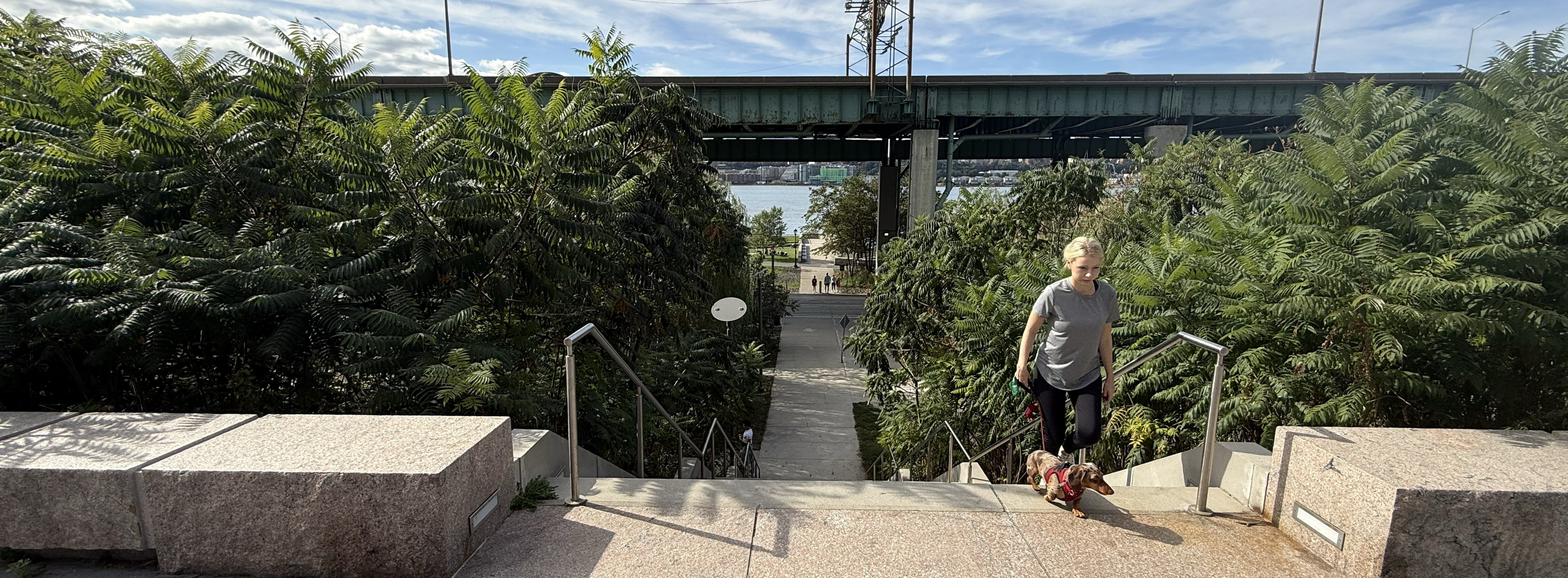
With old infrastructure of the West Side Highway looming over it, the Westside park has been raised approximately 30 feet above the Hudson River and features three lines of defense: the Westside Greenway closest to the water, separated by a recreational space, and finally protective berms that shield the structures behind them. 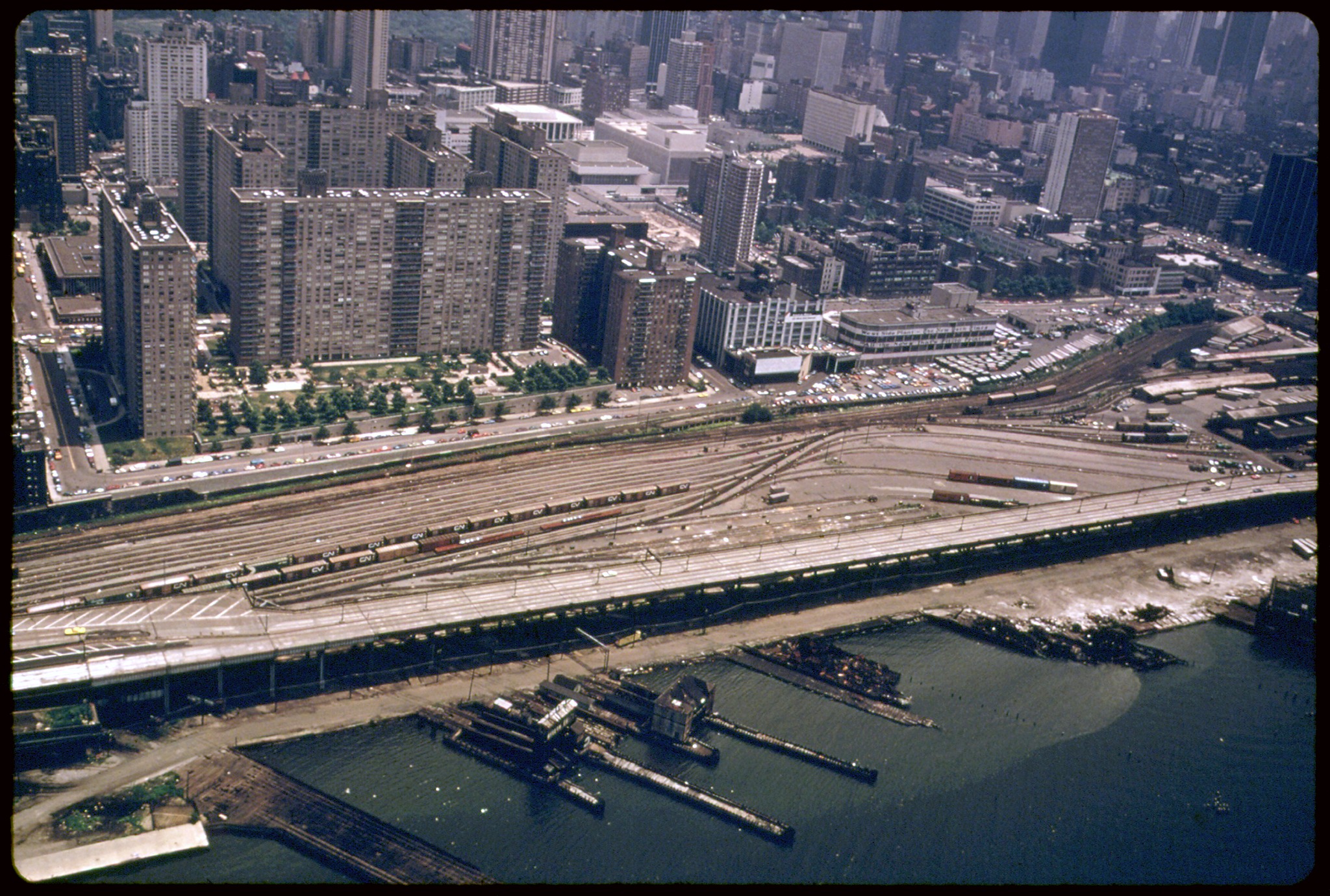
The 60th Street Rail Yard on Manhattan’s west side once served as a major freight hub, linking rail cars ferried across the Hudson from New Jersey to local tracks. Located between West 59th and 72nd streets, it featured six warehouse piers, labeled B through I, and three float bridges that enabled direct transfer of rail cars from barges to the yard. 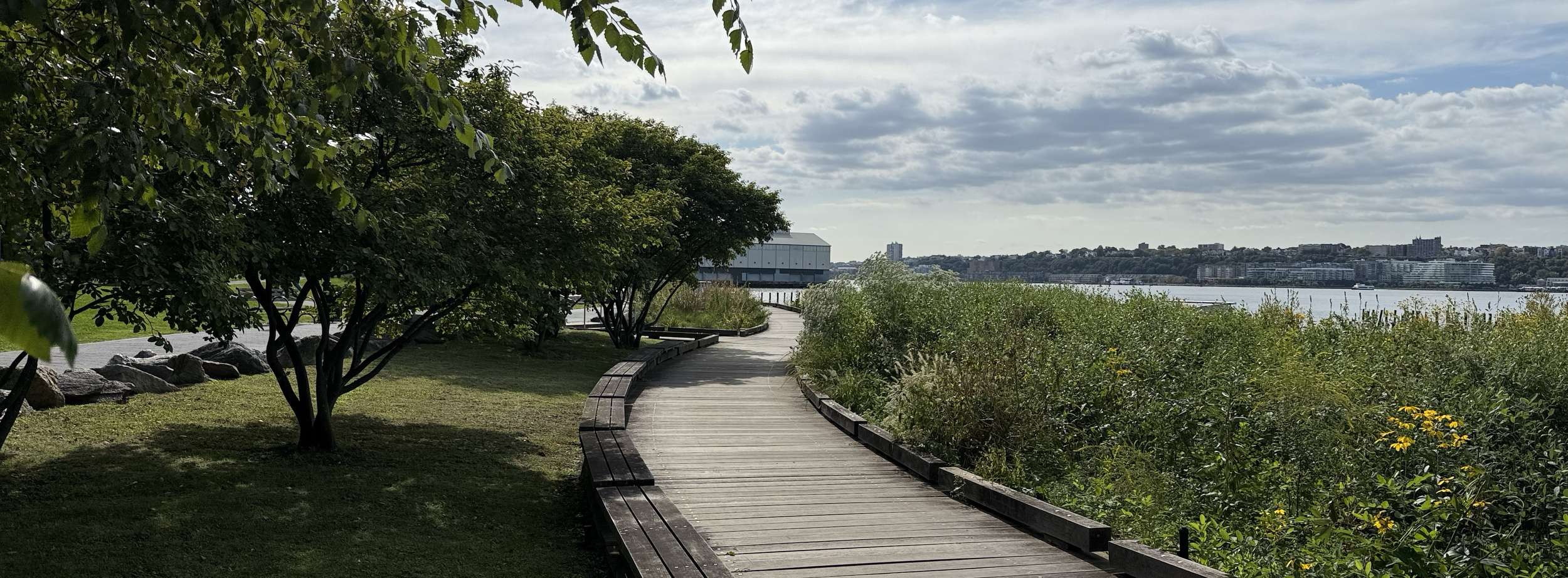
native plants support local biodiversity by providing habitat for wildlife, increase the resilience of shorelines against climate change impacts, enhance water quality, and improve urban aesthetics and community engagement with natural green spaces. 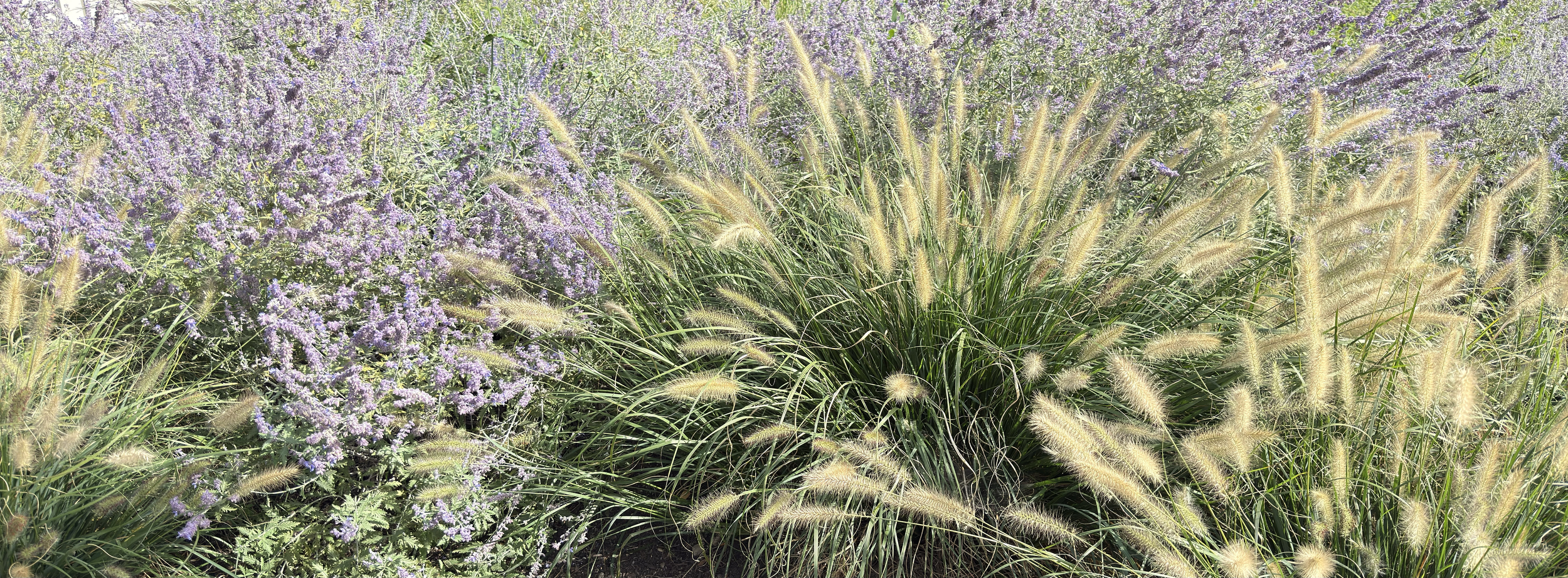
Using native species is beneficial because they are adapted to local environments, require less maintenance, and contribute to long-term ecological and infrastructural stability alongside engineered flood protection measures. 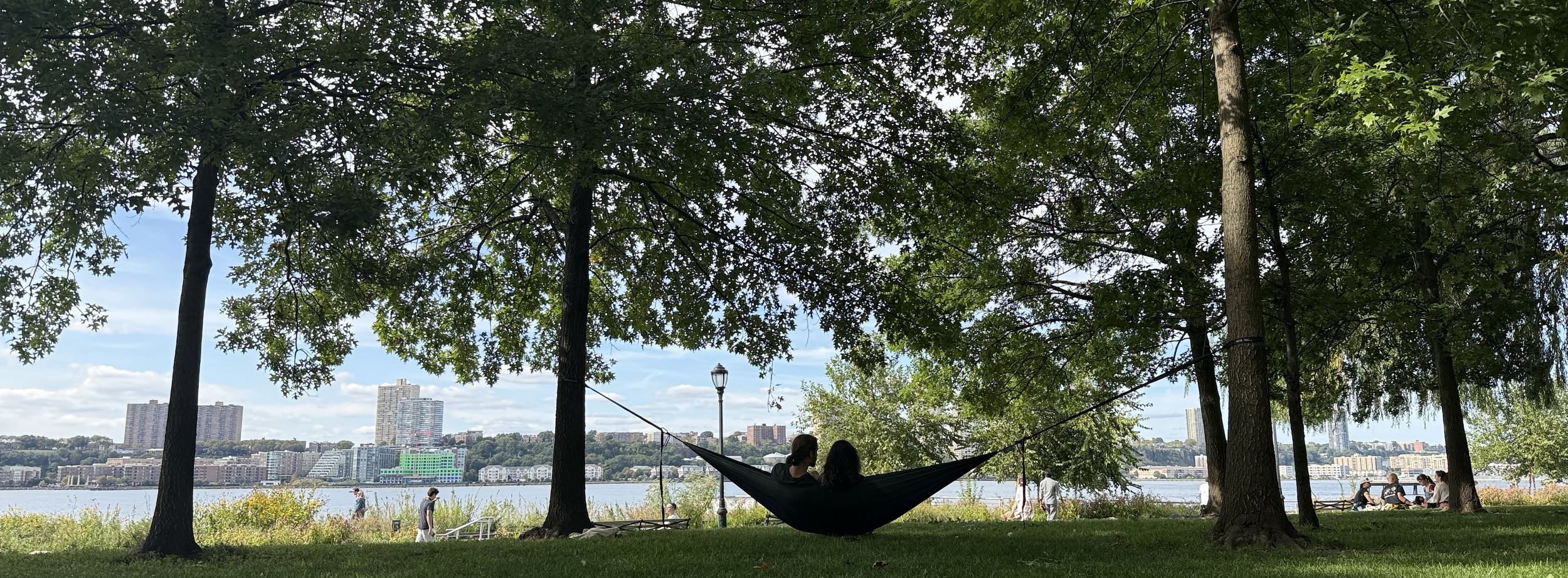
Native flora such as weeping willows and native plants are being planted along New York City’s waterfronts as part of shore protection efforts, where they play a critical role by stabilizing soil with their extensive root systems to reduce erosion, managing stormwater through improved infiltration and filtration, and demonstrating salt and flood tolerance suited to coastal conditions. 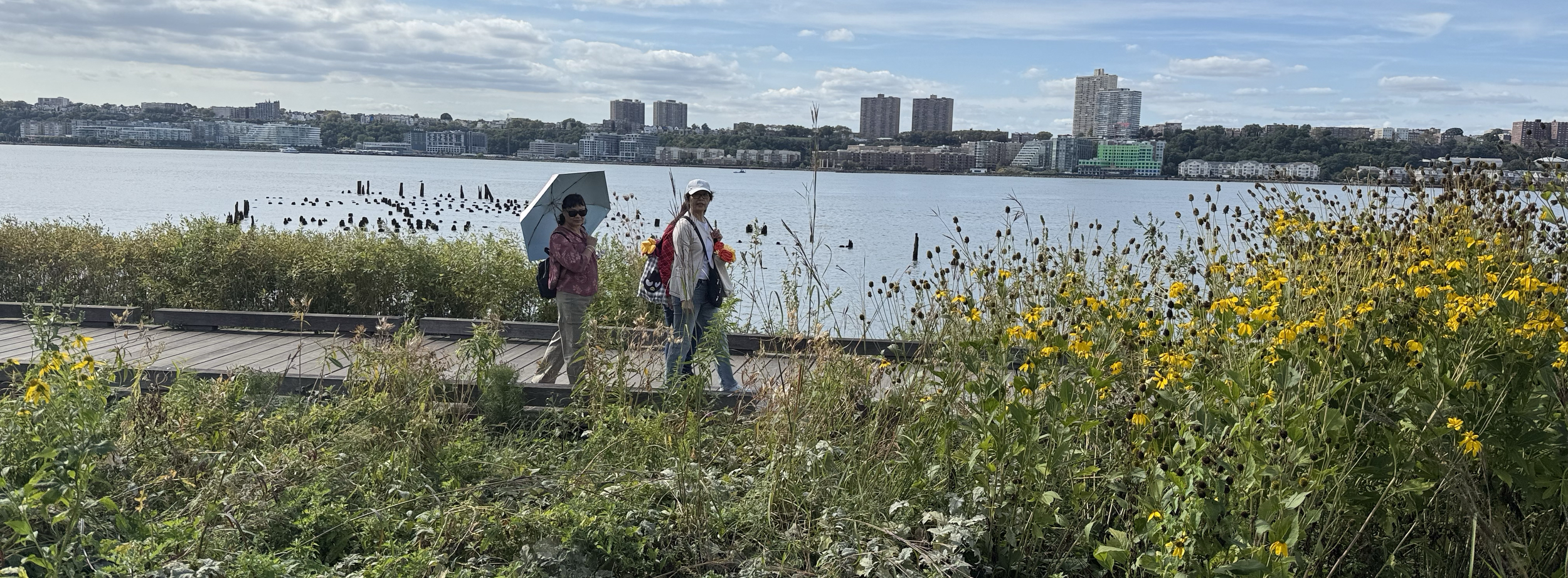
Native flora planted at 69th Street on the West Side helps protect the land behind the shore by stabilizing the soil with deep root systems that reduce erosion, absorbing and filtering stormwater to prevent flooding, and tolerating salt and periodic flooding, which strengthens the resilience of the shoreline against storms and sea level rise 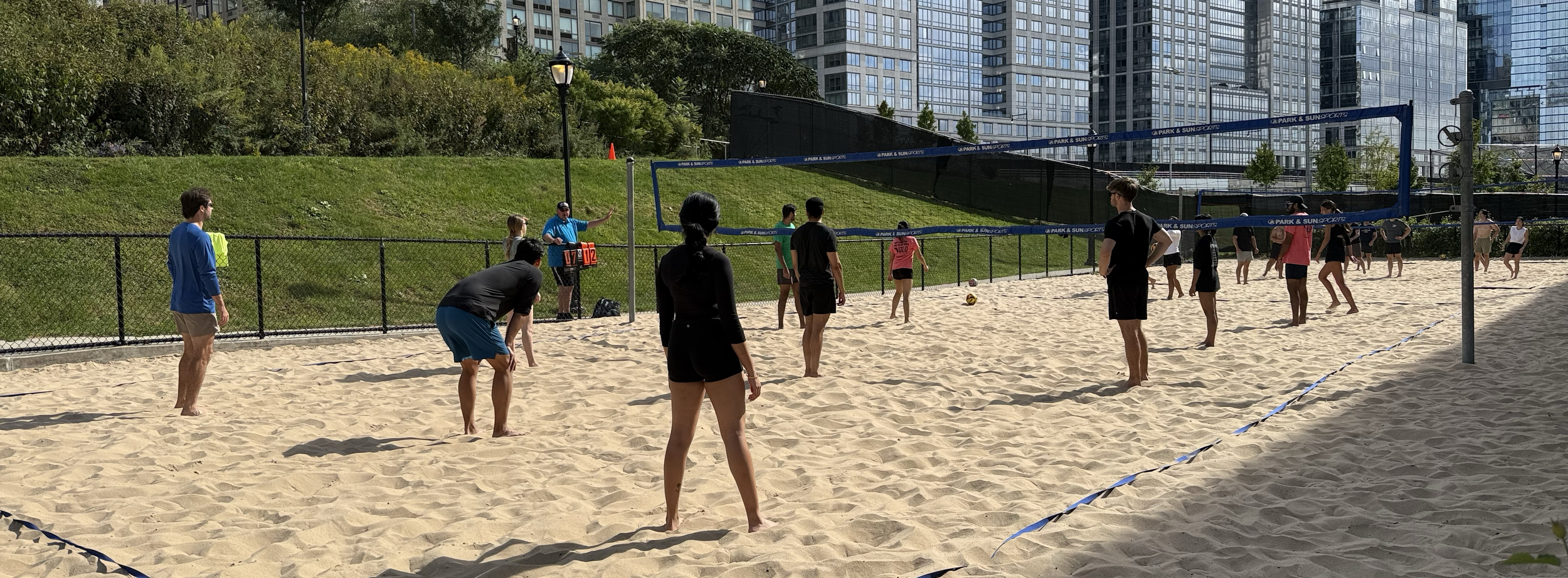
Behind the first lines of defence along the shore are recreatinoal areas. The recreation areas are both for enjoyment and they are also functional: in their width and with their soil, sand and grass they serve as a second line of defence. 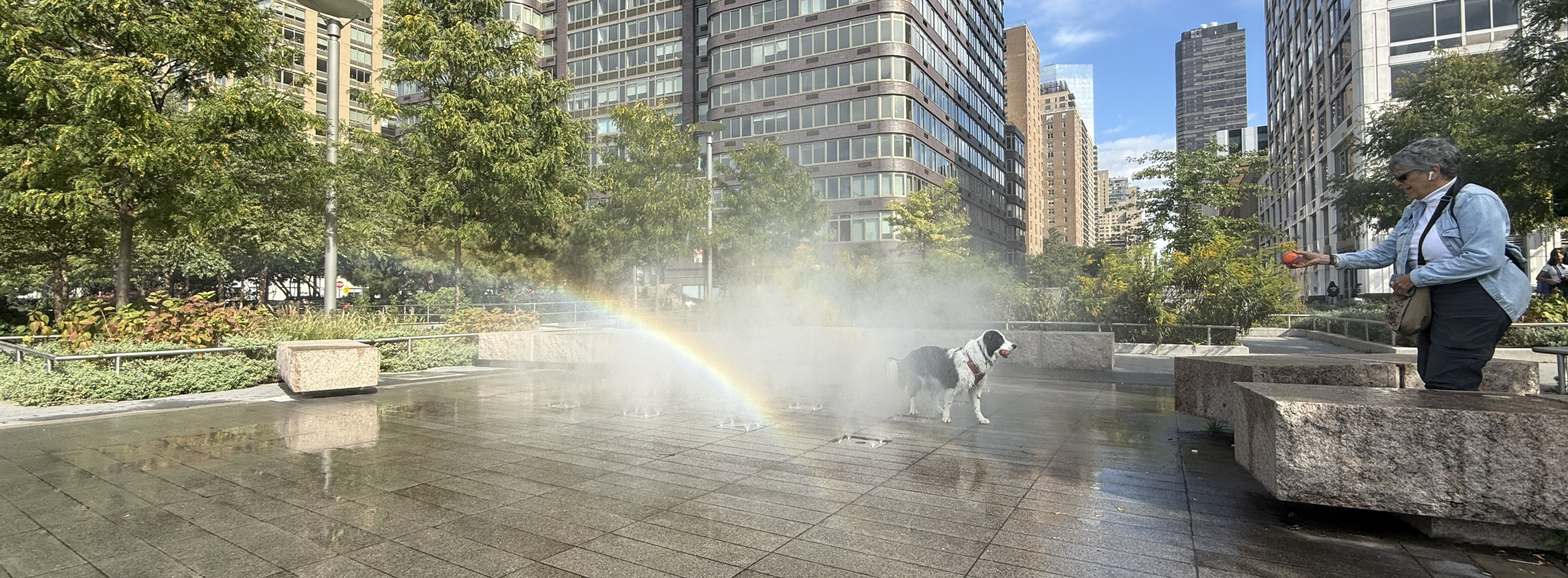
The third line of defence is above a TK foot berm. It hosts sprinklers for cooling down and also breakwaters for further protection. 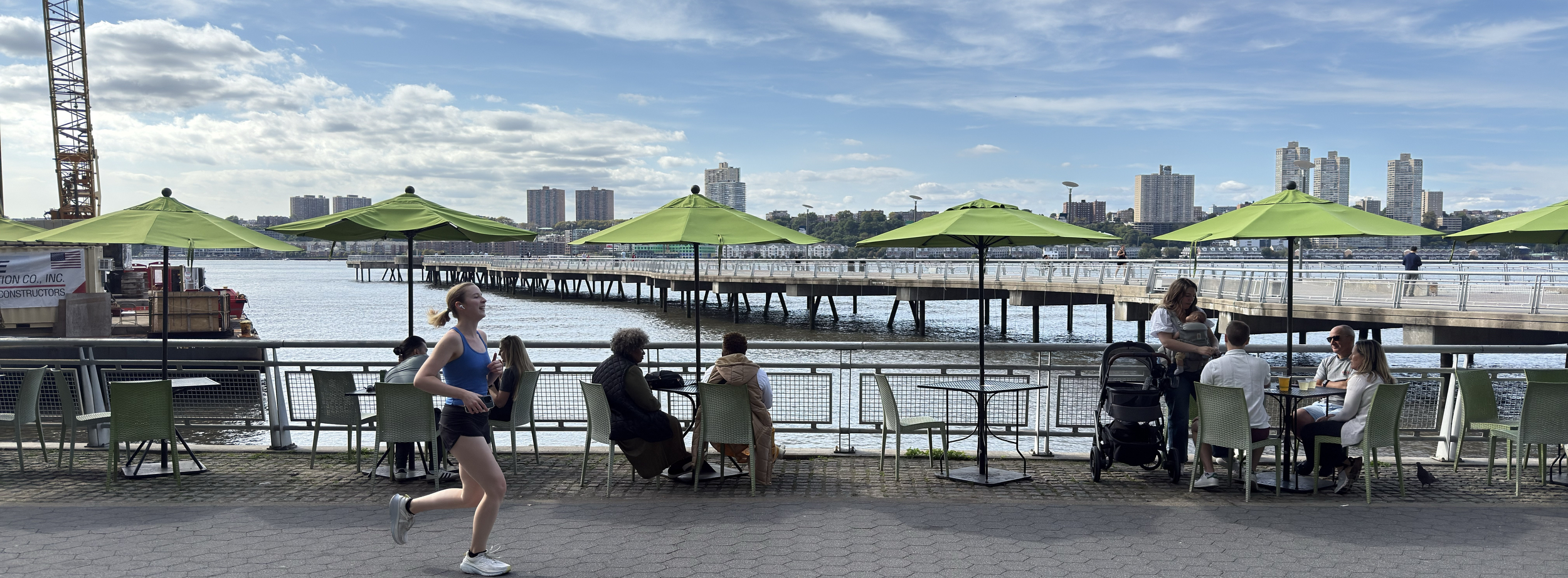
Resiliency projects that include restaurants and bars have generated substantial economic income by attracting visitors and boosting local commerce, integrating vibrant social spaces that support hospitality jobs and increase neighborhood property values while enhancing waterfront livability. 
The benefits from resiliency projects are not limited to New York; states such as Pennsylvania, Ohio, and Michigan have supplied steel and concrete materials, Texas-based company FloodBreak has provided custom flood gates critical to coastal defense, while companies like Skanska USA and IPC Resiliency Partners, based in New York, have been key contractors providing heavy civil construction, reinforced concrete, and steel infrastructure essential for Manhattan’s waterfront resiliency projects. 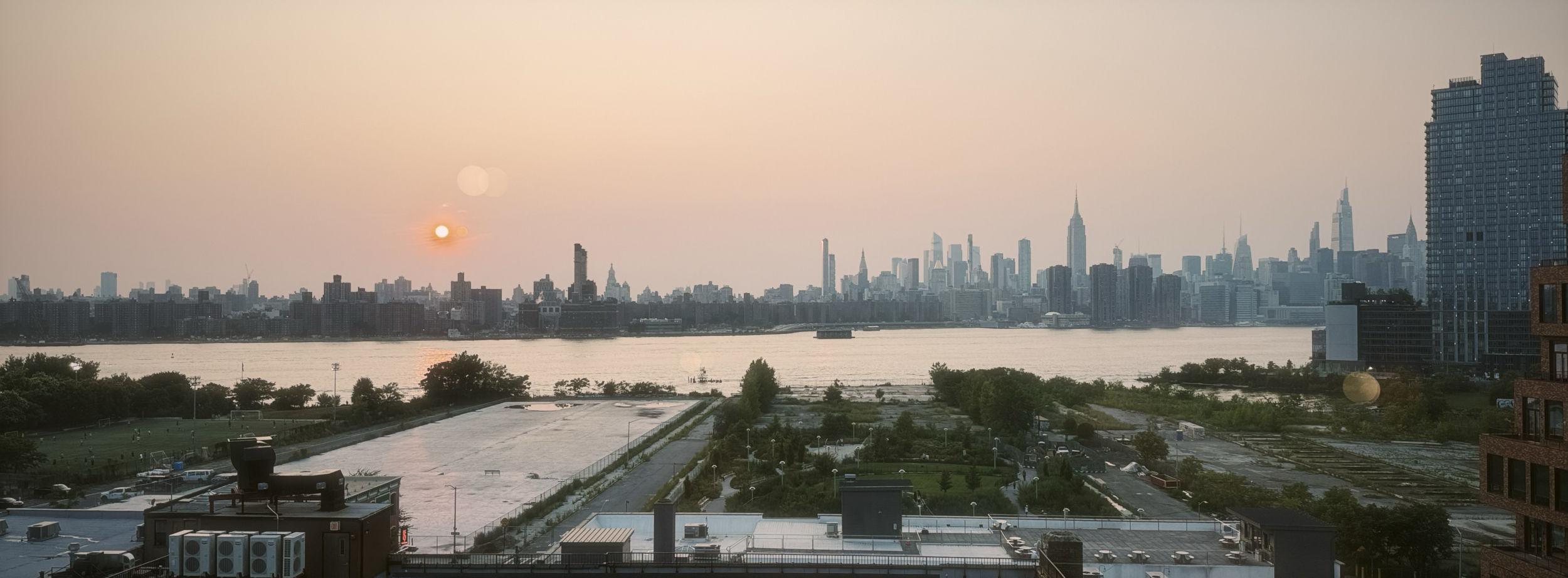
Old infrastructure still lines much of the East River in Brooklyn, underscoring the urgent need for green infrastructure as smoke-filled skies from wildfires in the West darken the skyline on hot, humid days with sunsets over the river. With temperatures projected to continue rising in the coming decade, the implementation of green spaces alongside updated flood defenses is critical—not only to reduce urban heat and improve air quality, but also to protect vulnerable populations, especially the elderly, who suffer thousands of heat-related deaths annually nationwide as heatwaves become more frequent and intense. -
NYRP Rough Visuals
NYRP Rough Visuals
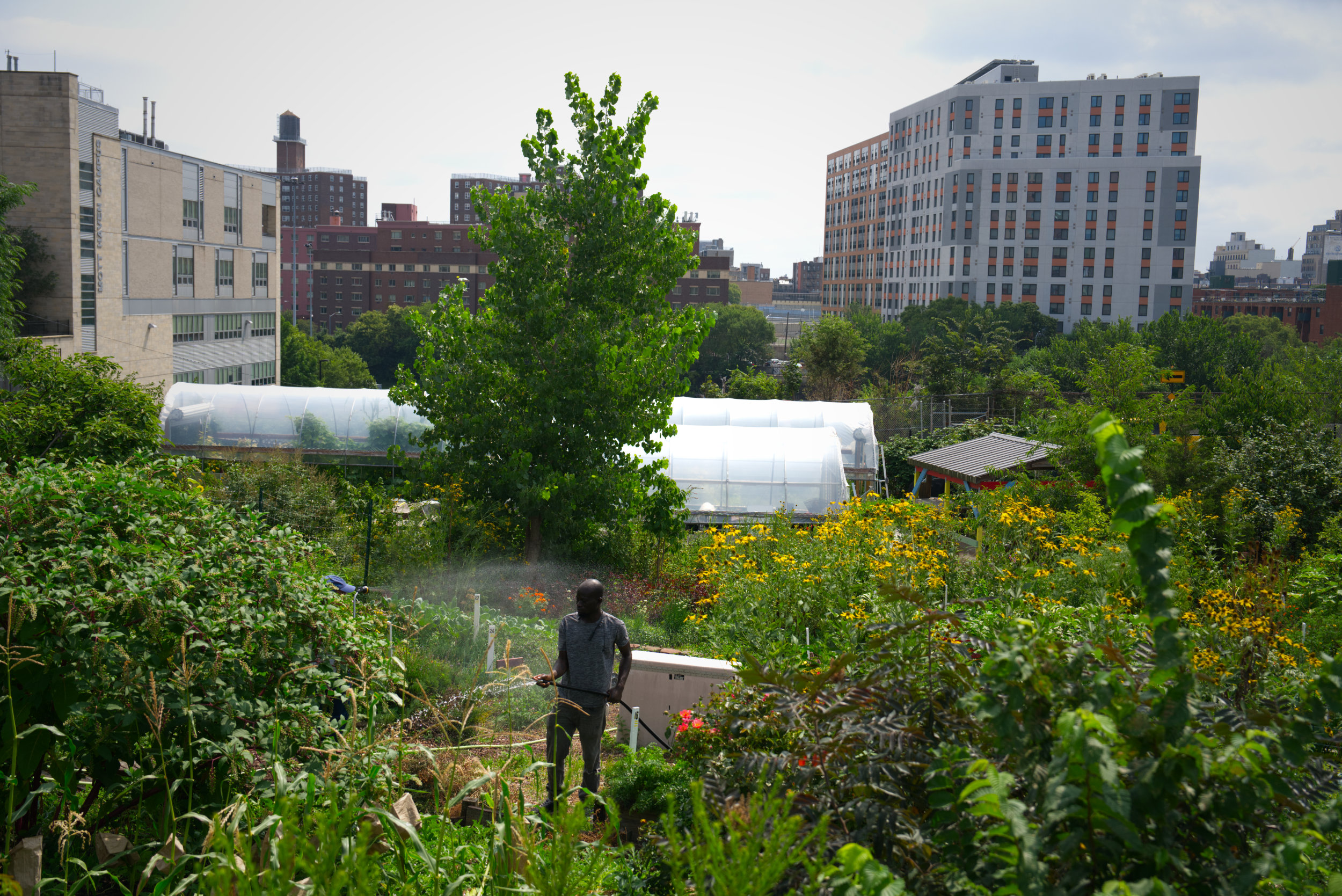
An asylee from Africa (he asked not to be identified, but gave permission for the photo) waters a crop in The New Roots Community Farm, 19365 square feet which offers critical services to refugees, asylees, and immigrant communities in addition to local South Bronx residents. The garden grows turmeric, moringa, and hibiscus among other culturally relevant crops. 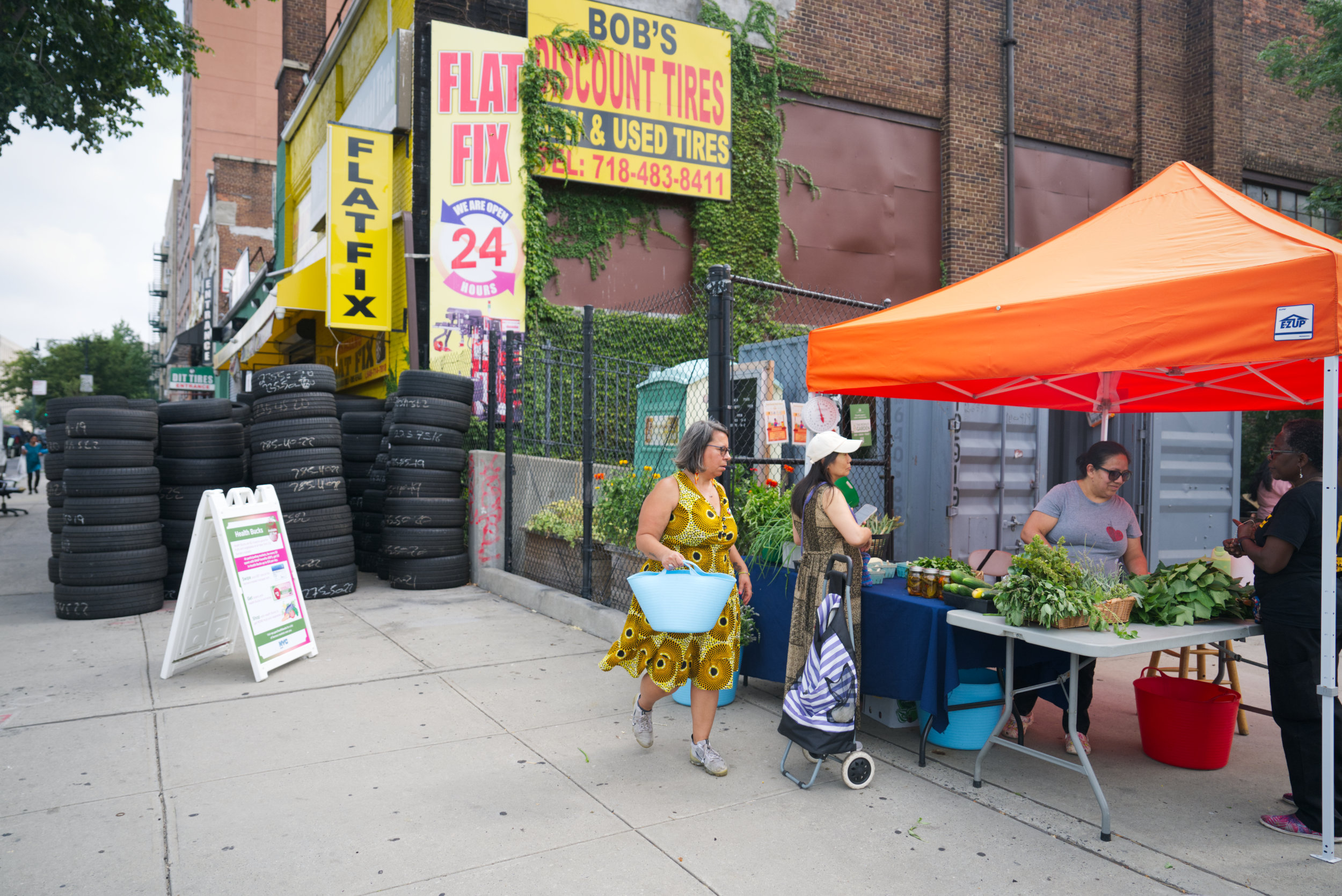
Surrounded by a dense urban expanse off of the Grand Concourse, The New Roots Community Farm offers critical services to refugees, asylees, and immigrant communities in addition to local South Bronx residents. The garden grows turmeric, moringa, and hibiscus among other culturally relevant crops which are distributed to the community on the weekends. 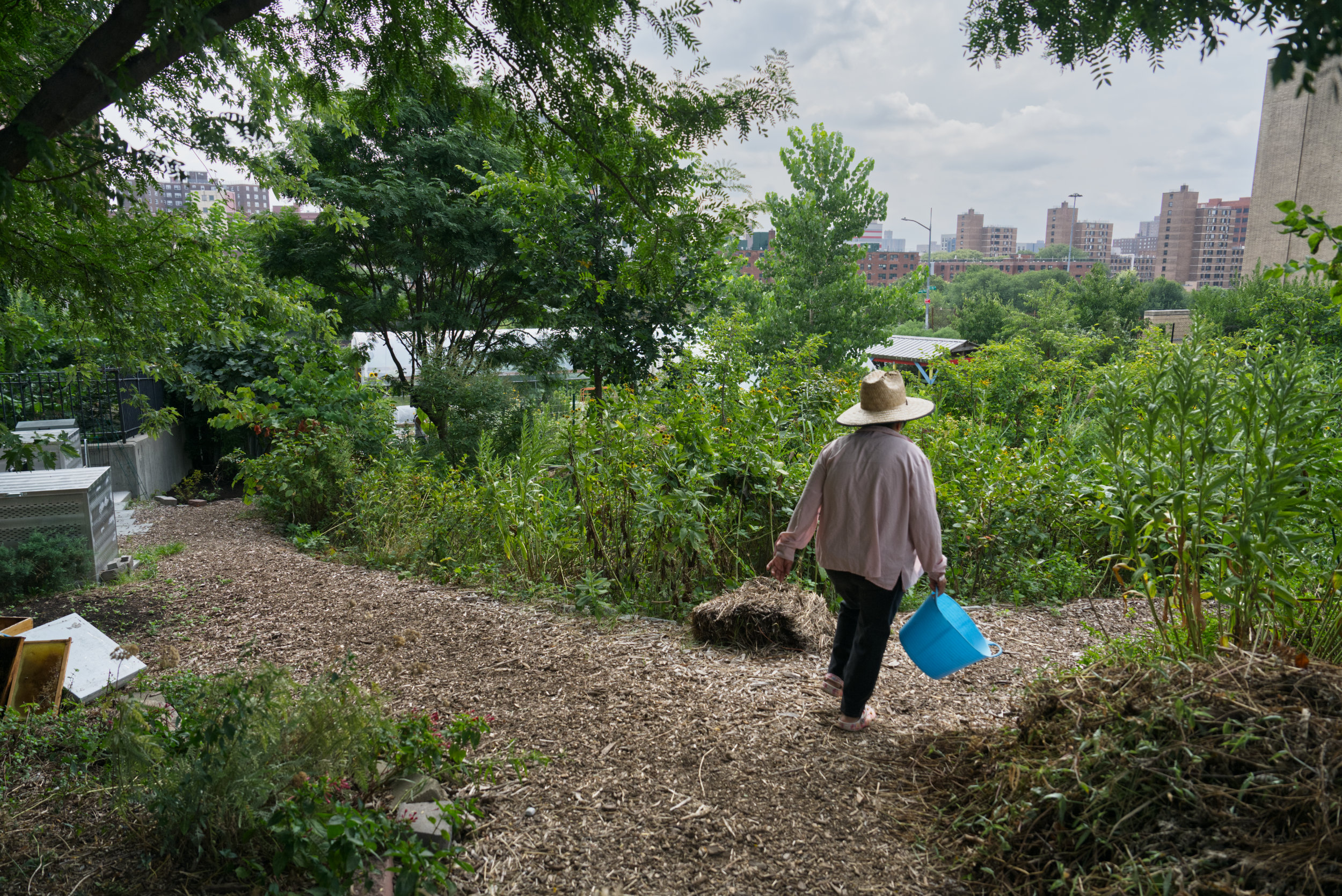
A volunteer walks down one of the paths in The New Roots Community Farm in the Bronx, located just off the Grand Concourse. This area is prone to flooding, and outside the garden, roads and sidewalks are often underwater for hours. Within the garden, the pathways slope to direct water downhill and divide it, allowing most water to be absorbed. As a result, the garden is usually dry within hours after a storm.
Surrounded by a dense urban expanse off of the Grand Concourse, The New Roots Community Farm offers critical services to refugees, asylees, and immigrant communities in addition to local South Bronx residents. The garden grows turmeric, moringa, and hibiscus among other culturally relevant crops.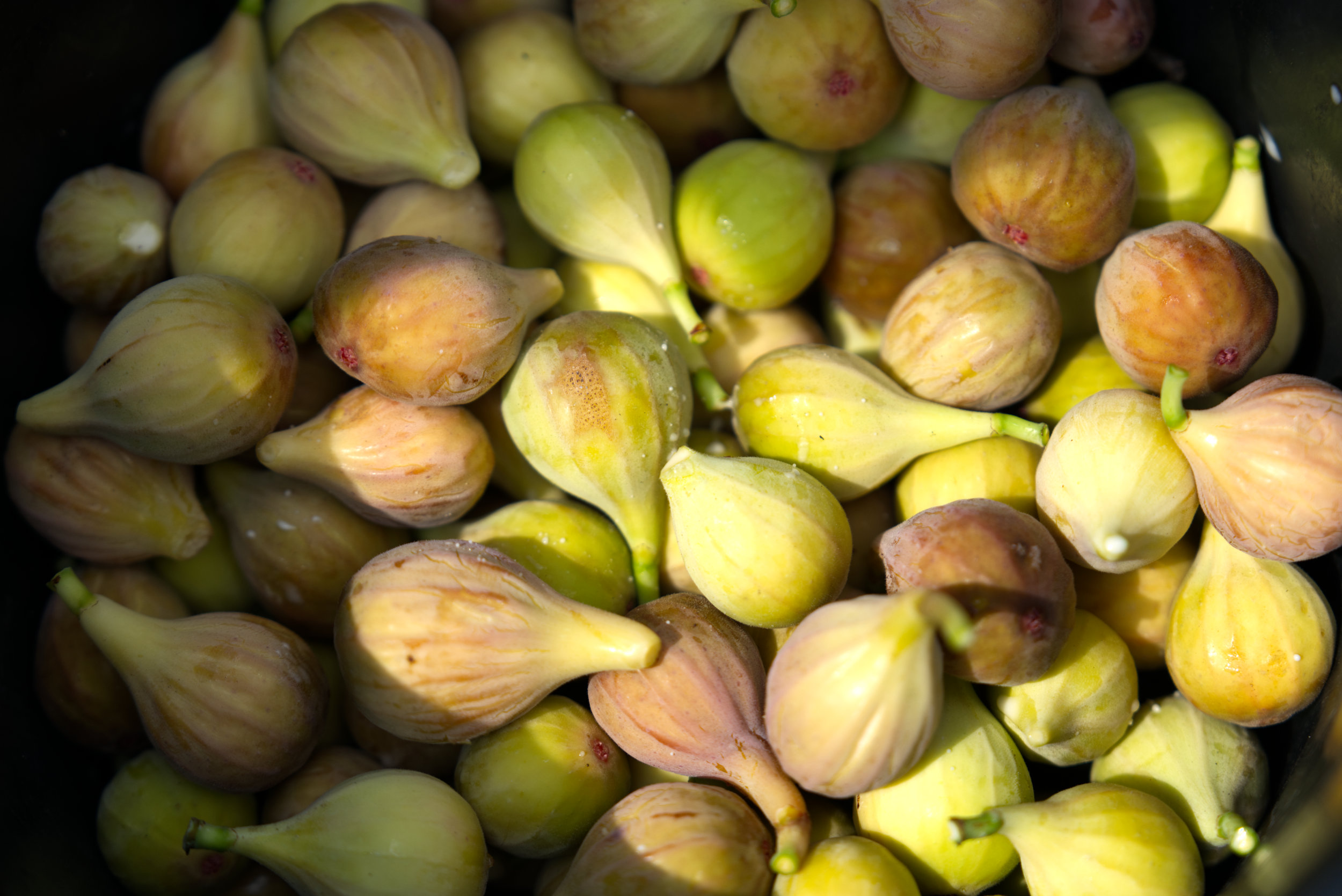
Figs collected by (name and location TK) in The New Roots Community Farm which offers critical services to refugees, asylees, and immigrant communities in addition to local South Bronx residents. The garden grows turmeric, moringa, and hibiscus among other culturally relevant crops. 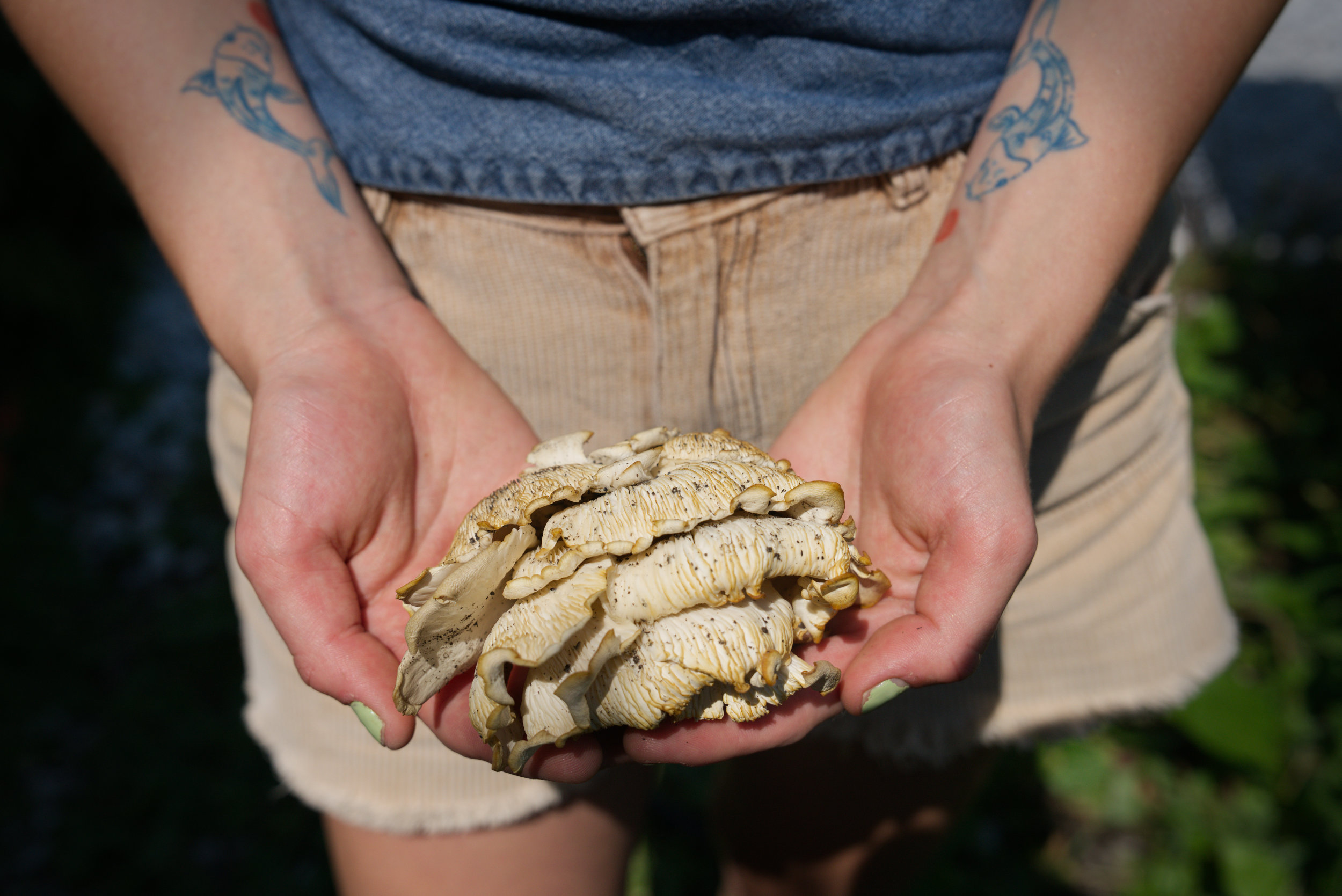
Mushrooms (type tk) collected in The New Roots Community Garden. Surrounded by a dense urban expanse off of the Grand Concourse, The New Roots Community Farm offers critical services to refugees, asylees, and immigrant communities in addition to local South Bronx residents. The garden grows turmeric, moringa, and hibiscus among other culturally relevant crops. 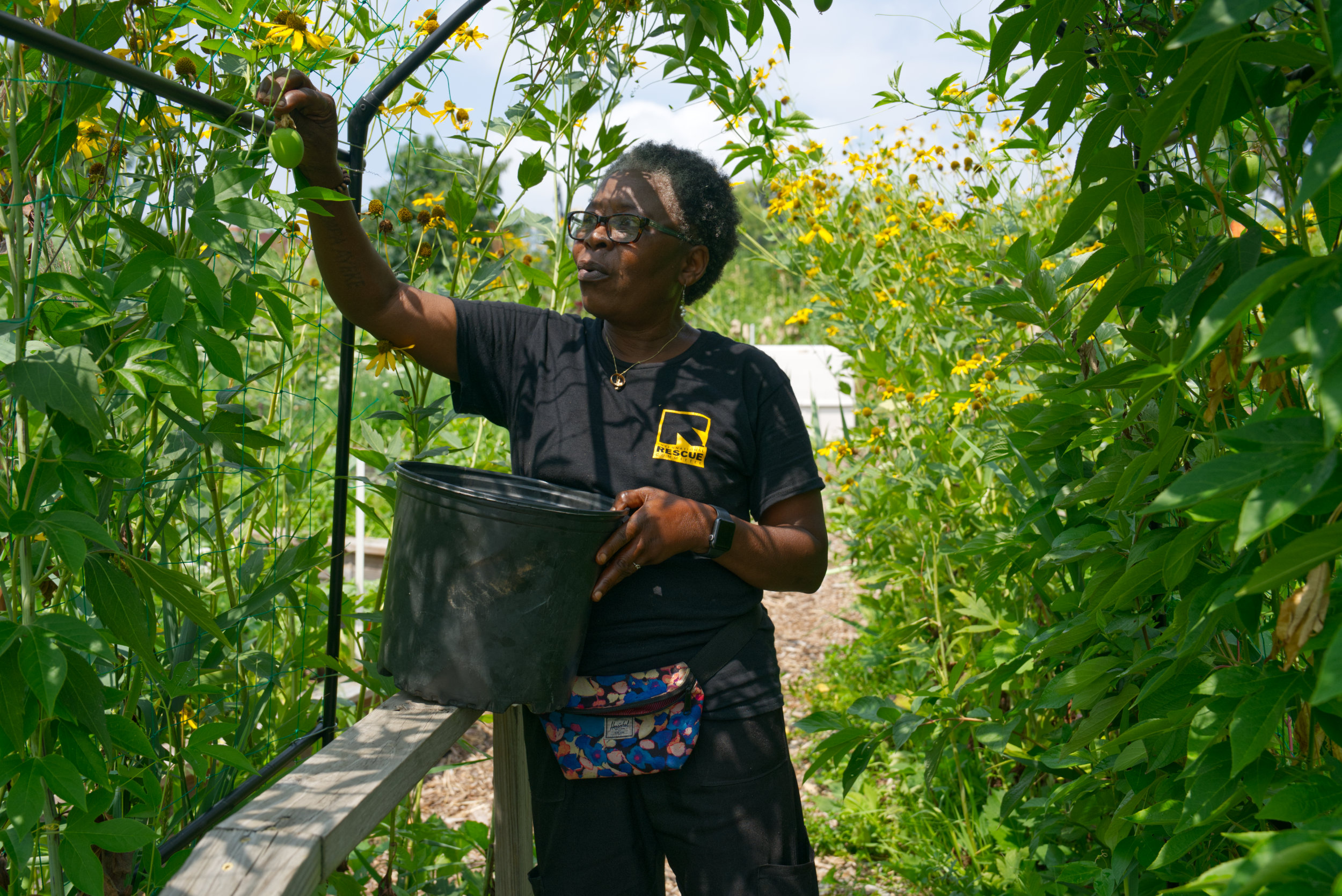
Name TK from TK collects TK fruits in the garden. Surrounded by a dense urban expanse off of the Grand Concourse, The New Roots Community Farm offers critical services to refugees, asylees, and immigrant communities in addition to local South Bronx residents. The garden grows turmeric, moringa, and hibiscus among other culturally relevant crops. 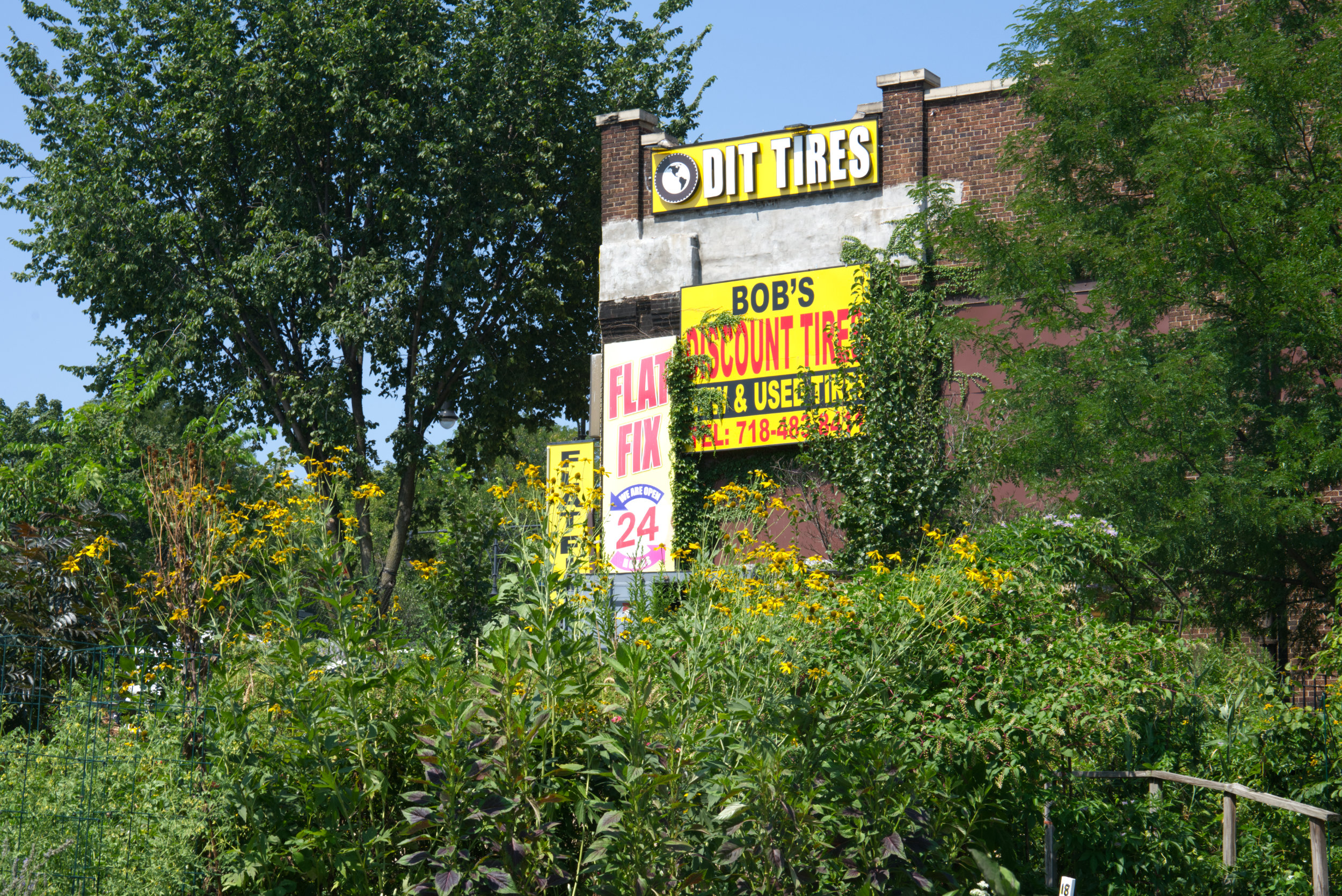
Surrounded by a dense urban expanse off of the Grand Concourse, The New Roots Community Farm offers critical services to refugees, asylees, and immigrant communities in addition to local South Bronx residents. The garden grows turmeric, moringa, and hibiscus among other culturally relevant crops. 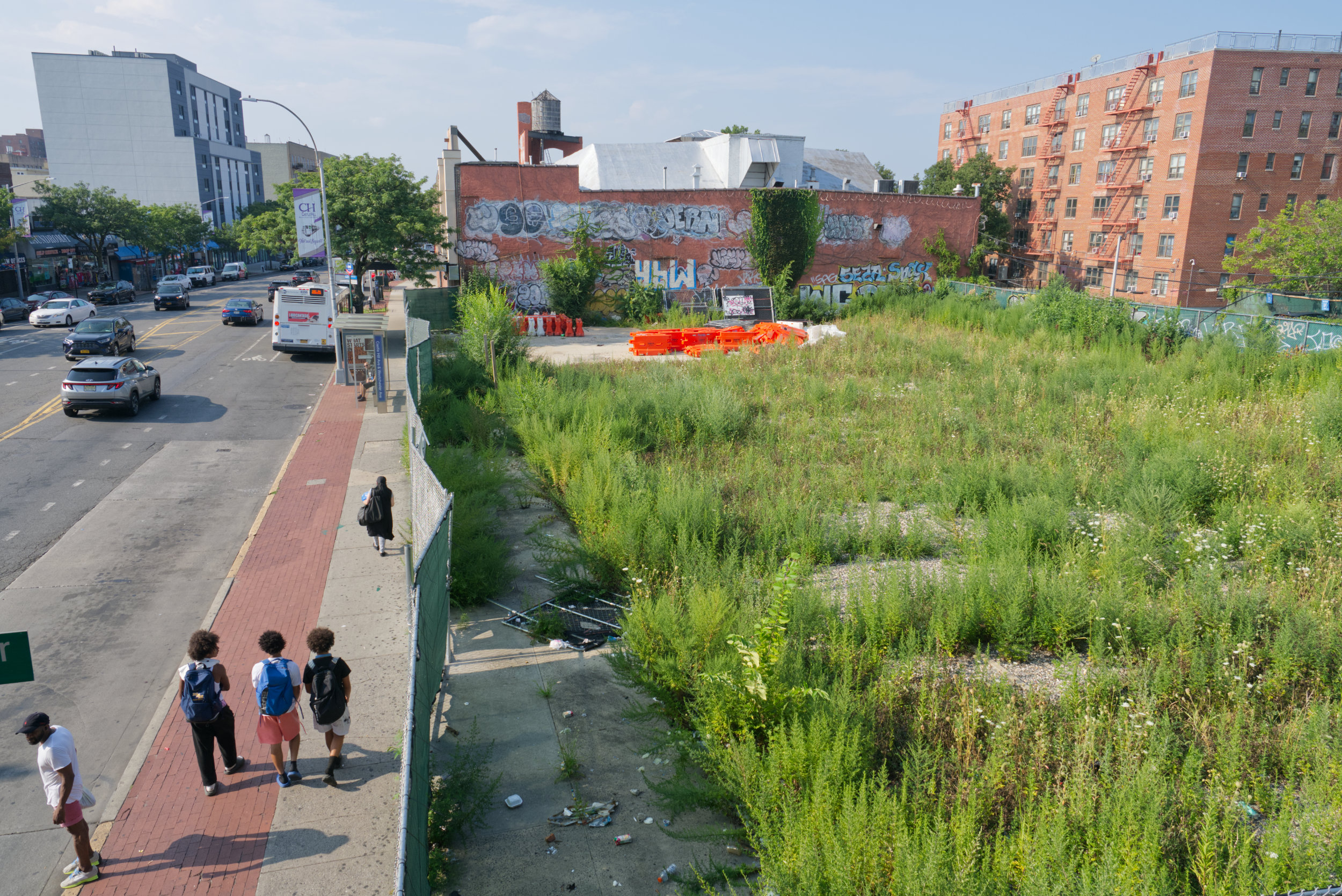
About a quarter of a mile from the Glover Street Community Garden in the Bronx, there is an empty lot just off the Castle Hill Avenue station. Given the dense population of the neighborhood and the need for green space and fresh fruits and vegetables, this lot could be put to good use if transformed into a community garden or similar green space.
The New York Restoration Project (NYRP) began transforming empty lots into community gardens in 1995 when Bette Midler founded the organization by cleaning up trash in neglected parks. Early on, NYRP recognized the importance of preserving green spaces in underserved communities. Currently, the New York Restoration Project (NYRP) continues to transform and maintain over 50 community gardens and parks across all five boroughs, focusing on underserved neighborhoods.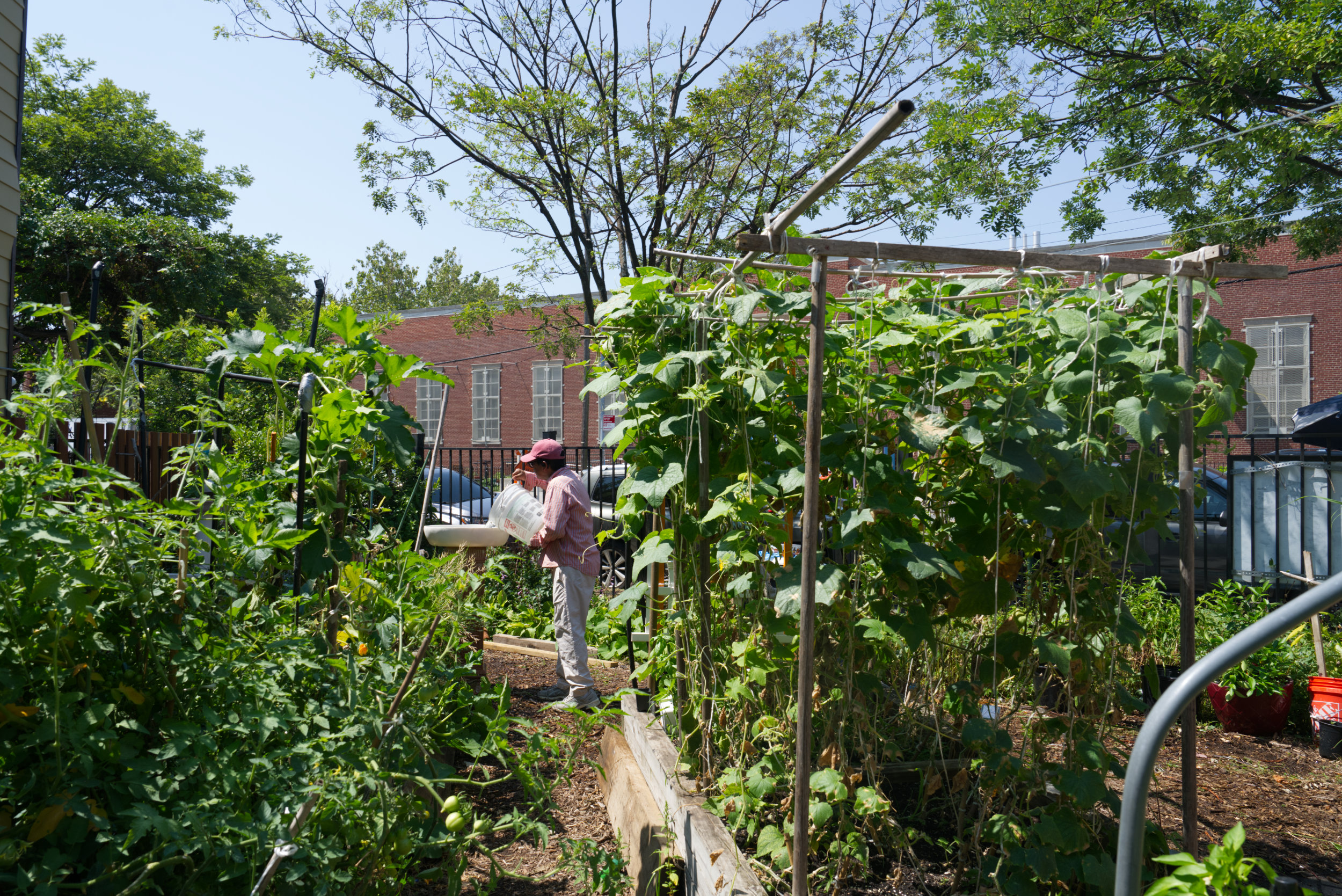
A volunteer waters in the Glover Street Community Garden, Bronx, 1,209 sq ft.. Founded in 1982 as a beautification project by local residents, Glover Street Community Garden was fully renovated in the fall of 2018. The reconstruction includes new fencing and pathways, a water supply and irrigation system, a shade structure with picnic tables, movable benches and tables, a seating area, a garden tool shed, 13 raised garden beds, compost bins, a barbecue, and numerous landscape plantings. 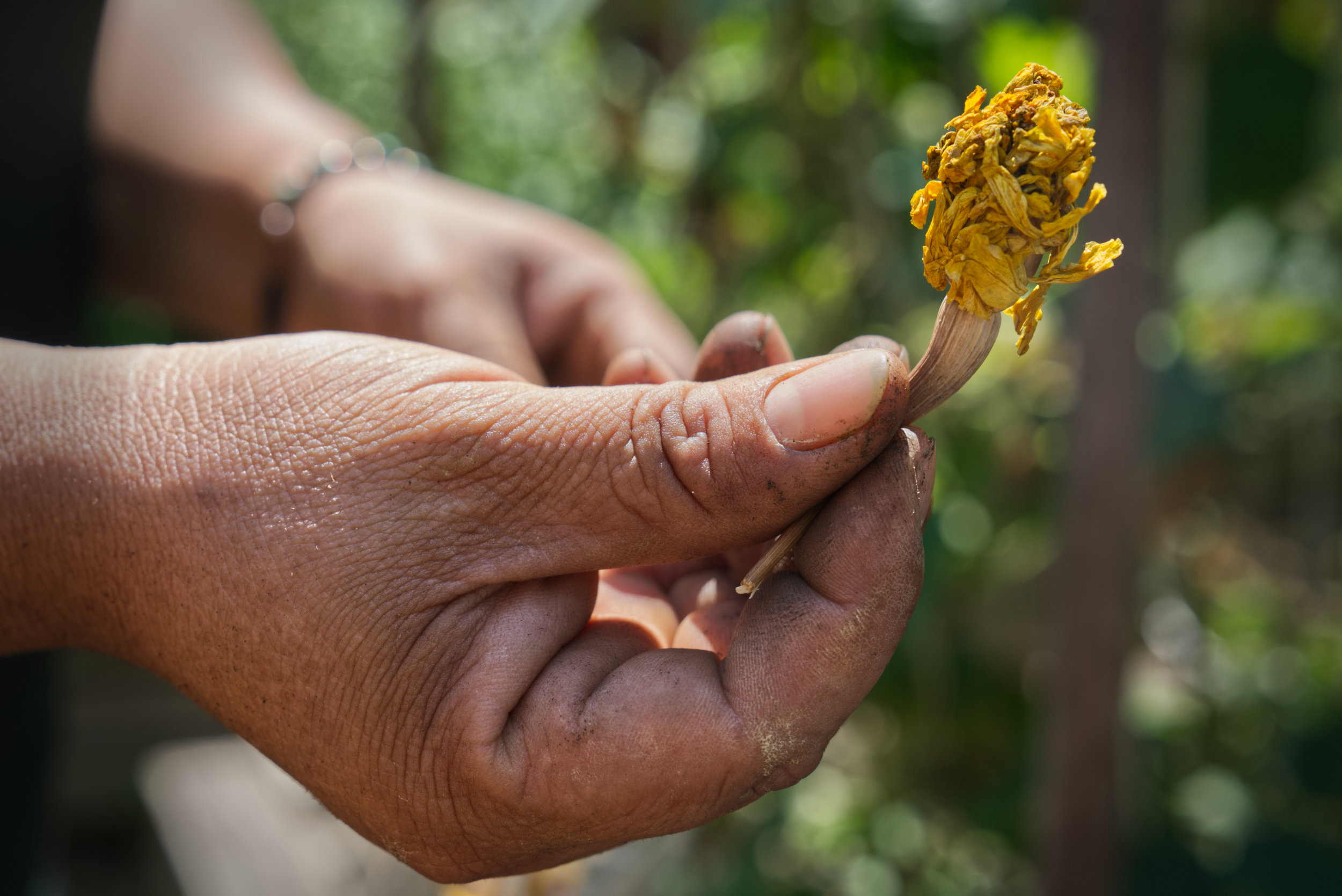
A volunteer holds a dried marigold in the Glover Street Community Garden, 1,209 sq ft. The garden is particularly known for giving away free meals to students throughout the summer and hosting an annual Día de los Muertos celebration (which the garden grows a bounty of marigolds for) in the fall. 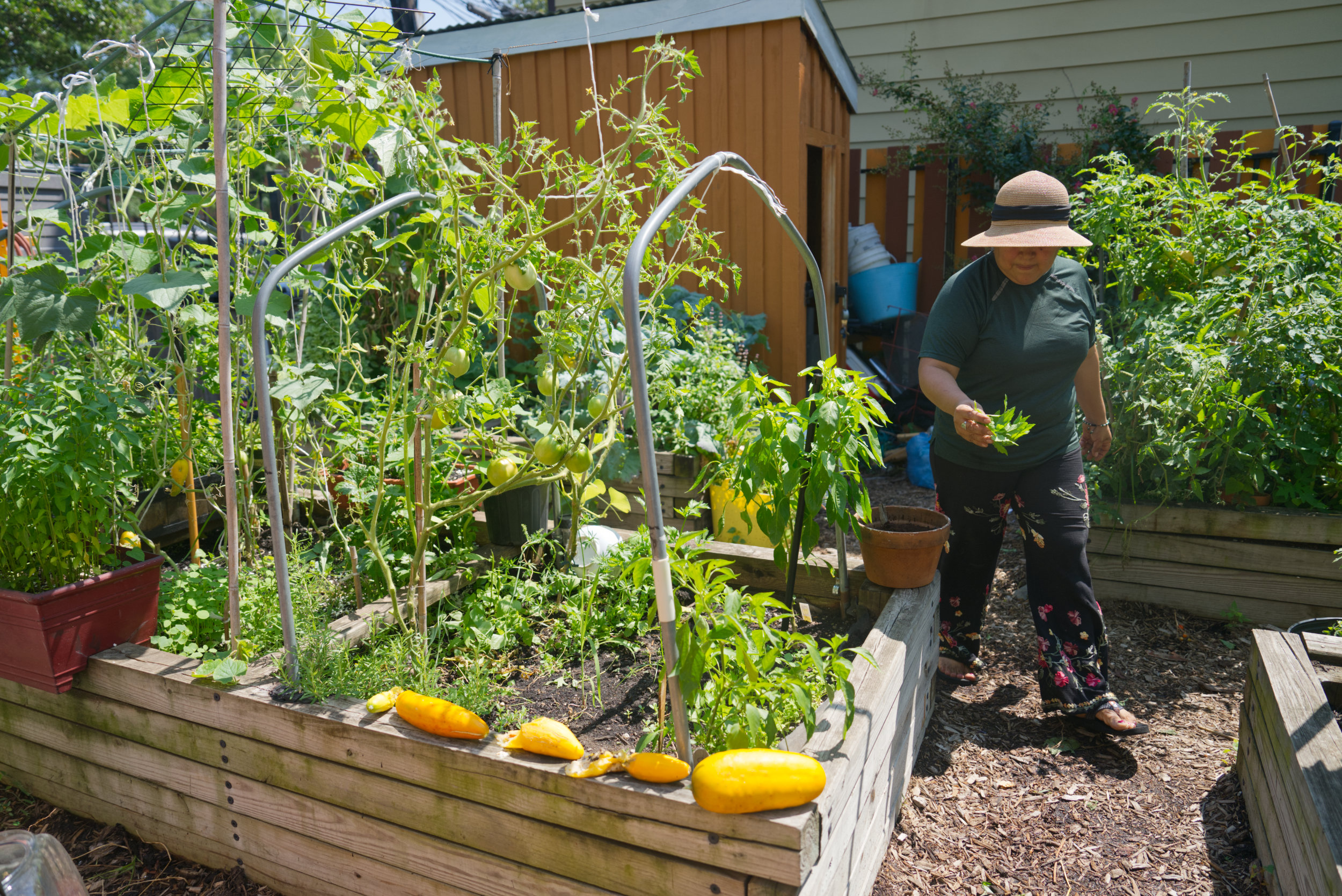
A volunteer in the Glover Street Community Garden, Bronx. Founded in 1982 as a beautification project by local residents, Glover Street Community Garden was fully renovated in the fall of 2018. The reconstruction includes new fencing and pathways, a water supply and irrigation system, a shade structure with picnic tables, movable benches and tables, a seating area, a garden tool shed, 13 raised garden beds, compost bins, a barbecue, and numerous landscape plantings. 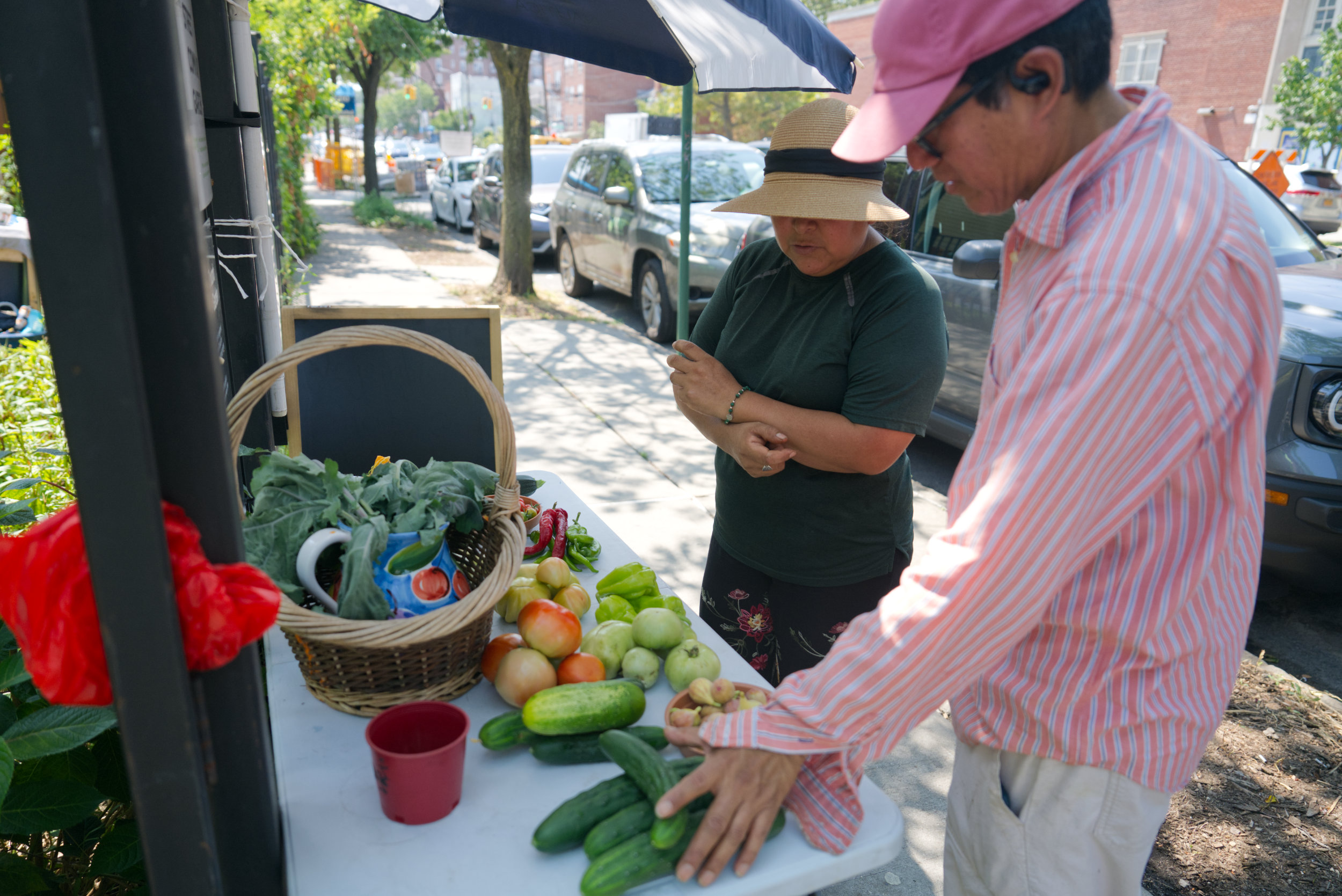
Volunteers sort fruits and vegetables are offered to the community in the entrance of the Glover Street Community Garden. Founded in 1982 as a beautification project by local residents, Glover Street Community Garden was fully renovated in the fall of 2018. The reconstruction includes new fencing and pathways, a water supply and irrigation system, a shade structure with picnic tables, movable benches and tables, a seating area, a garden tool shed, 13 raised garden beds, compost bins, a barbecue, and numerous landscape plantings. 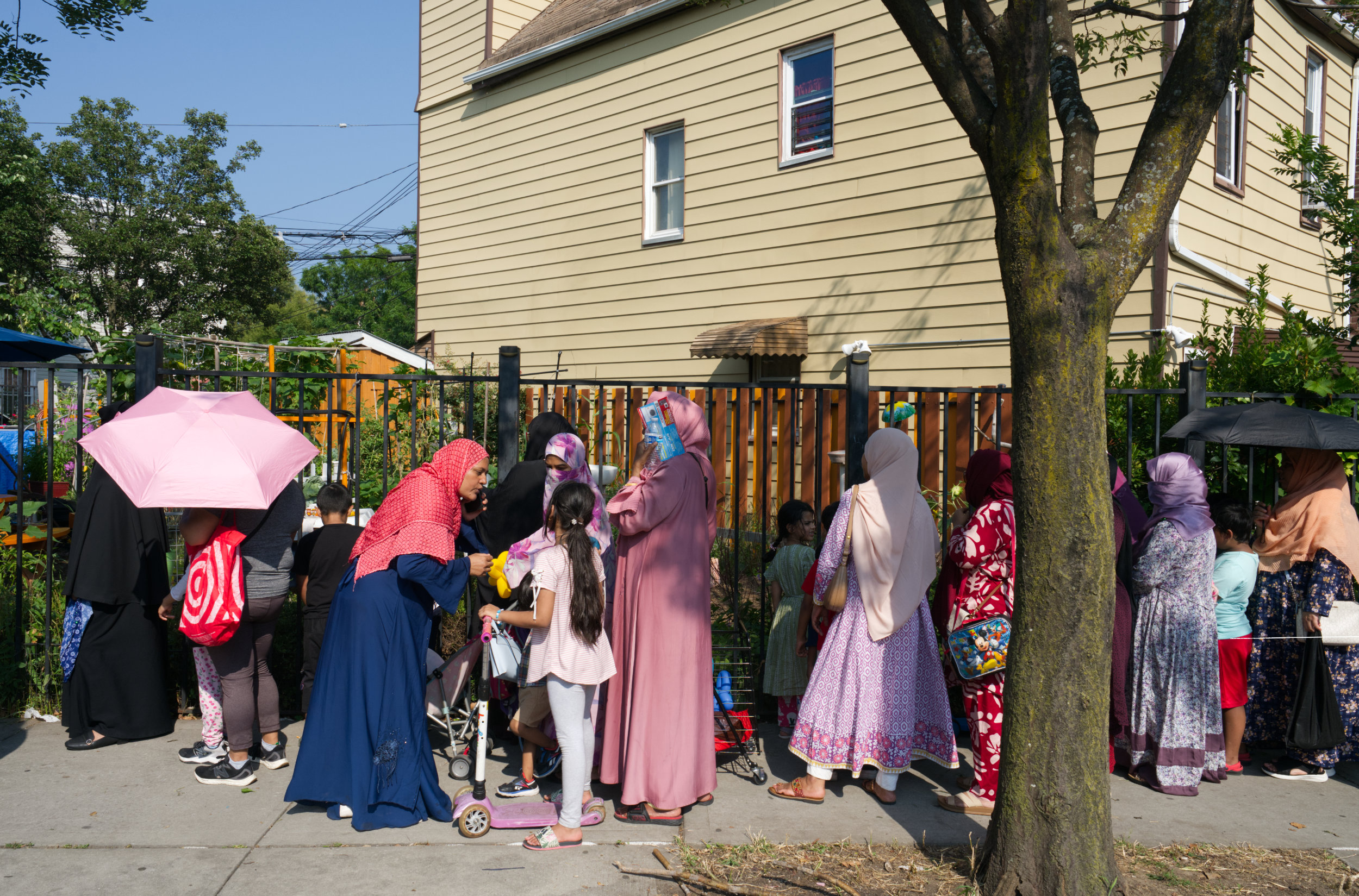
Children and their parents lined up around the block before the new school year began to receive backpacks, school supplies and books. 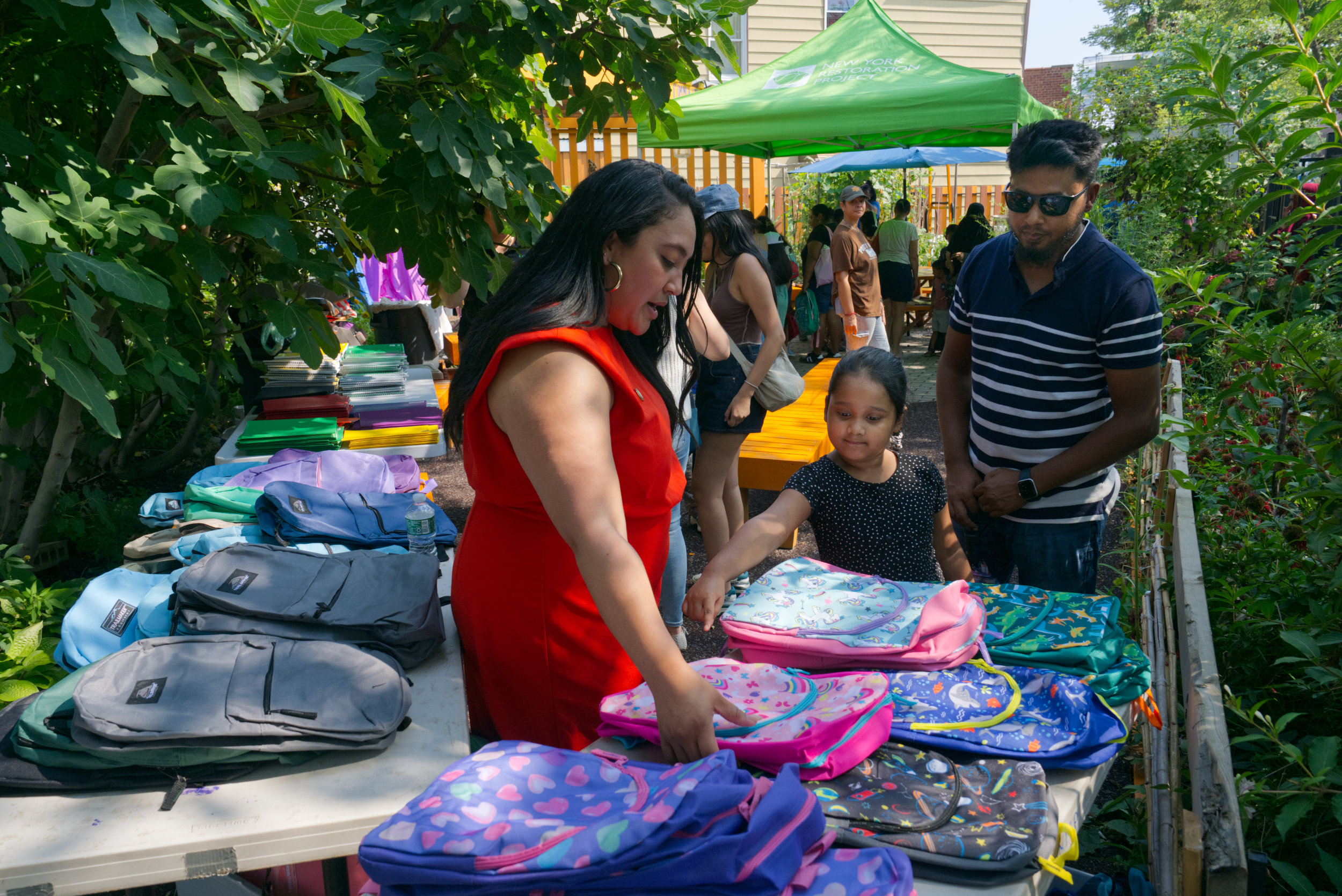
Apart from offering residents in the Bronx fresh fruit and vegetables the Glover Street Community Garden also hosts a day offering children free backpacks, school supplies and books. On this Sunday the line for these items stretched a city block and children and their parents waited for hours to receive these items. Founded in 1982 as a beautification project by local residents, Glover Street Community Garden, 1,209 sq ft., was fully renovated in the fall of 2018. The reconstruction includes new fencing and pathways, a water supply and irrigation system, a shade structure with picnic tables, movable benches and tables, a seating area, a garden tool shed, 13 raised garden beds, compost bins, a barbecue, and numerous landscape plantings. 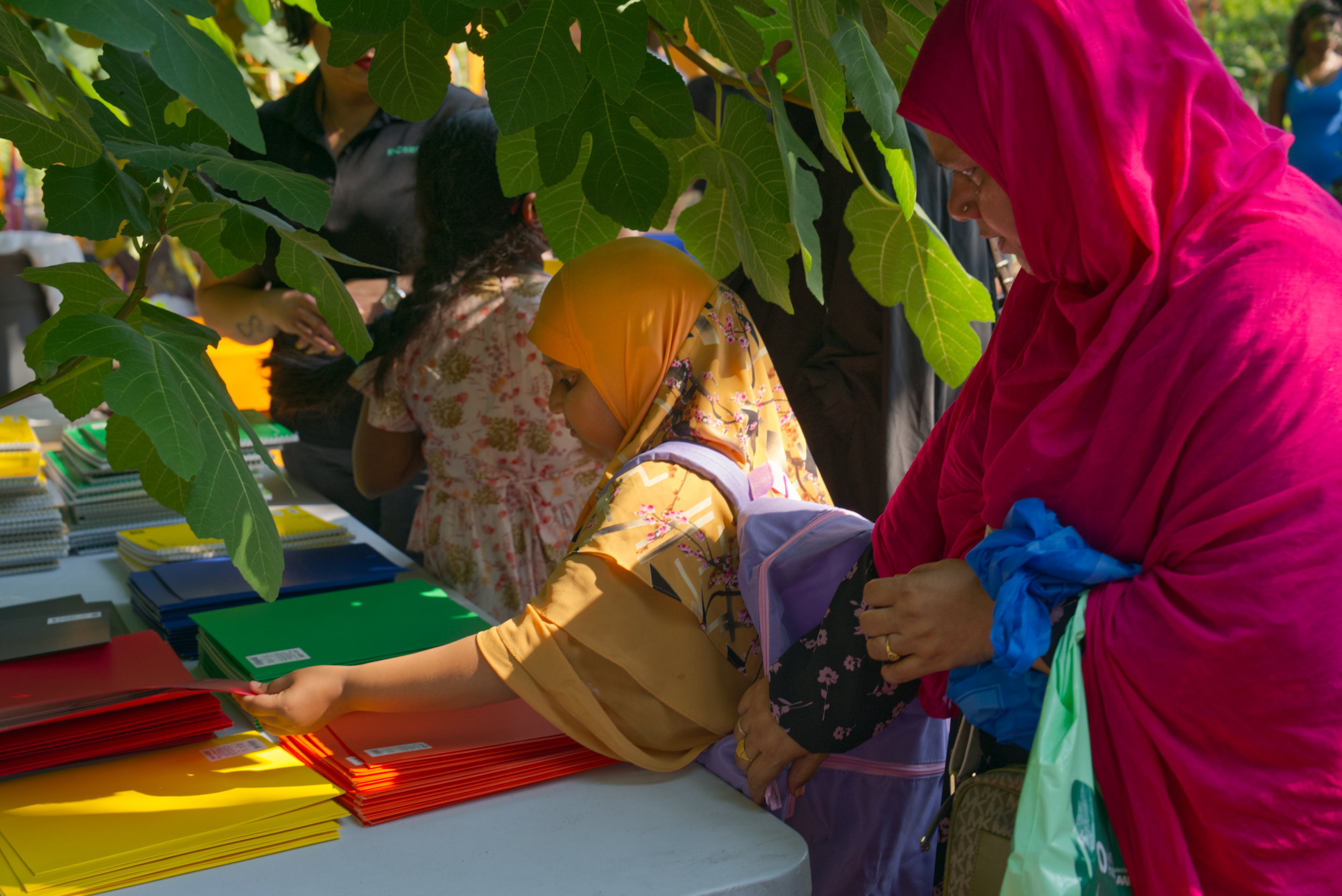
Apart from providing fresh fruits and vegetables to Bronx residents, the Glover Street Community Garden also hosts a day where children receive free backpacks, school supplies, and books. On this Sunday, the line for these items stretched a city block, with children and their parents waiting for hours to receive them. Founded in 1982 as a beautification project by local residents, Glover Street Community Garden, 1,209 sq ft., was fully renovated in the fall of 2018. The reconstruction includes new fencing and pathways, a water supply and irrigation system, a shade structure with picnic tables, movable benches and tables, a seating area, a garden tool shed, 13 raised garden beds, compost bins, a barbecue, and numerous landscape plantings. 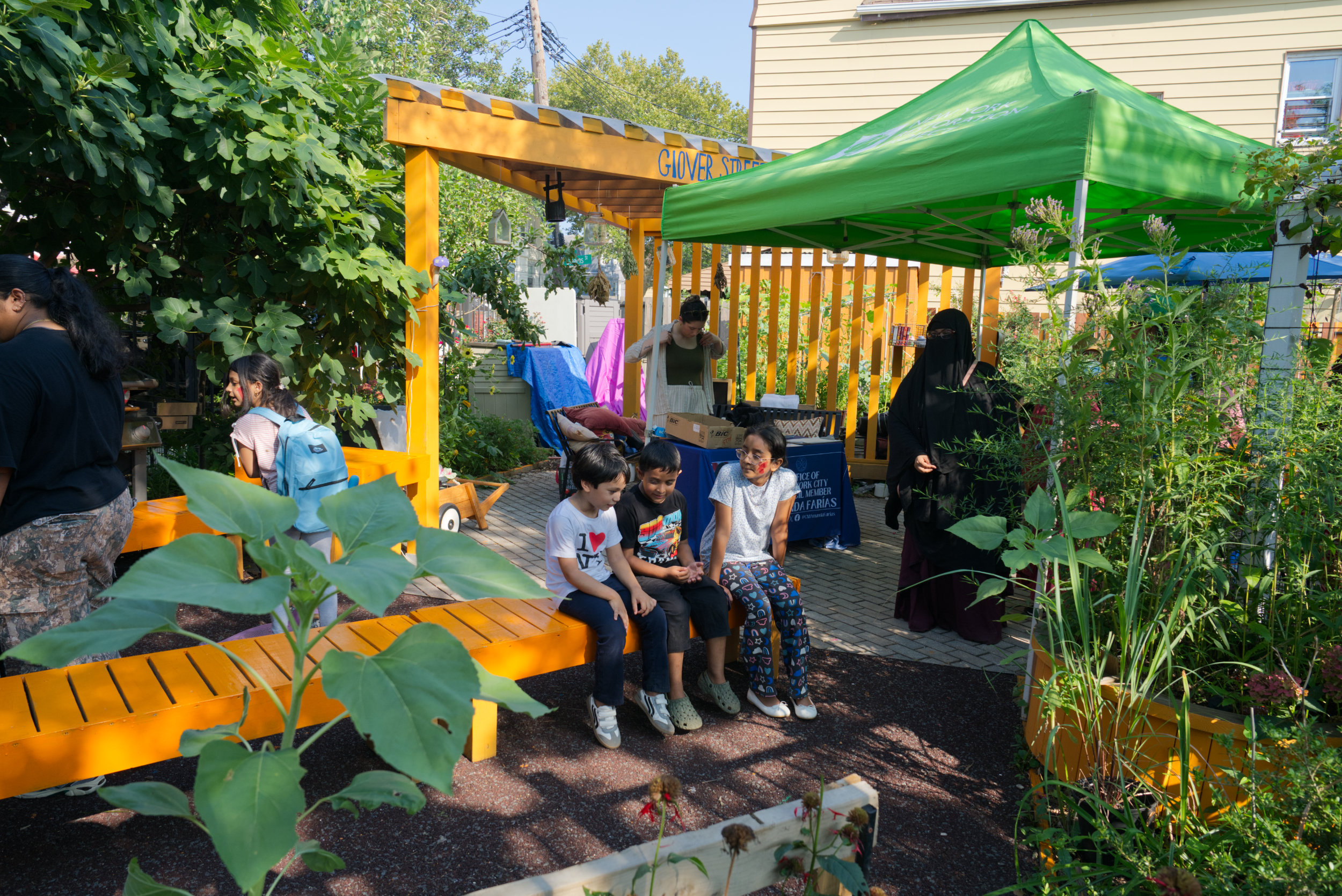
Apart from providing fresh fruits and vegetables to Bronx residents, the Glover Street Community Garden also hosts a day where children receive free backpacks, school supplies, and books. On this Sunday, the line for these items stretched a city block, with children and their parents waiting for hours to receive them. Shiitake Workshop
A Shiitake mushroom harvest workshop in partnership with Cornell’s Small Farms Program was held in NYRP’s Riley-Levin Demonstration Garden. NYRP Urban Ag member Corey Blant and Agroforestry & Mushroom Specialist at Cornell Connor Youngerman led the event.
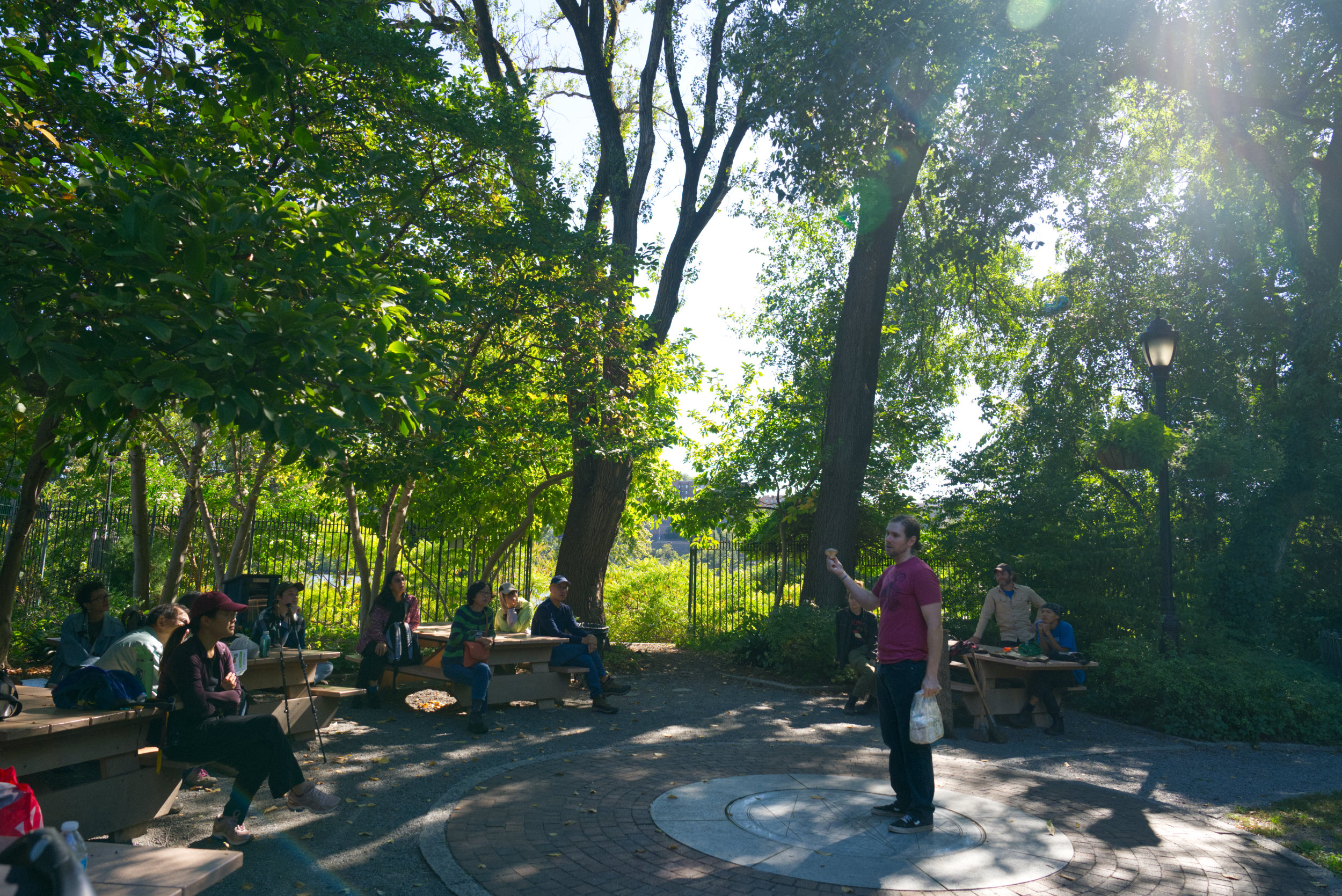
Mushroom Specialist of Cornell University Connor Youngerman leads a Shiitake mushroom harvest workshop in NYRP’s Riley-Levin Demonstration Garden. 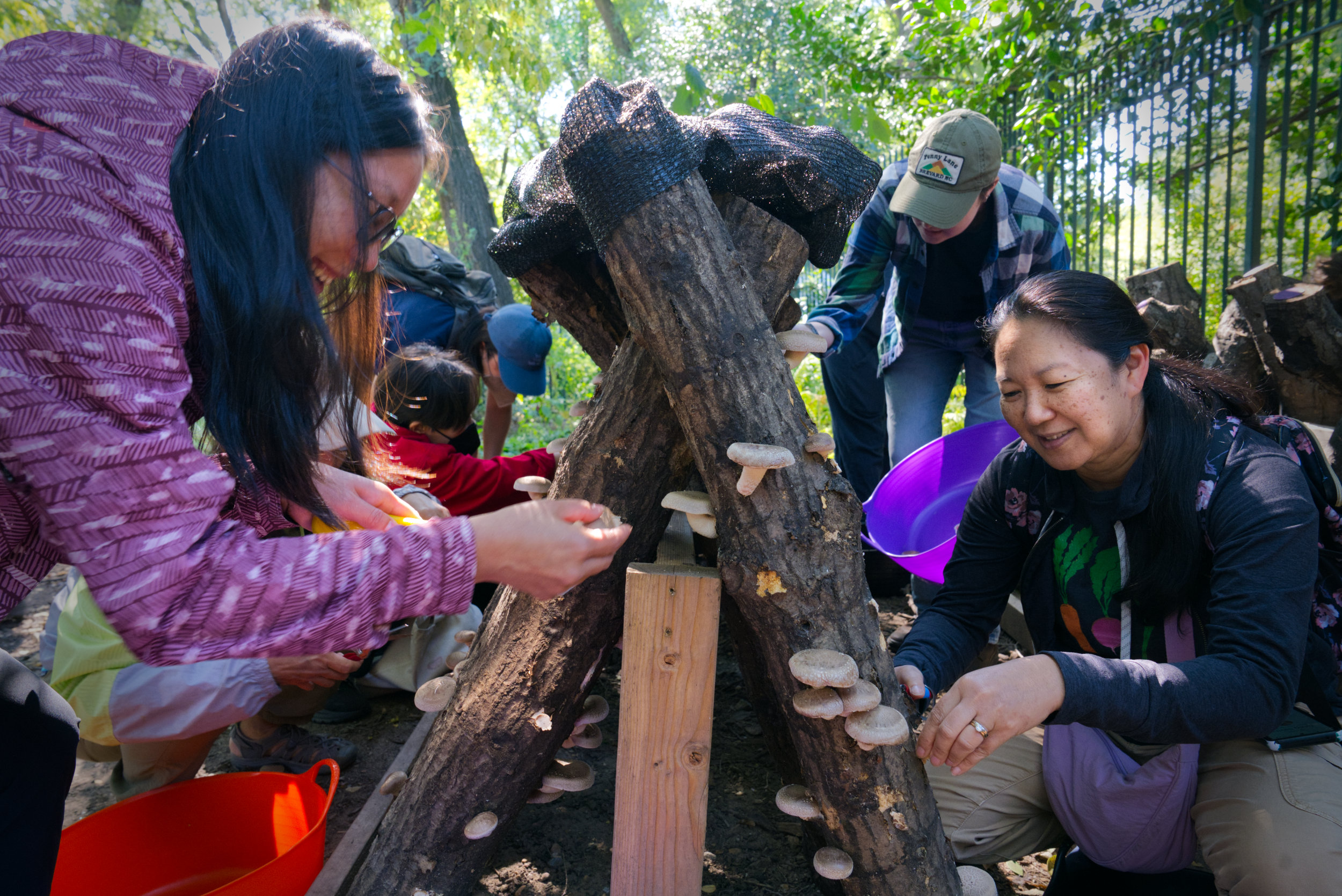
A Shiitake mushroom harvest workshop in partnership with Cornell’s Small Farms Program was held in NYRP’s Riley-Levin Demonstration Garden. 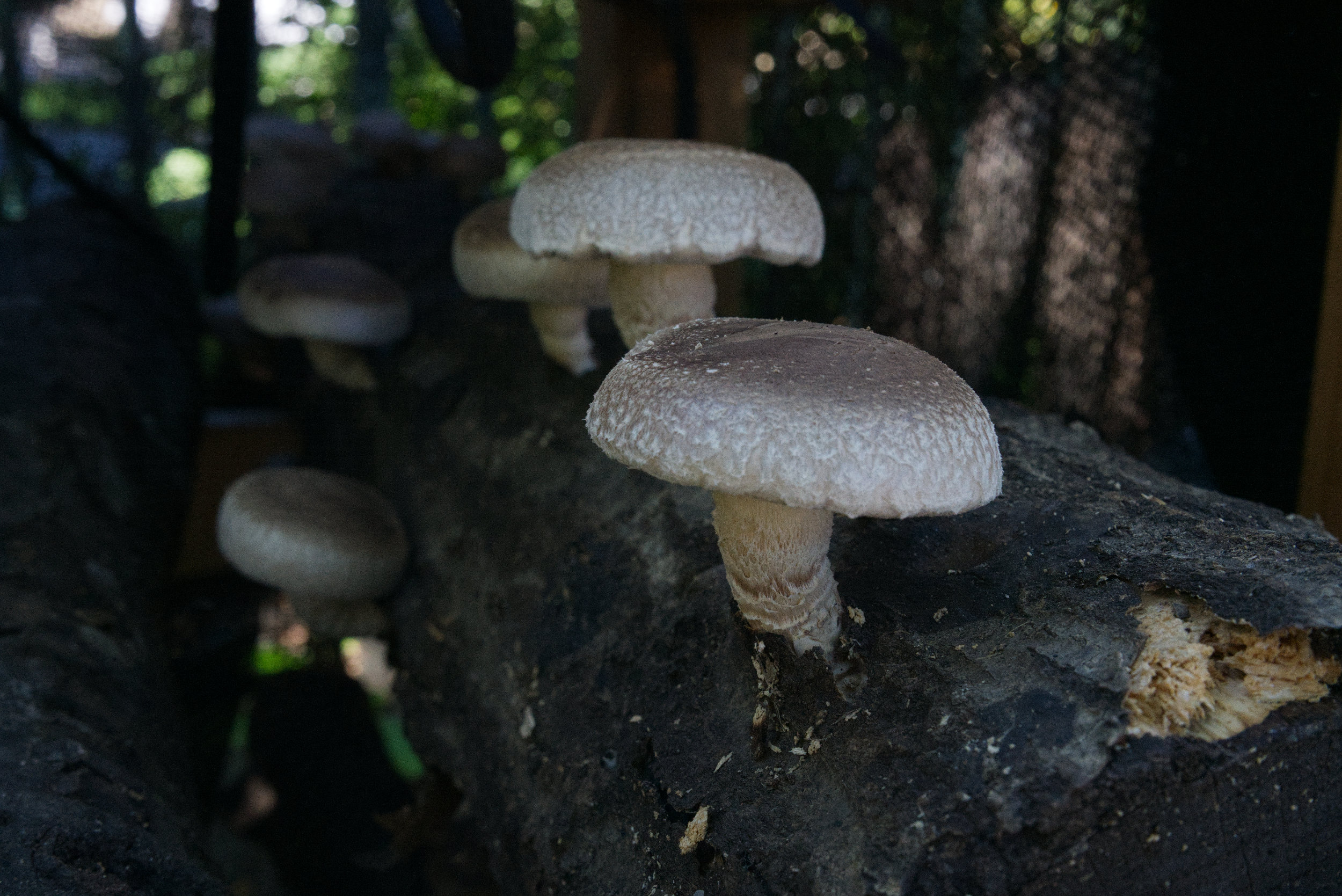
Shiitake mushrooms on inoculation logs in NYRP’s Riley-Levin Demonstration Garden where a Shiitake mushroom harvest workshop in partnership with Cornell’s Small Farms Program was held. 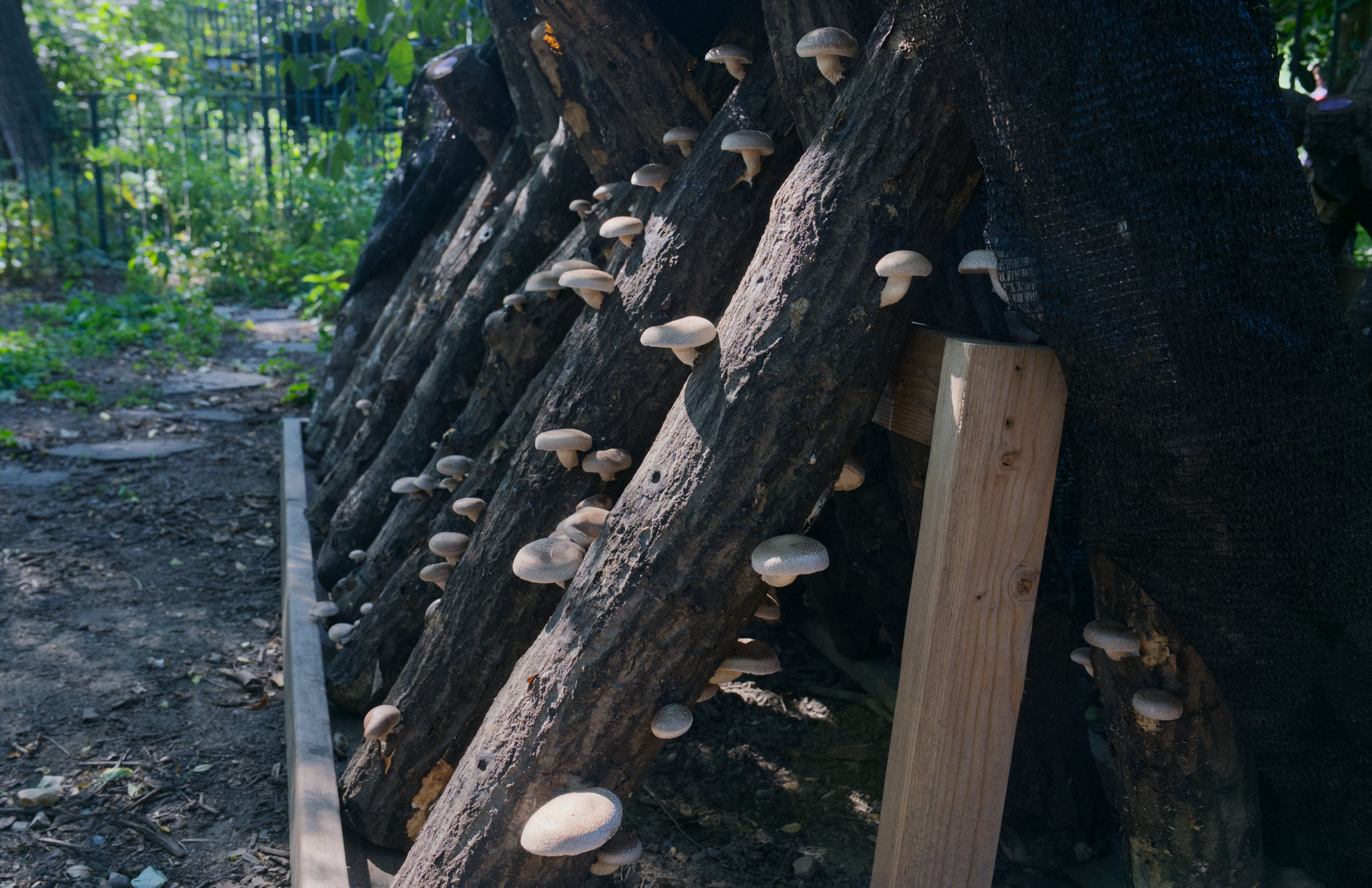
Shiitake mushrooms on inoculation logs in NYRP’s Riley-Levin Demonstration Garden where a Shiitake mushroom harvest workshop in partnership with Cornell’s Small Farms Program was held. 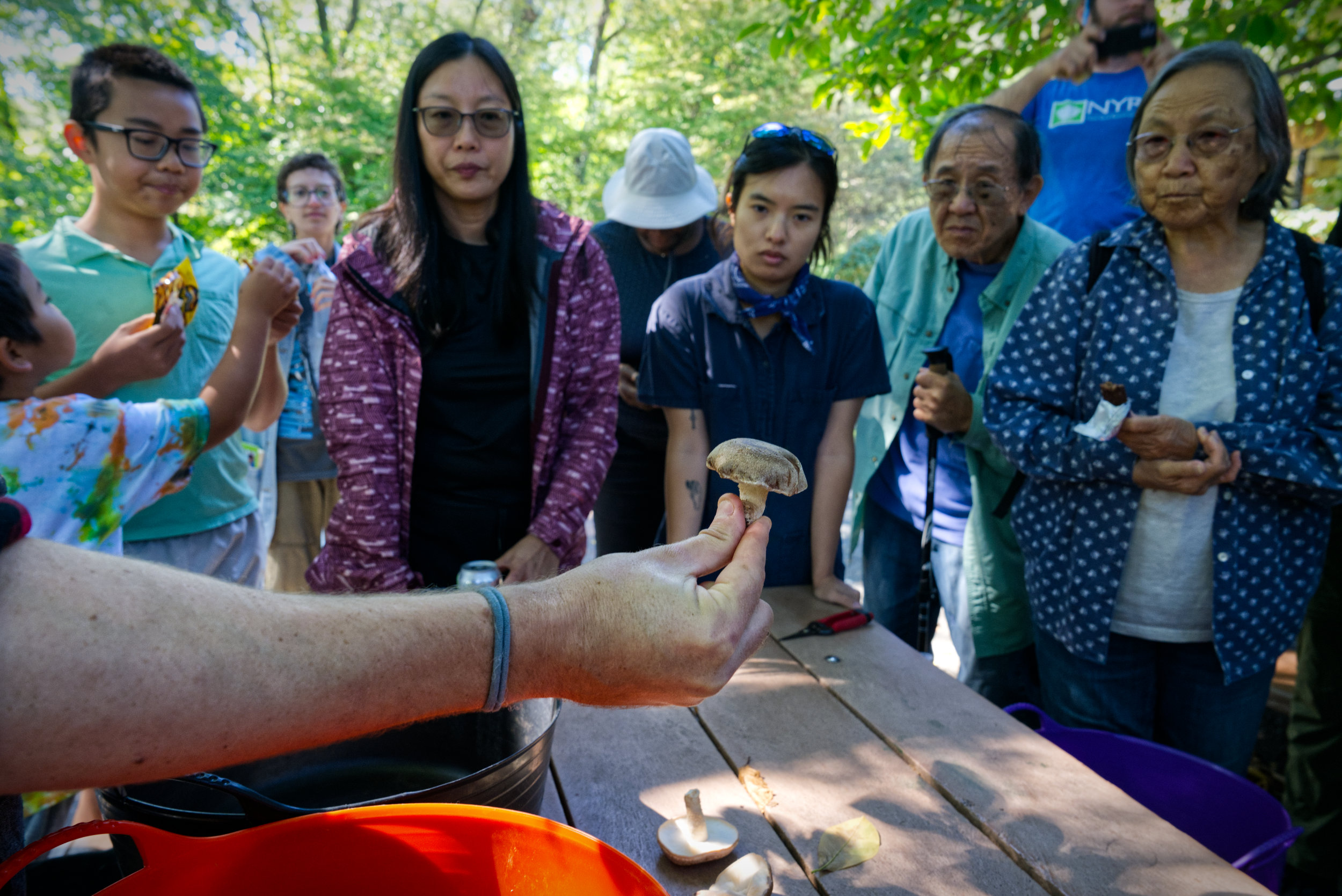
Mushroom Specialist Connor Youngerman leads a Shiitake mushroom harvest workshop in NYRP’s Riley-Levin Demonstration Garden. 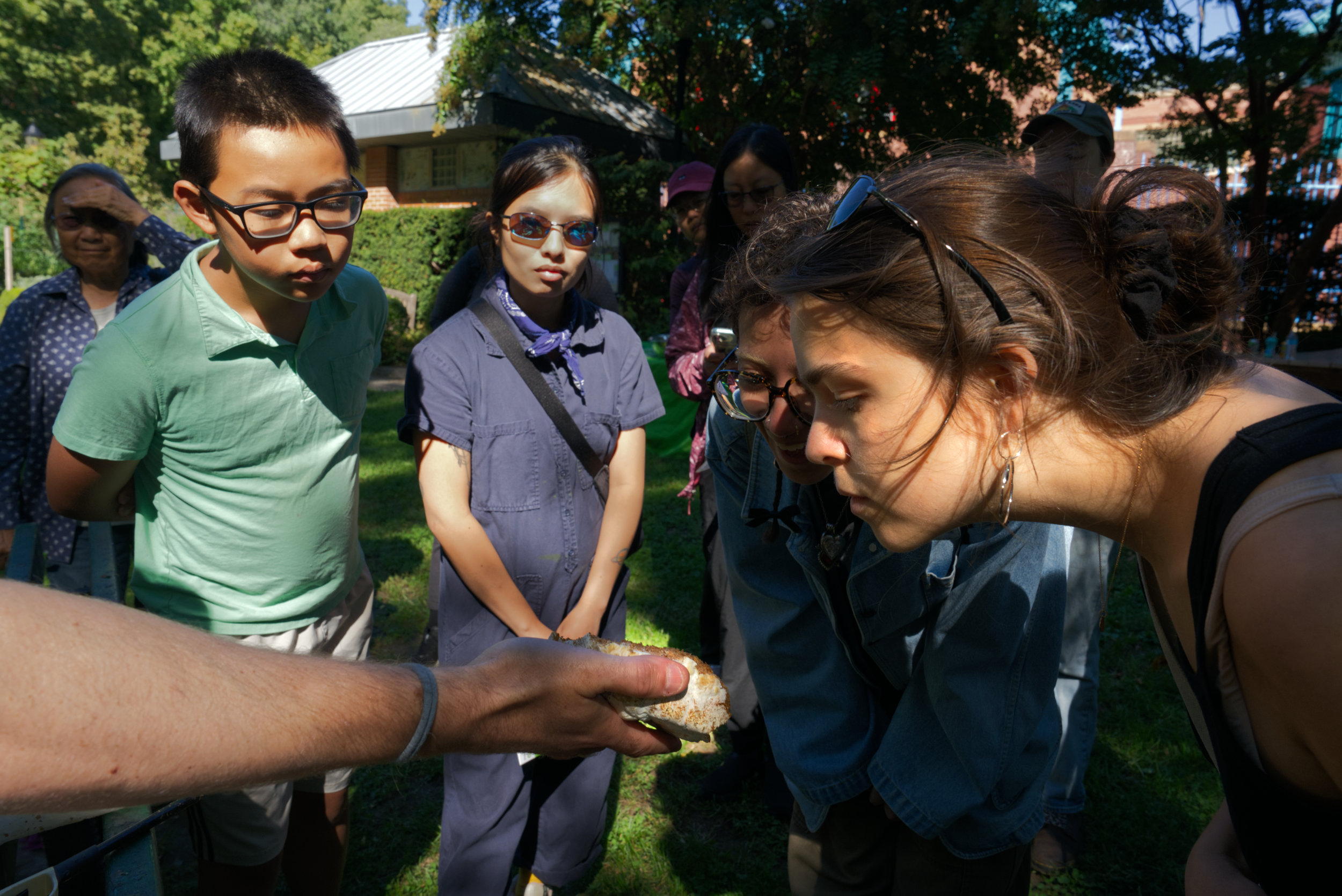
A participant who attended a Shiitake mushroom harvest workshop in partnership with Cornell’s Small Farms Program looked at mushroom spawn which would later be added to an inoculation log. The workshop was held in NYRP’s Riley-Levin Demonstration Garden. 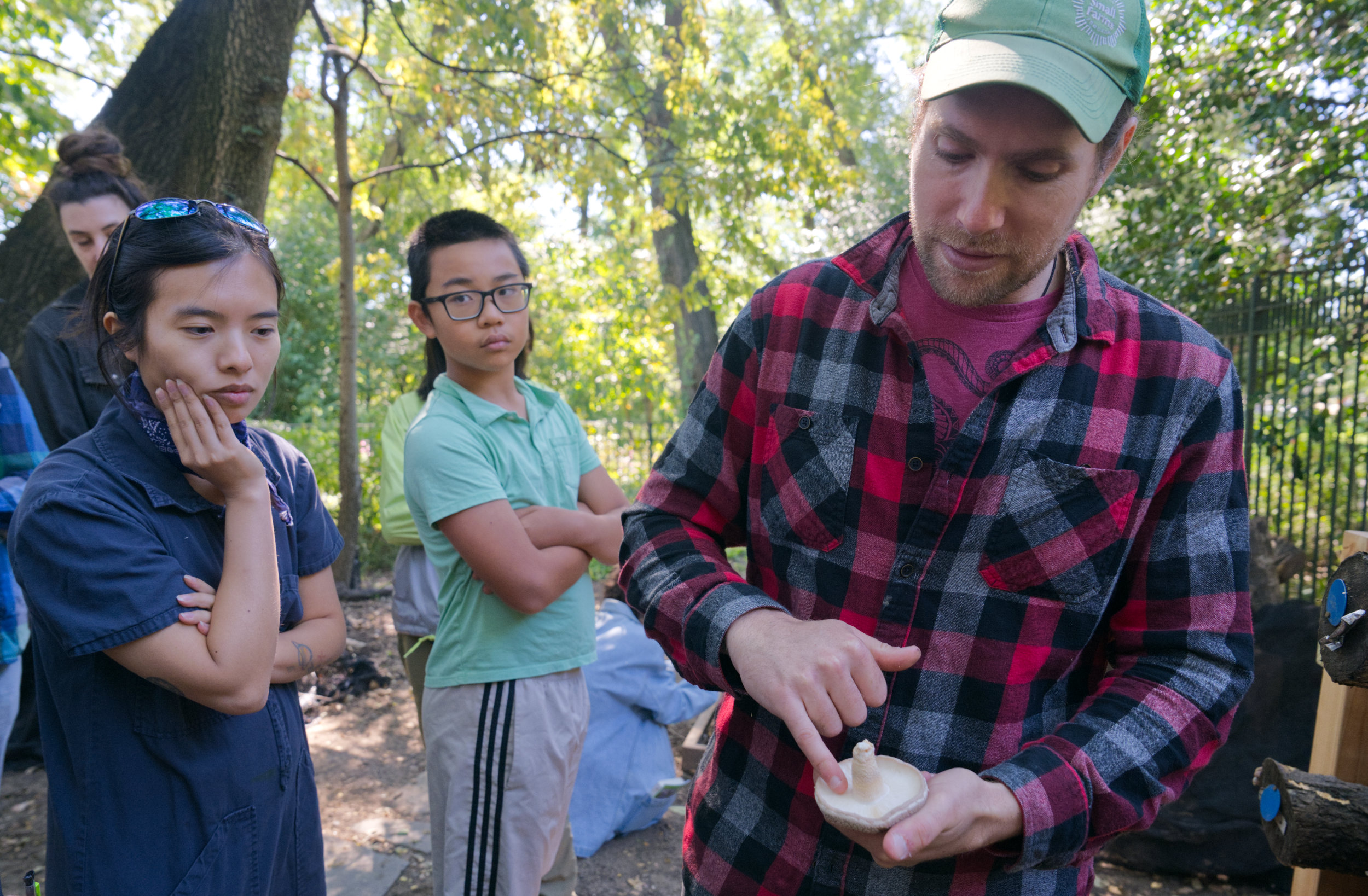
Mushroom Specialist of Cornell University Connor Youngerman leads a Shiitake mushroom harvest workshop in NYRP’s Riley-Levin Demonstration Garden. 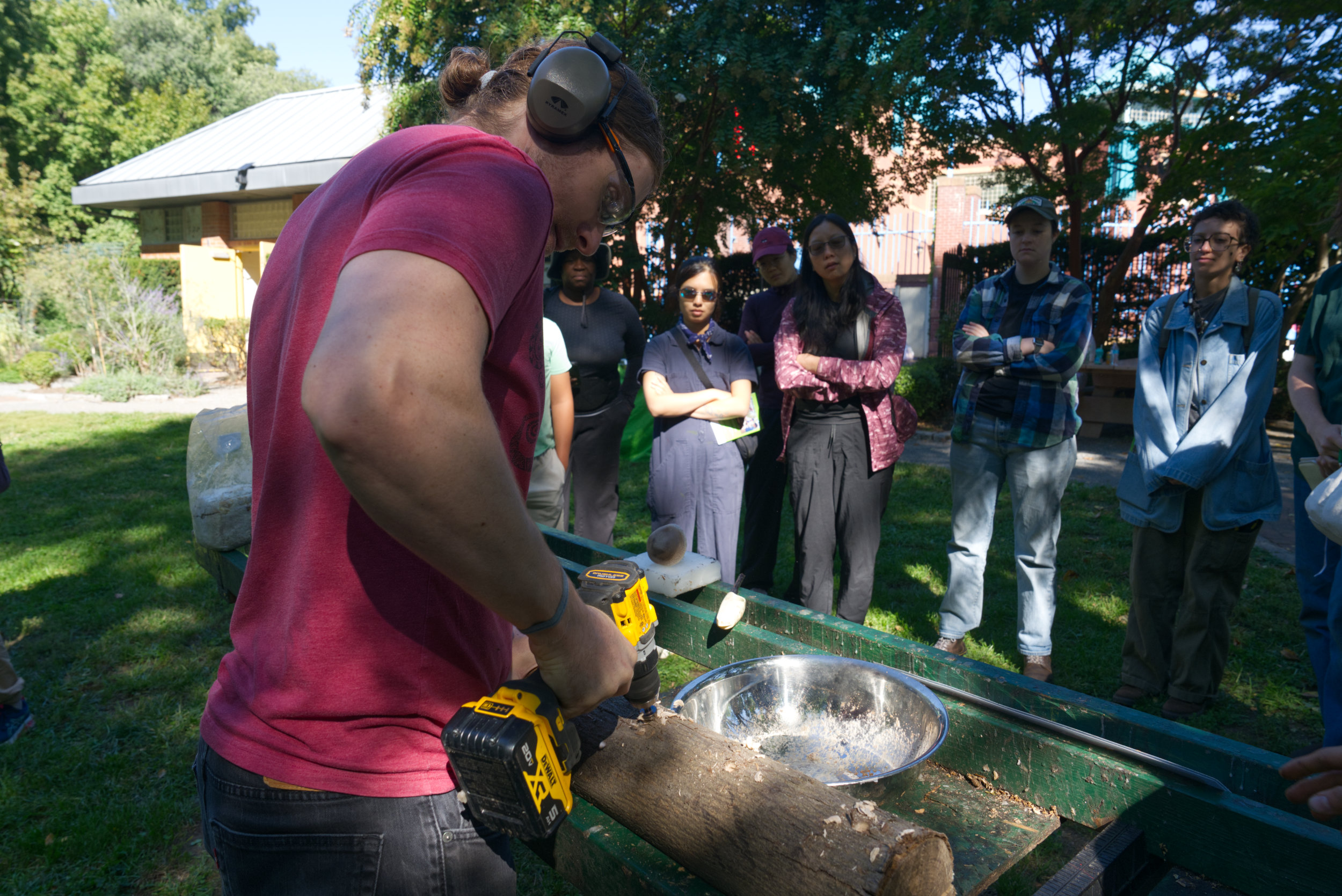
Mushroom Specialist of Cornell University Connor Youngerman leads a Shiitake mushroom harvest workshop in NYRP’s Riley-Levin Demonstration Garden. Here he demonstrates how inoculation logs are drilled into then filled with mushroom spawn and then capped with wax to initiate the growing process. 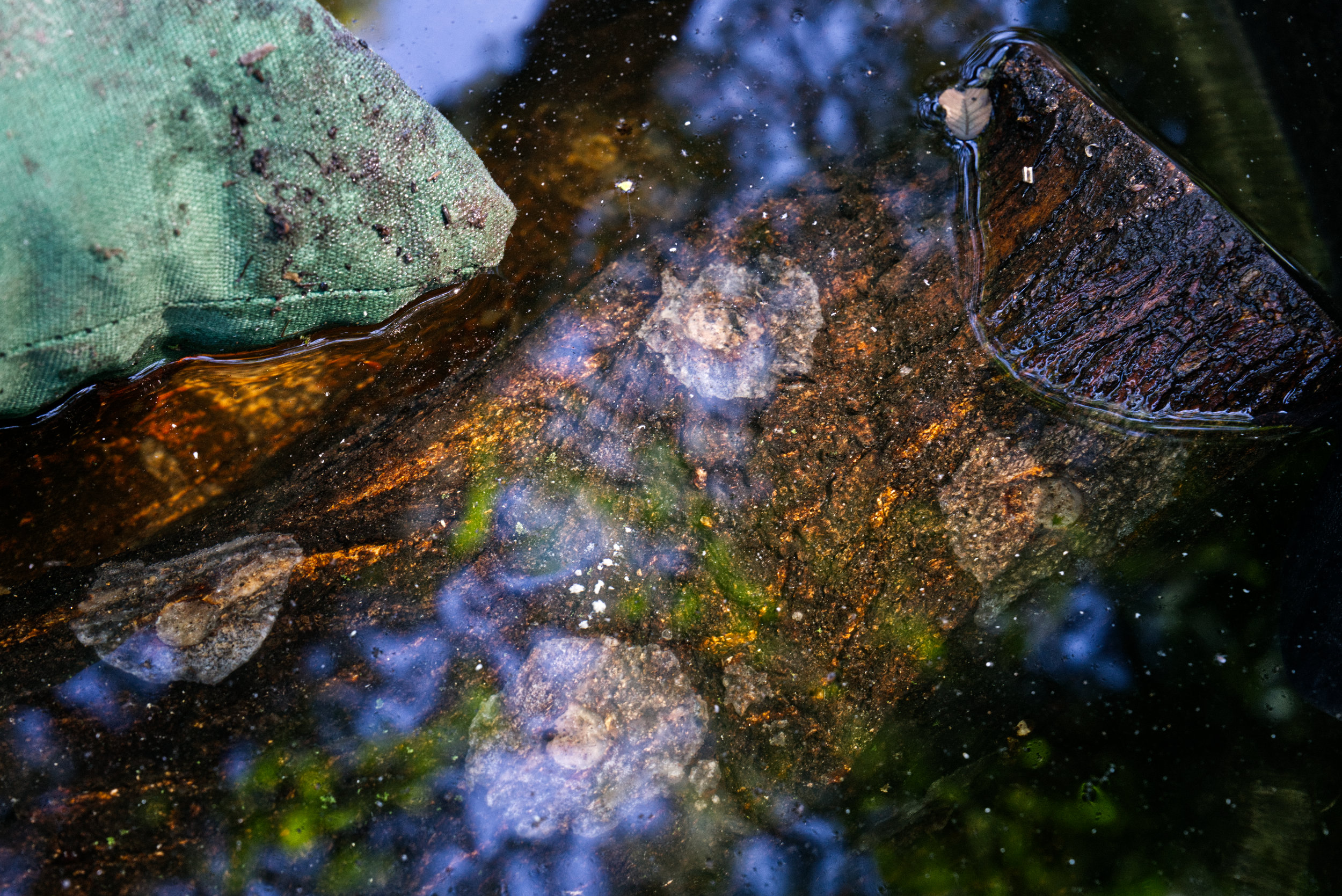
An inoculation log submerged in water. After the logs are taken over by the fungus which gestate from 6-12 months logs are submerged for 12-24 hours to jumpstart the shititake flowering. This was a part of a Shiitake mushroom harvest workshop in partnership with Cornell’s Small Farms Program was held in NYRP’s Riley-Levin Demonstration Garden. NYRP Urban Ag member Corey Blant and Agroforestry & Mushroom Specialist at Cornell Connor Youngerman. 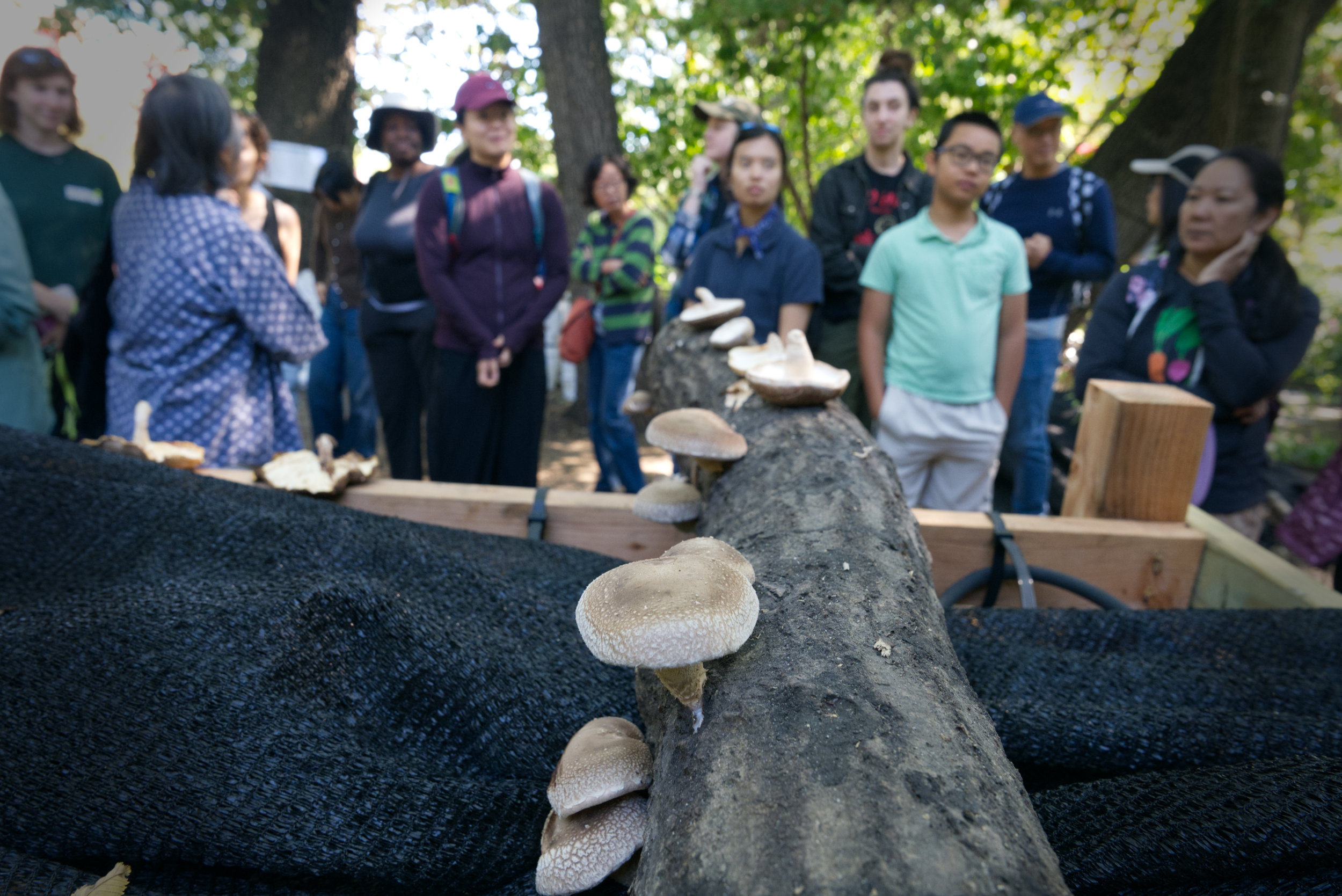
Shiitake participants shiitake mushrooms look on at inoculation logs in NYRP’s Riley-Levin Demonstration Garden where a Shiitake mushroom harvest workshop in partnership with Cornell’s Small Farms Program was held. 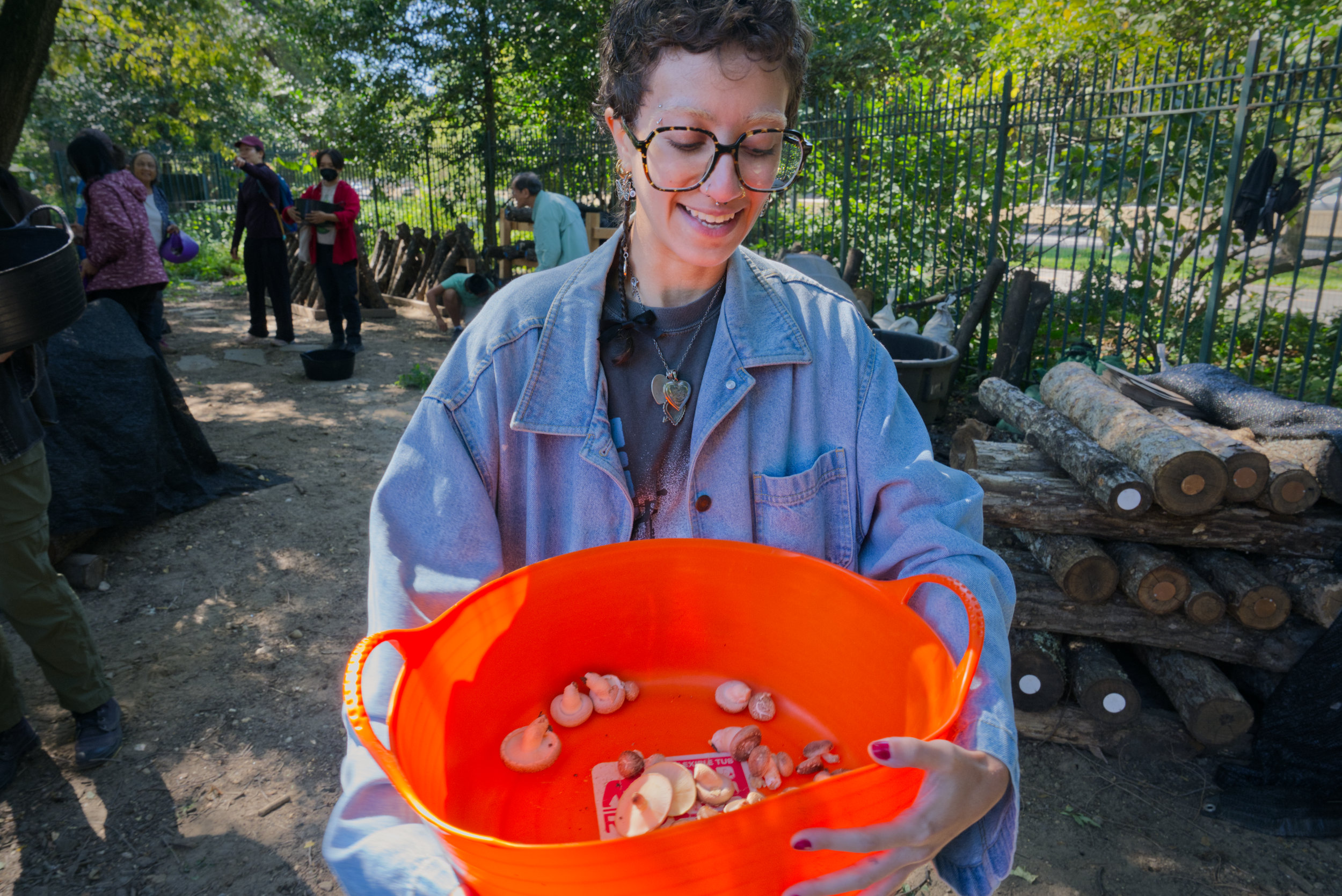
After harvesting shiitake mushrooms Thursday Silverman holds their bounty at a Shiitake mushroom harvest workshop in partnership with Cornell’s Small Farms Program was held in NYRP’s Riley-Levin Demonstration Garden. 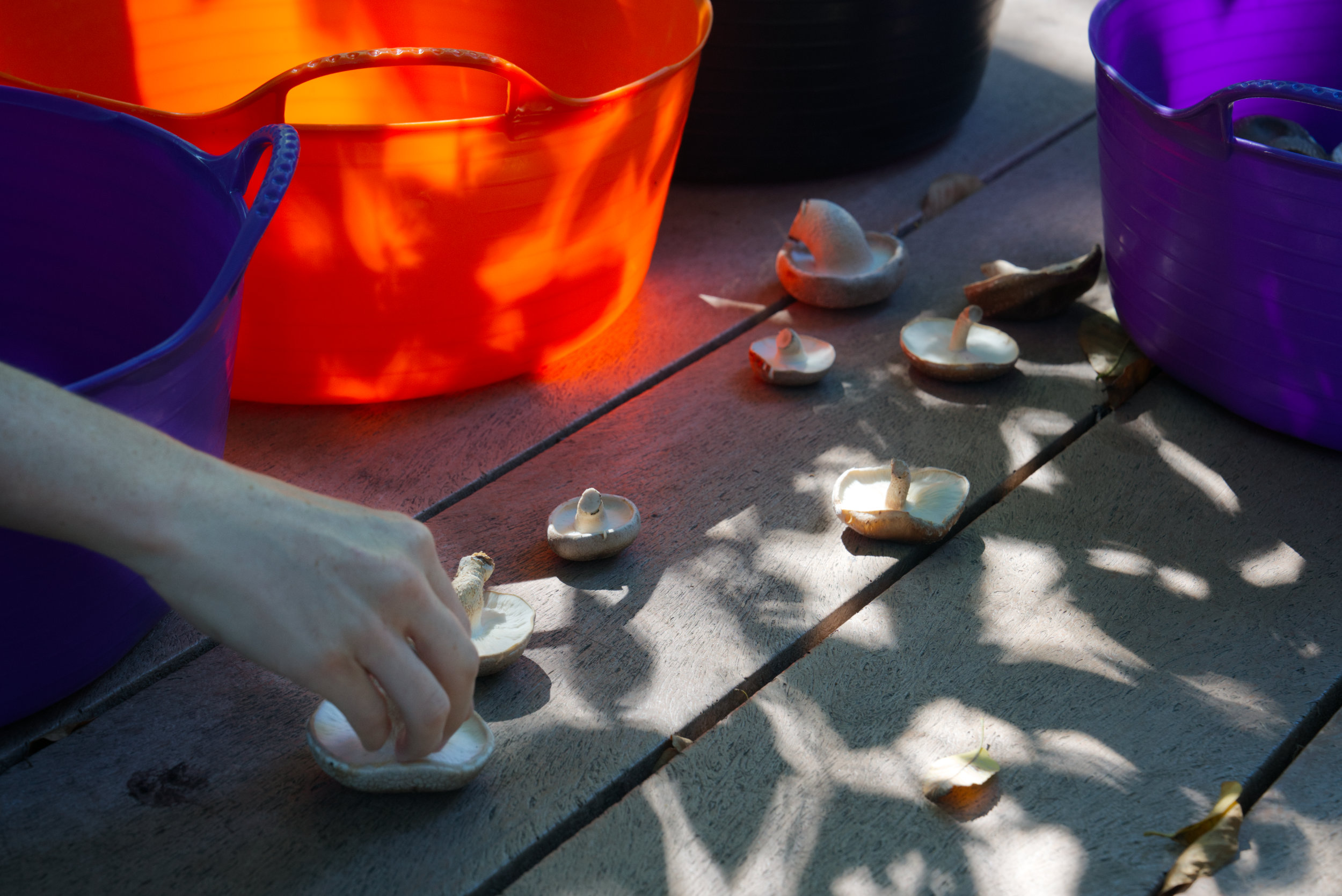
After harvesting shiitake mushrooms participants graded their mushrooms into 3 categories of desirability at a Shiitake mushroom harvest workshop in partnership with Cornell’s Small Farms Program was held in NYRP’s Riley-Levin Demonstration Garden. 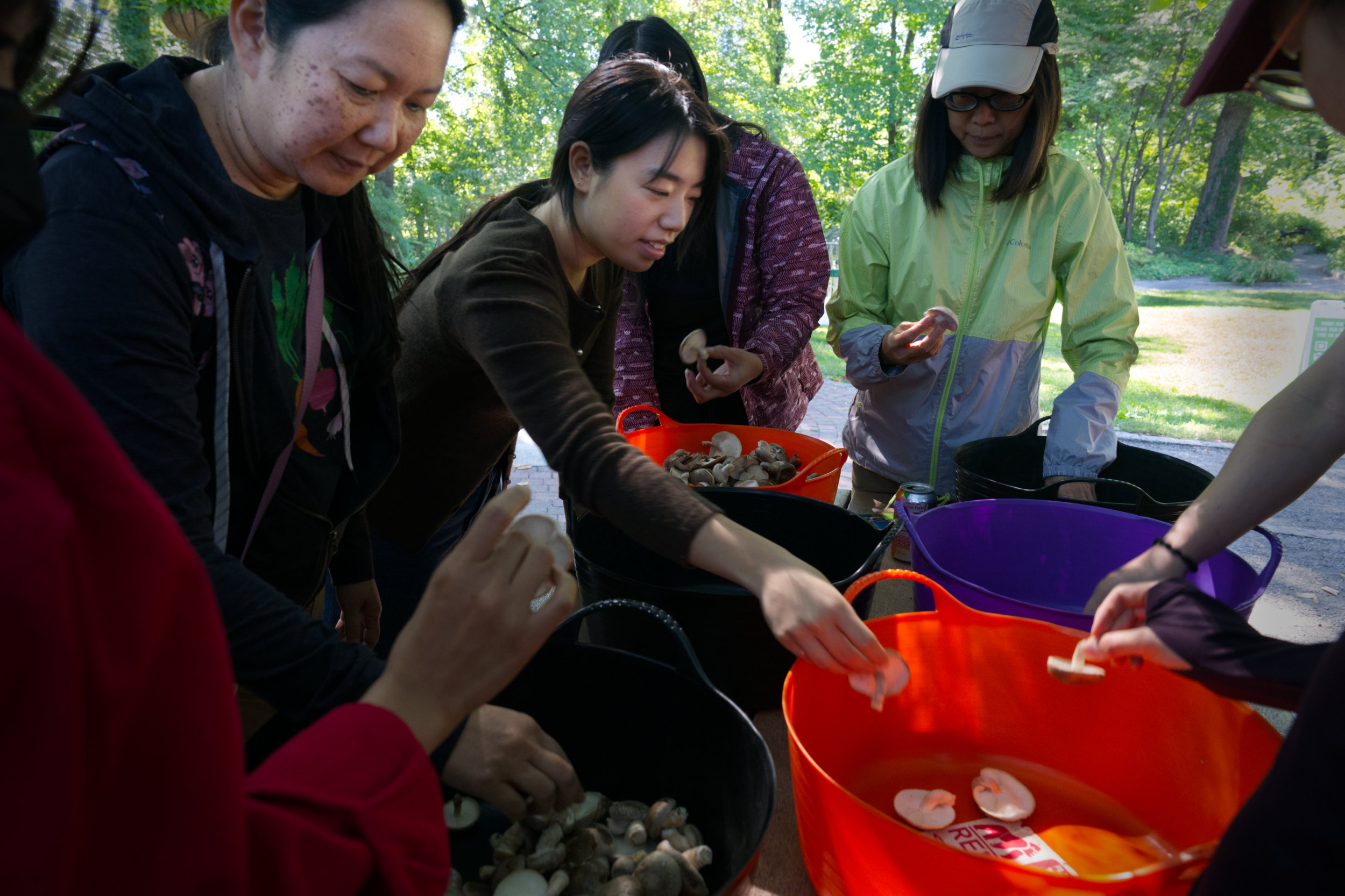
After harvesting shiitake mushrooms participants graded their mushrooms into 3 categories of desirability at a Shiitake mushroom harvest workshop in partnership with Cornell’s Small Farms Program was held in NYRP’s Riley-Levin Demonstration Garden. 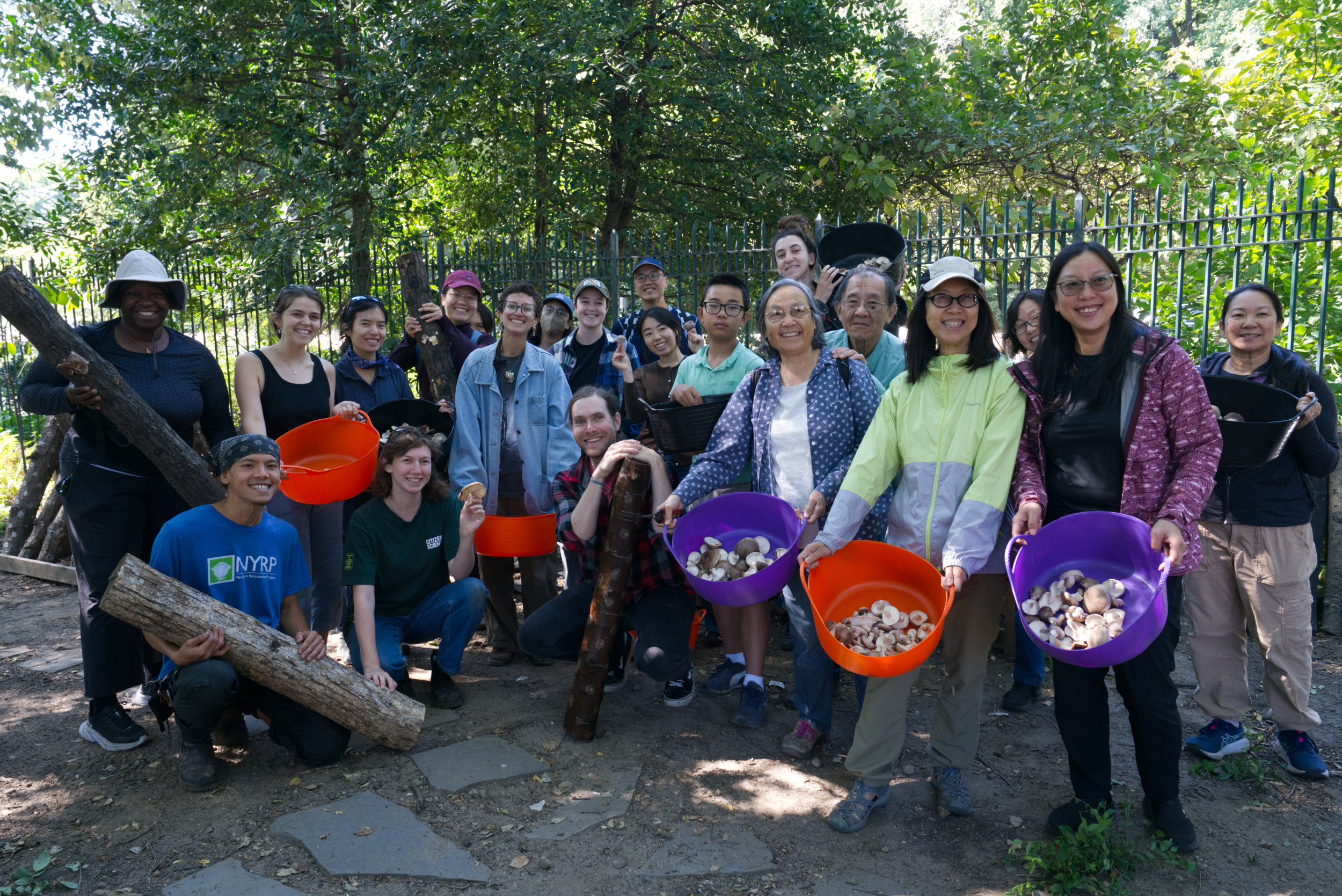
After harvesting shiitake mushrooms participants hold their bounty at a Shiitake mushroom harvest workshop in partnership with Cornell’s Small Farms Program was held in NYRP’s Riley-Levin Demonstration Garden. -

A Plea to Save the Elizabeth Street Garden
A Plea to Save the Elizabeth Street Garden

The Elizabeth Street Garden, on March 30, 2025. Visitors and volunteers hope it is not the last Sunday that the garden will exist. When verbal arguments confuse, obfuscate, and deceive, visuals are all we have left. In supporting the garden, my intent is that the appreciation of this place through images may become another possibility for its preservation.
A Stroke of a Pen Can Save the Garden
The Elizabeth Street Garden is facing imminent closure by the City of New York.
It is inconceivable that such a place of respite, healing, great beauty and civic worth would even be considered to be set for demolition-and yet, unless the our elected officials step in, the flowers in the garden will be crushed by bulldozers, trees felled by chainsaws and the statues carted off—to erase this space would represent an act of unconscionable violence wielded upon us by our very own government.
If the garden is closed, siding against the thousands who seek to preserve it, the City will have chosen Pennrose, a Pennsylvania-based development company, over the very people it is meant to serve. Closure by the city could happen at any moment, despite an ongoing federal trial, as the garden clings to its last hope, one day at a time. However, none of this would be necessary if the mayor simply designated the garden as a land trust—a decision he can make with a stroke of the pen for a fee of $1.
To help save the garden please send an urgent message to the governor and mayor.
The following photographs were taken on Sunday, March 30, 2025. Hopefully this will not be the last Sunday for the garden to be enjoyed.
Celebrating a Uniqueness of Place

To destroy this space, especially by an out of state developer, would be a grave injustice to the people of New York City. The Elizabeth Street Garden welcomes the young and elderly, visitors from near and far, and people of all faiths and backgrounds. 
The city claims the new development will benefit the elderly, yet they already receive far more from this space than they would from a for-profit corporation intent on destroying it. 
Spring leaves sprout. Will the garden survive for other springs to come? 
Spring vines envelop the statues as new life awakens. The city and developers threatening this sanctuary claim their plans, informed more by clip art than anything even remotely touching on anything slightly enlightened, will include greenspace, using the term generically, failing to recognize that store-bought “greenery” can never replace the native plants of New York City that live in the garden, nurtured by volunteers to sustain bird and insect habitats. Nor can it substitute for the carefully selected flora that curators and volunteers have thoughtfully arranged to create a living, breathing ecosystem.
As for housing, there are currently three available city owned lots within a mile of the garden that could serve as suitable locations. Seniors living there would still have access to this rare and restorative space. Rather than destroying the garden, the city should recognize it as an essential resource for their well-being in conjunction with any new housing.
The Sunday Tai Chi Ritual
This past Sunday, beneath gray skies, and despite the chilly and humid morning in the low 50s, the weekly tai chi session carried on, led, as always, by Sherry Zhang. Many familiar faces that I saw during summer’s languid days were present despite the cold and gray, a testament to their dedication and the deep need for this essential regenerative practice.

Sherry Zhang teaches tai chi every weekend in the garden. 
The uniqueness of place is equally important as the exercise itself. It’s one of the few places in New York where people can be in nature and exercise at the same time. 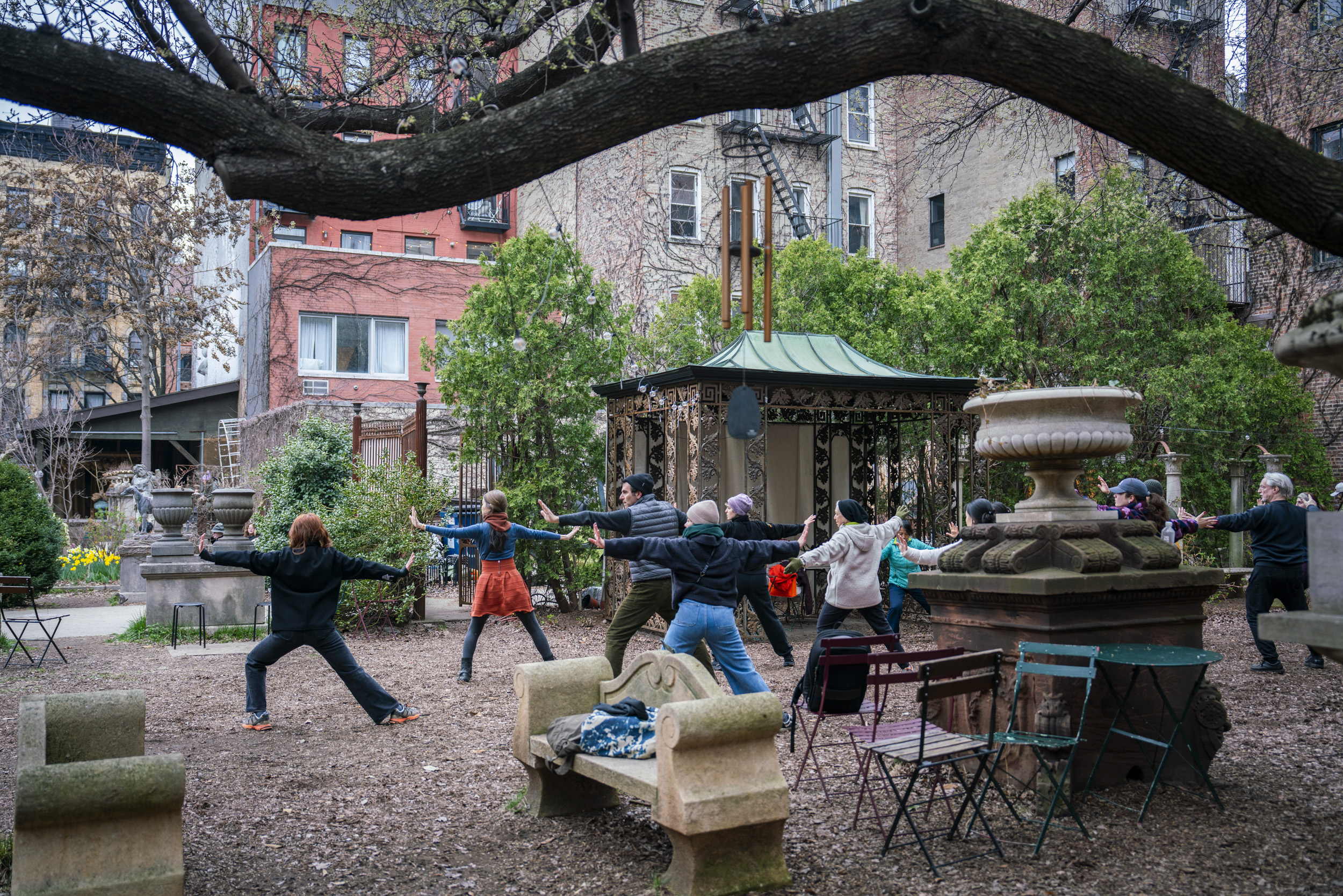
The classes happen year round, in the cold and the heat a testament to the need of the class. The gazebo in the rear was designed by the Olmsted Brothers, sons of renowned landscape architect Frederick Law Olmsted, for the Burrwood Estate in Cold Spring Harbor, Long Island, in 1898 
The age diversity is a testament to the common good that this class provides to the community. The garden as a work of art in and of itself
On February 18, 2025 A federal lawsuit was filed to protect the Garden under the Visual Artists Rights Act (VARA), arguing that it is an “irreplaceable physical and social sculpture.”
Elements in the garden evoke the aesthetic of Gilded Age estates. Once an empty lot strewn with heroin needles, crack vials, and the detritus of a collapsing neighborhood, it was transformed into the oasis it is today by Allan Reiver in 1991. Since Allan’s passing in 2021, his son, Joseph, has meticulously tended to the land—planting trees, maintaining the lawns and flowers, and preserving the historically significant stone statuary and architectural elements salvaged from across the East Coast.

The main path that leads one into the garden is reminiscent of Axial layout is a fundamental principle in landscape design, particularly prominent in French formal gardens. It involves organizing garden elements along one or more imaginary lines, creating a sense of order, symmetry, and visual flow. The winding gravel path, central to the garden’s design, creates a choreographed experience, framing views of sculptures and the flora. From the neoclassical revival mansion Lynnewood Hall outside of Philadelphia, there’s 20th-century limestone balustrade designed by French landscape architect Jacques-Henri-Auguste Gréber, flanked by two large stone lions. From Burrwood Estate in Cold Spring Harbor, New York, there is an iron gazebo designed by the Olmsted Brothers, sons of Frederick Law Olmsted. This mirrors formal European garden traditions, where pathways guide perception and interaction. Reiver’s placement of artifacts (e.g., columns, birdbaths, wrought-iron furniture) alongside native plants and fig trees reflects a collage of materials which Allen said was “to create an oasis of tranquility in the middle of a dense urban environment.”

The sphinx, along with other sculptures in the garden, is considered part of a “nationally significant cultural landscape and work of outsider art” according to the Cultural Landscape Foundation. 
The balustrade in Elizabeth Street Garden acts as an axial framing device, similar to how 18th-century gardens used structures to frame views of the surrounding landscape. 
The garden also blends British influences that complement the French ones. Off the main path are smaller ones that cut through flower beds, reminiscent of English landscape gardens, which replaced the straight alleys of formal French gardens. The concept of Elizabeth Street Garden as an outdoor museum stems from its unique blend of art, architecture, and nature. Allan Reiver, the garden’s creator, transformed the space into a cohesive artistic environment. He arranged various sculptural elements to create a unified aesthetic experience, essentially turning the garden into a large-scale sculptural work The Fig Tree
Every day in the garden has its own rhythm and tempo, making each one unique. After the tai chi classes ended on the east side, volunteers uncovered a fig tree from its winter hibernation on the west side. The 12-year-old tree, donated by an artist from Japan who fell in love with the garden, has since matured into a source of abundance, offering its fruit to volunteers and visitors alike. If it survives, it will continue to nourish all who come here for generations.
Though the weight of the garden’s potential destruction loomed over the morning, a lightness returned as volunteers carefully stripped away the burlap sacks insulated with hay, revealing the tender branches within. With each sack removed, there was a quiet recognition that—for now—the garden was still open, the tree still alive. While the future is uncertain, one thing was clear: if this place is to endure, what we do now will lay the foundation for whatever refuge remains.
To help save this tree and this garden please send an urgent message to the governor and mayor.

The fig tree was donated by a Japanese artist and is 12 years old. In the fall its branches were covered to protect it from the cold of the winter months. 
Megan, a volunteer helps unwrap the fig tree for the summer season. 
Twine from the tree is preserved and would later be composted. There is not an element in the garden that is wasted. 
This is after all an urban garden: Flower embroidered Docs mix with the new classical elements and surrounding nature. 
Megan is one of the thousands of volunteers that come to keep the garden thriving throughout the year. 
Longtime volunteer and garden organizer Emmanuelle Chiche. 
Wilting flowers await composting. 
Emmanuelle removes the last burlap from the fig tree. The volunteers know one thing for sure—nature won’t wait for court decisions. Trees need tending, weeds need pulling, and only through their care can this place have a future. -

Threads of Resilience: Ukraine’s Cultural Fight After Three Years of War
Threads of Resilience: Ukraine’s Cultural Fight After Three Years of War
A recovered piece of artwork that was shot through the center by Russian forces. The Ukrainian Ministry of Culture and Strategic Communications reports that 1,333 cultural heritage sites have been damaged or destroyed across Ukraine. Let every nation know, whether it wishes us well or ill, that we shall pay any price, bear any burden, meet any hardship, support any friend, oppose any foe to assure the survival and the success of liberty.
—John F. KennedyIf our fellow democracies are not secure, we cannot be secure. If you are threatened, we’re threatened. If you’re not at peace, we cannot be at peace. An attack on you is an attack on us.
—Ronald Reagan
3 Years of War
These photos were made while making my upcoming film, “Bone and Thread.” While making the film, one of my goals was to live as normal a life in Kyiv as possible to illustrate how life and culture persevere. The “Mosaic of War” was never meant to be an exhaustive photo essay. Most of the photos were taken on an iPhone—because it is the tool most people use to capture their daily lives, I felt it was the most honest way to document mine during my four trips to Ukraine.
The mixture of civility and spectre of the most savage brutality are a constant. To put this into perspective, if Kyiv were New York City then the distance from Bucha to Verkhovna Rada, Ukraine’s parliament, is comparable to the distance from Bayside, Queens to City Hall. The atrocities that happened on the outskirts of Kyiv came…THAT CLOSE.
The relentless destruction that defines daily life in Ukraine is matched only by the people’s steadfast preservation of their culture and identity — a thread that weaves through this mosaic. When peace, a Just Peace, finally arrives, It’s Ukraine’s that will form the foundation of the nation’s future and reinvigorate all of our respective democracies.


Civility in Darkness
This is a war about heritage. It’s not only a war for our territory or for wide political goals. It’s a war against our memory, historical memory. It’s a war against our identity. Against our culture. And, of course, a war against our future.
Ihor Poshyvailo, Director of the Maidan MuseumDespite nightly bombings, people go to the gym, eat at restaurants, and attend cultural events. The daily narrative we receive often chases the most violent extremes at the frontlines, and while this coverage is essential, it also does a disservice—it leaves people without a true understanding of what Ukraine is about. Though the war has slipped from the headlines, life in Kyiv remains extreme in its own way: a civilized city, relentlessly bombarded, enduring a reality that no other metropolitan city would tolerate. A version of 9/11 happens every day in Kyiv.
This short was recorded on the evening of the largest bombing campaign at that point in the war, in November 2022. Since then, there have been many more ‘largest bombings.’ That night, Kyiv was without electricity, running water, or heat, just as the first snow began to fall. In response, many turned to their culture, embracing it as a source of strength to endure the long, dark night.
Index of Destruction
The first step in liquidating a people is to erase its memory. Destroy its books, its culture, its history. Then have someone write new books, manufacture a new culture, invent a new history. Before long the nation will begin to forget what it is and what it was.
—Milan KunderaThe Ukrainian Ministry of Culture and Strategic Communications reports that 1,333 cultural heritage sites have been damaged or destroyed across Ukraine.
UNESCO has verified damage to 343 cultural sites as of February 2024, including 31 museums, 127 religious sites, 151 buildings of historical and/or artistic interest, 19 monuments, 14 libraries, and one archive.
The destruction extends beyond heritage sites to cultural infrastructure. 2,185 cultural infrastructure facilities have been affected, with 409 completely destroyed.


Bone & Thread
It was important to my parents to pass down Ukrainian culture and history to us. They were afraid that Ukraine would lose its culture, because the Soviet Union was conducting Russification….I firmly believe that art heals and unites people. It connects me to the history of my family, to my Ukrainian roots, and it compels me to take action and reminds me of my duty to keep the culture alive.
—Ola RondiakMy upcoming film features the artist Ola Rondiak and her seminal work, what she calls, “contemporary art with a historical conscience” exploring four generations of maternal lineage and how history intertwines with the current conflict.. Without works such as hers, there would be no robust defense of the nation because what this work does is set historical precedent, giving people a kind of cultural DNA with which to defend themselves.
Art becomes a profound tool in combating the earliest ambitions of genocidal intent. If individuals or communities fail to define themselves, they risk being defined by others. This is why artists are some of the first to be rounded up. However, when artists assert their identity through creative expression, communities and entire nations resist erasure. Art proclaims: “I am who I am—you have no agency over am.”
When I was in Kyiv as the city was being bombed, the prime target was civilian infrastructure that left millions without heat electricity and running water. Russian intent was to literally freeze millions to death. During that time history acted as a kind of antibody to the savagery that was visited upon this civilized and cultured city. People I spoke with said ,“We have seen this before and survived through it. By knowing our history we can see the genocidal intent of this current war and defend against it.”That is why the invading belligerents try so hard to destroy culture and the memory associated with it, and that is why the citizens of this nation will never relinquish it and are fighting as they are through such terrible hardship.
Art gives people a kind of cultural DNA with which to defend themselves. Ola’s art in particular serves as a visual chronicle of Ukrainian resilience over generations and centuries where one persons strength is passed onto the next, weaving together symbols, traditions, and personal narratives and finally influencing the national and even global narrative of democratic prerogatives. This artistic lineage creates a tangible connection to the past, reinforcing a sense of shared identity and purpose. By embedding historical struggles and triumphs into her work, Ola provides a cultural touchstone that reminds Ukrainians of their enduring spirit and collective strength.


-

USAID In Africa
A loving father and his daughter (who is HIV+) wait to visit/visit a doctor at the Bukoba Regional Hospital, Tanzania. USAID: The End of a Lifeline in Africa
In 2014, I documented HIV, tuberculosis, and malaria treatment programs, as well as nurse and doctor training initiatives across Africa, focusing on how investments in health had significantly improved well-being across the continent. What I witnessed was remarkable—unlike anything I had seen in my many years working there. Investments in equipment and infrastructure had transformed entire hospitals, equipping them with modern technology and hygienic facilities. My work reflected not just a continent in need but one progressing toward prosperity, even as challenges remained.
These photos capture that progress—many of those pictured were living with HIV yet leading healthy, fulfilling lives, a testament to the impact of sustained investment in public health. The majority, if not all of these locations received funding from USAID and no longer do.
A decade earlier, at the height of the HIV pandemic, I had seen entire villages devastated and was deeply critical of my own nation’s inaction. Yet, under a president with whom I profoundly disagreed, a transformation in global public health took shape. Through the President’s Emergency Plan for AIDS Relief (PEPFAR), launched by George W. Bush, along with USAID, I saw firsthand the immense return on investment—lives saved, medical infrastructure built, and goodwill toward the United States heightened. Beyond being sound public policy, these efforts were also a strategic move at a time when multiple global actors sought to diminish the U.S.

Rural Health Motivators visited homes in remote areas, engaging women in conversations about health. When the COVID-19 pandemic struck, these same healthcare workers walked those familiar roads, playing a crucial role in slowing the spread of the virus. 
A young man is tested for HIV. (Rapid test result: negative.) Rural outreach teams goto great lengths to test people for HIV in their homes and council them on how to live healthy lives surrounding the Lake Victoria region. 
A blood sample for tuberculosis. Modern, refrigerated facilities have made tests much more accurate and even feasible, as equipment before USAID investments was lacking. 
The Nicoadala District Mobile Clinic with decals of participating organizations from the United States and globally. 
The laboratory room with GeneXpert machine (rapid test TB) and lab technician in the TB clinic at TEBA headquarters in Maseru. 
The x-ray room in Mwanyamala Hospital, Dar es Salaam, Tanzania. 
Student training at Mwanyamala Hospital, Dar es Salaam, Tanzania. 
Bishoftu Hospital, Ethiopia. 
Bishoftu Hospital, Ethiopia 
A pregnant woman receives a checkup from a male midwife at Bishoftu Hospital, Ethiopia. 
A community-based ARV distribution program in Nicoadala District, Mozambique, operated through a network of women who gathered weekly to collect antiretrovirals and distribute them to surrounding villages. This system later proved essential during the COVID-19 pandemic, as the established networks helped curb the spread of the virus and deliver aid to those who fell ill. 
A rural patient is given ARV refills at a clinic in Berea District, Leshoto. 
A woman and her daughter is visited by a TEBA Care supporter in her house. Households are visited of those miners that are diagnosed with TB. HCW’s also visit family members who might be infected because they share the house with the infected miner. TEBA Supporters also sign up people with a cell phone so that they can easily be reached to check their status and see if they are taking their medications. 
A woman pumps water at the CMS Gbagbam-Faith based clinic, Ivory coast. USAID has contributed significantly to improving access to drinking water in Côte d’Ivoire, particularly through its programs targeting both urban and rural areas. 

Mother and mentors coffee ceremony at Bishoftu Hospital, Ethiopia. 
Mother and mentors coffee ceremony at Bishoftu Hospital, Ethiopia. 
Mothers wait on benches at the clinic where their sons went to be circumcised in a rural village near the Kagera Sugar Company, Bukoba, Tanzania. 
This is young women is of the many who benefitted from USAID. Walking down a rural road in Leshoto, she was making her way to a clinic. She wanted to make sure that she was healthy and safe for those she chose to be with and was going to get tested for HIV. 
HIV+ Women dance as a act of supporting supporting each other in Berea in Hospital, Swaziland. 
HIV+ children play in the waiting area of the pediatric clinic of the Bukoba Regional Hospital, Tanzania. HIV is no longer the life ending disease it used to be. Great strides have been made to treat children such as these to that they can lead healthy and happy lives.. 
HIV+ teens attend informational sessions at the Baylor Teen Clinic where they also play football and dance. The clinic happens every Saturday and is essential of these boys and girls lives. It is the one of the few places where they can get to gather and not have to worry about the stigma of being HIV+. They support each other and bring each other in in a welcoming and free manner. -

USAID: Imperfect Aid, Essential Relief

Port au Prince, April 6 2010
The Petionville golf course, once a retreat for wealthy Haitians and foreigners, became an IDP camp after the 2010 earthquake, where USAID played a substantial role in tent distribution and food aid—USAID’s role in Haiti was deeply flawed, including a $140 million food program that ultimately harmed Haitian farmers by undermining local agricultural production.USAID: Imperfect Aid, Essential Relief
In post-disaster scenarios, I often found myself deeply critical when I saw the USAID logo emblazoned on tents and cans of food. Given the immense wealth of the United States, these contributions felt insufficient compared to the dire conditions in which refugees and internally displaced people were forced to live—and yet without it millions would have been dead. Over 20 years, I documented this flawed and essential in aid in Kosovo, Albania and Pakistan, amongst other nations. No country illustrates both how essential and flawed it was than Haiti, following the 2010 earthquake. USAID allocated approximately $2.3 billion for reconstruction and development. However, only about 2 percent of these funds—just over $48 million—were awarded directly to Haitian organizations, with the majority going to firms in Washington, D.C., Maryland, or Virginia. Over my
At the same time, despite my government’s contradictory policies in many of these regions which exasperated the need and deepened poverty, USAID’s help (however much of a bandaid, and a small one at that)remained absolutely essential. Those who have since dismantled the agency were well aware of its flaws. However, their mandate should have been to address these shortcomings and implement meaningful reforms, not to erase the institution entirely.

Muzaffarabad, Pakistan, November 25, 2005
Under president George W. Bush, The U.S. responded Pakistan’s October 8, 2005, earthquake, pledging $50 million for initial relief and reconstruction. Assistance included emergency shelter, food, water, medical supplies, and military support, with ongoing coordination to address evolving needs.
Mapou, Haiti, May 30, 2004
Wheat distributed by US Central command to displaced Haitians following the 2005 flooding which killed over 1,000 people in this rural village.
Bara Kau, Pakistan, November, 2, 2005
USAID/OFDA in Washington committed $1 million to be provided through the American Red Cross in response to a Preliminary Emergency Appeal issued by the International Federation of Red Cross and Red Crescent Societies. This was in addition to the $100,000 announced yesterday by the U.S. Embassy in Islamabad.
Port au Prince, Haiti, Petionville IDP Camp, April 8. 2010
Despite its significant shortcomings, USAID played a crucial role in distributing food and tents in this camp after the 2010 earthquake.
Mapou, Haiti May 30, 2004
Children look at marine Chinooks as US Central Command distributed food.
Mapou, Haiti, May 30 2024
A boy holds a handful of rice as U.S. Central Command distributes food aid.
Port Au Prince, May 31, 2004
Following the February 2004 ousting of President Jean-Bertrand Aristide, Haiti was plunged into political turmoil. Concerned about potential mass migration to the U.S., President Clinton deployed the U.S. military under the pretext of maintaining order. In this image, U.S. Marines search young men for contraband—an act that, in practice, often amounted to routine harassment rather than genuine security enforcement.
Port Au Prince, May 31, 2004
Rations from USAID and the World Food Program were sold on the street, although they were intended solely for humanitarian assistance.
Mapou, Haiti, May 30 2024
Humanitarian assistance that was delivered by US Central Command was distributed by the Red Cross.
Port Au Prince, May 31, 2004
U.S. Marines and Canadian forces await a Chinook helicopter delivering humanitarian aid to flood-stricken Mapou. Given the region’s extreme poverty and urgent need, the militarized response was excessive. In Haiti, a country with a long and fraught history of foreign military interventions, the heavily armed presence of U.S. and Canadian forces during the Mapou flood relief effort was both appreciated and felt more imposing than reassuring to many.
Kukes, Albania, March 1999
While food distribution from donor states is essential, it does not come without arrogance from the agencies that deliver it; pictured here, an unknown aid worker tosses aid to the desperate. Arrogance aside, the U.S. Department of Defense shipped 500,000 Humanitarian Daily Rations (HDRs) to Albania, while USAID/OFDA contributed an additional 300,000 HDRs to support food distribution efforts.
Kukes, Albania, March 1999
USAID coordinated closely with the UN World Food Program (WFP) and other NGOs to ensure food supplies reached refugees in camps and host communities.
Kukes, Albania March 1999
14,000 tons of food per month were supplied by the U.S. government (including USAID) for distribution to refugees in camps and those staying with host families in Albania. Family food packs, airlifted from Utah, were distributed to 3,000 refugee families. These packs included essential items like rice, wheat, and cooking oil.
Central Haiti, Early June, 2004.
After Hurricane Alex hit Haiti thousands where left homeless and hunderds where killed when their village, Mapou, was flooded. With food supplies already dangerously low (the countryside has been been destroyed and therefor people cannot grow their own food) thousands risked starvation. Aid was distributed by the United States and The Red Cross.
Central Haiti, November 2010
Already reeling from the January 12 earthquake and an influx of foreign aid that undercut local farmers, Haiti was further devastated by heavy storms, which caused severe flooding, particularly in the western regions. Pictured: A flooded field as a man carries a bag cooking charcoal.
Muzaffarabad, Pakistan, November 25, 2005
A mother and her daughter boil water for cooking. While the 2010 earthquake claimed over 230,000 lives, a harsh winter loomed, threatening even more casualties. A concerted global effort—led in part by the U.S.—became critical. Without winterized tents, deaths from exposure were expected to surpass those from the quake, making rapid intervention essential. Thanks to contributions from USAID and other international partners, that crisis was largely averted.
Panjgran, Pakistan, November 15, 2005.
Panjgran, a remote village in Punjab Provience, was among the most vulnerable, accessible only by helicopter and lacking tents before aid arrived. Here, residents receive blankets and supplies from Médecins Sans Frontières (which does not accept government funding) to prepare for the winter. However, the United States’ contribution cannot be overlooked or discounted: USAID provided $41.8 million in aid, including airlifts of 45,000 blankets, 1,570 winterized tents, water purification units, and other essential supplies.
Kukes, Albania, March 1999.
After crossing the border from Kosovo to Albania a woman departs to a destination unknown. USAID provided critical aid to Kosovar refugees, including emergency shelter, food, medical assistance, and clean water, helping thousands survive displacement and harsh conditions.
Muzaffarabad, Pakistan, November 25, 2005
A girl blows on the last ember of a fire along the Jehlum river. Without the support from USAID she very likely would not have survived through the winer.


